



Nearly half of American virtual teams report feeling confused about their roles, leading to missed deadlines and frustration. With remote work now the norm across the United States, building a productive team takes more than just technology. Clear expectations and strong communication are what set high-performing American teams apart. Uncover practical strategies that turn virtual teams into efficient powerhouses, let you sidestep common pitfalls, and help everyone stay aligned on shared goals.
Step 1: Establish Clear Team Roles and Expectations
You want a virtual team that operates like a well-oiled machine. The key? Crystal clear roles and expectations from day one. When team members understand exactly what they’re responsible for, productivity skyrockets and confusion disappears.
Start by creating a comprehensive role definition document that outlines each team member’s specific responsibilities, performance metrics, and expected outcomes. According to research from the Center for Creative Leadership, defining the team’s purpose and clarifying individual roles ensures everyone understands their core objectives. Break down each role into quantifiable tasks and deliverables, mapping out who handles what and how success will be measured.

Northwestern University’s Center for Leadership recommends building flexibility into these role definitions. As projects evolve, be prepared to adjust responsibilities to maintain team efficiency. Schedule quarterly role review sessions where you can realign tasks based on team members’ strengths and project demands. This adaptive approach prevents stagnation and keeps everyone aligned with shifting organizational goals.
Pro tip: Create a visual team matrix that displays each member’s role, key responsibilities, and reporting structure. Update this document quarterly and share it transparently with your entire virtual team to foster clear communication and mutual understanding.
Step 2: Implement Robust Communication Protocols
Effective communication is the lifeblood of successful virtual teams. Your goal is to create a communication framework that keeps everyone connected, informed, and aligned regardless of physical distance.
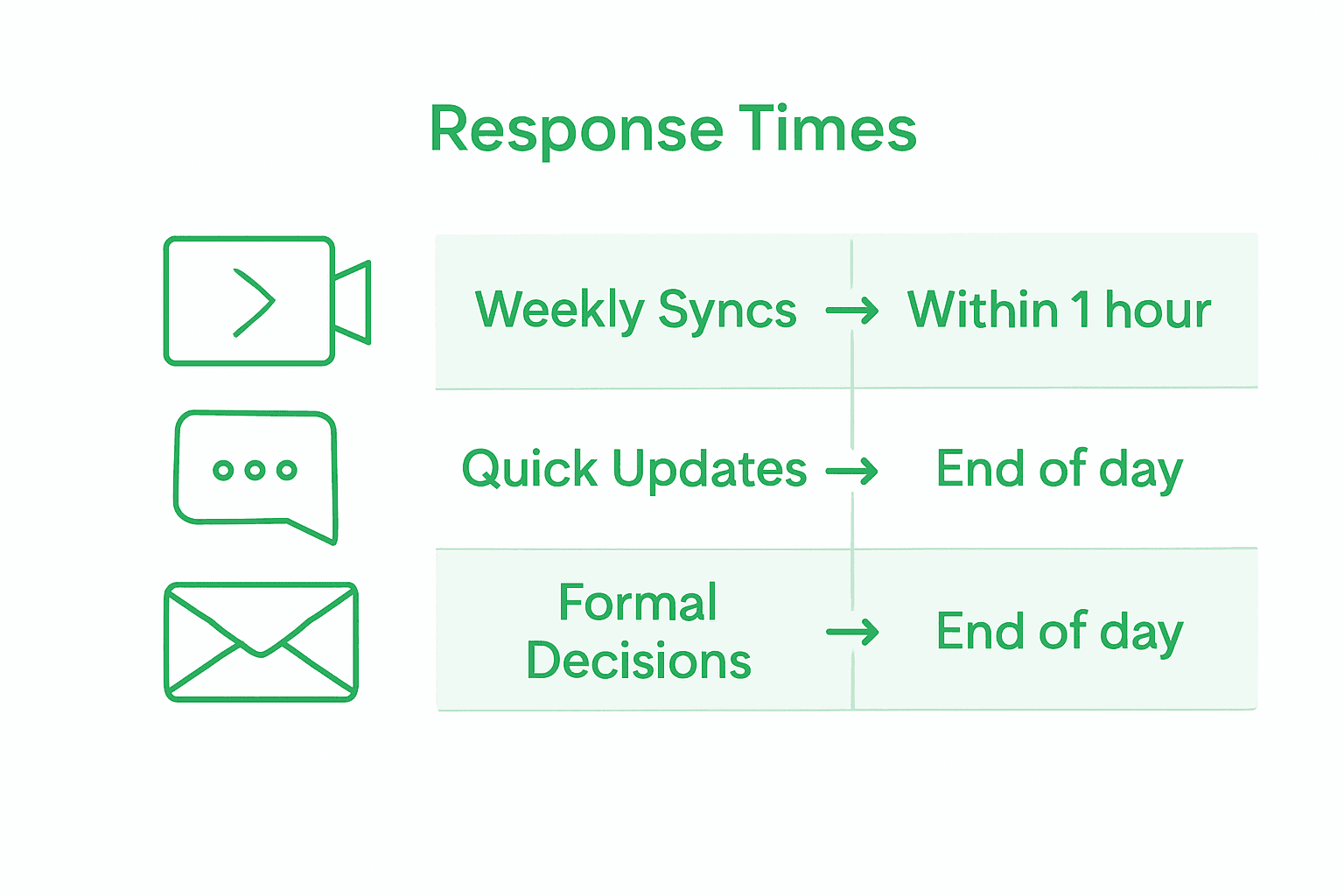
According to MIT Sloan Management Review, establishing clear communication protocols is crucial. Start by defining preferred communication channels for different types of interactions. For instance, use video conferencing for complex discussions, instant messaging for quick questions, and email for formal documentation. The Center for Creative Leadership recommends providing specific guidelines for team discussions, emphasizing the importance of active listening and setting expectations for response times and communication styles.
Create a communication matrix that outlines when to use each platform, expected response windows, and meeting cadences. This helps prevent communication overload and ensures that team members understand the appropriate context for each communication method. Regular check ins and transparent communication rhythms will help your virtual team stay synchronized and productive.
Pro tip: Implement a standardized communication log where team members can track key discussions, decisions, and action items across different platforms to maintain transparency and accountability.
Step 3: Deploy Effective Collaboration Tools
Transforming your virtual team into a powerhouse of productivity starts with selecting the right digital collaboration tools. Your mission is to equip your team with technology that breaks down communication barriers and streamlines workflow across different locations and time zones.
Research from the Review of Business and Economics Studies underscores the critical role of digital collaboration tools in enhancing virtual team performance. Begin by assessing your team’s specific needs and workflow requirements. The Chartered Institute of Personnel and Development recommends investing in comprehensive project management software that offers features like real time task tracking, document sharing, communication channels, and progress visualization. Look for platforms that integrate multiple functions allowing team members to collaborate seamlessly without constantly switching between different applications.
Prioritize tools that offer intuitive interfaces and robust security features. Consider solutions that provide granular access controls, enabling you to manage permissions and protect sensitive information. Test multiple platforms with a small pilot group to ensure the chosen tools genuinely improve team productivity and communication rather than creating additional complexity.
Pro tip: Select collaboration tools that offer mobile compatibility and cross platform functionality to ensure your team can stay connected and productive regardless of their device or location.
The table below compares main digital collaboration tool features and their business impact:
| Feature | Team Advantage | Business Impact |
|---|---|---|
| Real-time task tracking | Enables rapid status updates | Improves project delivery speed |
| Document sharing | Centralizes resources | Streamlines knowledge transfer |
| Integrated communication | Reduces context switching | Minimizes miscommunication risks |
| Progress visualization | Clarifies milestones | Increases transparency and focus |
| Access controls | Secures sensitive info | Mitigates compliance risks |
Step 4: Monitor Performance and Provide Feedback
Successful virtual team management hinges on your ability to track performance and deliver meaningful feedback. Your goal is to create a transparent accountability system that motivates team members while providing clear guidance for improvement.
According to Purdue University Northwest, setting clear expectations for performance and availability is critical. Develop a comprehensive performance tracking framework that includes quantifiable metrics specific to each team member’s role. This might involve establishing key performance indicators (KPIs) that align with individual responsibilities and overall team objectives. Regular performance reviews should be scheduled consistently perhaps monthly or quarterly to ensure ongoing communication and alignment.
Implement a balanced approach to performance monitoring that combines both quantitative measurements and qualitative assessments. Use digital dashboards to track objective metrics while simultaneously conducting one on one video conferences to discuss nuanced performance aspects. This hybrid approach allows you to capture both numerical data and contextual insights about team member contributions. Remember that remote work requires a more intentional and structured feedback mechanism to compensate for the lack of in person interactions.
Pro tip: Create a standardized performance review template that includes self assessment components, allowing team members to provide context and insights about their own work challenges and achievements.
Step 5: Assess Team Efficiency and Make Adjustments
Maximizing virtual team performance requires continuous evaluation and strategic recalibration. Your objective is to develop a systematic approach for monitoring team dynamics, identifying potential bottlenecks, and implementing data driven improvements.
According to MIT Sloan Executive Education, assessing virtual team performance involves a comprehensive review of both quantitative metrics and qualitative team interactions. Conduct regular performance audits that examine individual and collective productivity, communication effectiveness, and alignment with organizational goals. The Center for Creative Leadership emphasizes the importance of being flexible in your management approach adaptability is key to maintaining team engagement and performance. Analyze key performance indicators, review team feedback, and identify patterns that might indicate areas requiring intervention or process refinement.
Develop a structured review process that goes beyond traditional performance metrics. This means looking at collaboration patterns, tool utilization, communication frequency, and team morale. Pay attention to subtle indicators of team health such as response times, meeting participation, and the quality of interdepartmental interactions. Be prepared to quickly pivot your strategies if certain approaches are not yielding the desired results.
Pro tip: Implement a quarterly team health assessment survey that captures both objective performance data and subjective team experience insights, allowing you to make informed and proactive management decisions.
Here is a summary of strategies for effective virtual team management:
| Step | Key Focus Area | Core Benefit |
|---|---|---|
| 1 | Defining roles & expectations | Boosts clarity and accountability |
| 2 | Establishing communication protocols | Enhances transparency and alignment |
| 3 | Selecting collaboration tools | Increases productivity and connectivity |
| 4 | Monitoring performance & feedback | Drives improvement and motivation |
| 5 | Assessing and adjusting team processes | Sustains adaptability and morale |
Empower Your Virtual Team with Expert Outsourcing Solutions
Managing virtual teams requires clear role definitions, robust communication protocols, and effective collaboration tools to unlock high productivity. Feeling overwhelmed by monitoring performance or adjusting workflows? NineArchs LLC specializes in providing scalable and reliable remote workforce solutions tailored to your needs. Our professional services in virtual assistance, custom software development, and business process outsourcing help streamline your virtual team management so you can focus on driving business growth with confidence.
Take control of your virtual team’s success today by partnering with experts who understand the critical challenges of remote work dynamics.
Professional Outsourcing Services
Discover how our tailored remote workforce solutions can enhance your team’s productivity and operational efficiency now. Contact NineArchs LLC at https://ninearchs.com/contact and transform your virtual team challenges into your strongest business advantage.
Frequently Asked Questions
How can I establish clear roles and expectations for my virtual team?
To establish clear roles and expectations, create a comprehensive document that defines each team member’s specific responsibilities, performance metrics, and expected outcomes. Regularly update this document and conduct quarterly role review sessions to maintain alignment with team strengths and project demands.
What are effective communication protocols for managing virtual teams?
Implement effective communication protocols by defining preferred channels for various types of interactions, such as video conferencing for complex discussions and instant messaging for quick questions. Create a communication matrix that outlines when to use each platform and expected response times to ensure everyone stays aligned and informed.
How do I choose the right collaboration tools for my virtual team?
To choose the right collaboration tools, assess your team’s specific needs and workflow requirements. Look for project management software that offers features like real-time task tracking and document sharing, ensuring it integrates multiple functions to streamline your team’s productivity.
What performance metrics should I monitor for my virtual team?
Monitor performance metrics that include quantifiable key performance indicators (KPIs) specific to each team member’s role. Regularly review these metrics in one-on-one meetings and through digital dashboards to ensure accountability and drive continuous improvement.
How can I assess team efficiency and make adjustments?
Assess team efficiency by conducting regular performance audits that examine productivity, communication effectiveness, and alignment with goals. Implement a structured review process, including team health assessment surveys that capture both objective data and subjective insights, to identify areas for improvement.
Recommended
- What Is Remote Workforce? Complete Business Guide | NineArchs
- Virtual Staffing Explained: Transforming Business Growth | NineArchs
- Build an Effective Virtual Assistant Tasks List for Business | NineArchs
- Role of Outsourcing in Productivity: Complete Guide | NineArchs
- Content Marketing Workflow: Complete Guide for 2025 – Jarrod Harman