



More than 60 percent of American businesses outsource some aspect of their financial operations each year. Faced with rising operational costs and complex regulatory demands, many organizations are rethinking how they handle routine accounting. Outsourcing invoice processing now offers a path to greater efficiency, accuracy, and cost savings, harnessing both specialized expertise and the latest in digital innovation for businesses ready to evolve.
Defining Invoice Processing Outsourcing Today
Invoice processing outsourcing represents a strategic financial management approach where businesses delegate their invoice handling, verification, and payment workflows to specialized external service providers. This modern practice transforms traditional accounting practices by leveraging advanced digital technologies and specialized accounting expertise. Companies increasingly recognize that administrative support outsourcing can significantly streamline their financial operations.
The core of invoice processing outsourcing involves transferring complex accounting tasks such as invoice data entry, validation, reconciliation, and payment processing to professional service providers equipped with sophisticated technological infrastructure. These providers utilize advanced electronic systems that automate repetitive tasks, reduce manual errors, and accelerate transaction cycles. Digital technologies like cloud computing, artificial intelligence, and machine learning enable these external teams to process invoices with unprecedented speed and accuracy.
Key components of modern invoice processing outsourcing typically include:
- Electronic Invoice Capture: Automated scanning and digitization of paper and digital invoices
- Data Validation: Algorithmic cross-checking of invoice details against purchase orders and contracts
- Workflow Automation: Seamless routing of invoices through approval hierarchies
- Compliance Management: Ensuring adherence to financial regulations and internal control standards
- Reporting and Analytics: Generating comprehensive financial insights and performance metrics
Businesses across various industries are increasingly adopting this approach to optimize their financial operations, reduce operational costs, and focus on core strategic activities. By partnering with specialized service providers, organizations can transform their accounts payable processes from time-consuming administrative tasks into streamlined, technology-enabled workflows that drive organizational efficiency.
Key Steps in Outsourced Invoice Workflows
Outsourced invoice workflows represent a systematic approach to managing financial documentation through strategic external partnerships. Organizations seeking to optimize their accounts payable processes typically follow a structured sequence of steps that transform traditional invoice management. Businesses often begin by evaluating repetitive tasks that can be efficiently delegated to specialized service providers.

The primary workflow typically encompasses several critical stages designed to ensure accuracy, compliance, and operational efficiency. These stages include comprehensive preparation, meticulous document collection, rigorous validation, seamless processing, and continuous performance monitoring. Professional outsourcing providers utilize advanced technological platforms that integrate artificial intelligence and machine learning to automate and streamline each stage of invoice processing.
Key steps in a typical outsourced invoice workflow include:
- Initial Assessment and Scoping
- Analyzing current invoice management processes
- Identifying potential bottlenecks and inefficiencies
- Defining specific performance metrics and expectations
- Document Capture and Digitization
- Collecting invoices from multiple sources
- Converting physical and digital documents into standardized electronic formats
- Implementing optical character recognition (OCR) technologies
- Data Extraction and Validation
- Automatically extracting key invoice details
- Cross-referencing data against existing purchase orders and contracts
- Flagging potential discrepancies or anomalies
- Workflow Routing and Approval
- Establishing automated approval hierarchies
- Routing invoices to appropriate stakeholders
- Implementing multi-level verification processes
- Payment Processing and Reconciliation
- Executing timely payments to vendors
- Maintaining comprehensive financial records
- Generating detailed transaction reports
Successful invoice workflow outsourcing requires strategic collaboration between businesses and service providers. By implementing these structured steps, organizations can transform their accounts payable functions from manual, error-prone processes into efficient, technology-driven systems that reduce operational costs and minimize financial risks.
Popular Outsourcing Models and Distinctions
Invoice processing outsourcing encompasses diverse models that enable businesses to select strategies aligned with their specific operational requirements and technological capabilities. Organizations can choose from multiple approaches that range from fully remote services to hybrid arrangements, each offering unique advantages and challenges. Companies often explore business operations outsourcing to understand which model best suits their financial management needs.
The primary outsourcing models for invoice processing can be categorized into three fundamental approaches: fully remote, hybrid, and on-site augmentation. Each model presents distinct characteristics that impact organizational workflow, data security, and operational flexibility. Fully remote models involve complete external management of invoice processing, while hybrid approaches integrate external expertise with internal teams, creating a collaborative environment that balances control and specialized support.
Detailed breakdown of invoice processing outsourcing models:
- Fully Remote Model
- Complete external management of invoice workflows
- Total technology and process transfer to service provider
- Minimal internal team involvement
- Highest potential for cost reduction
- Maximum scalability
- Hybrid Model
- Shared responsibilities between internal and external teams
- Partial process outsourcing
- Collaborative technology platforms
- Flexible engagement levels
- Balanced approach to risk management
- On-Site Augmentation Model
- External specialists work directly within client facilities
- Direct supervision and immediate collaboration
- Knowledge transfer and skill development
- Gradual process optimization
- Enhanced communication and cultural alignment
Successful outsourcing requires careful evaluation of organizational needs, technological infrastructure, and strategic objectives. Businesses must consider factors such as data security, compliance requirements, scalability, and potential cost savings when selecting an appropriate invoice processing outsourcing model. The most effective approach will depend on unique organizational contexts, existing technological capabilities, and long-term financial management strategies.
Benefits and Challenges for Modern Businesses
Invoice processing outsourcing presents a complex landscape of strategic advantages and potential obstacles for modern businesses seeking operational optimization. Organizations must carefully weigh the transformative potential against potential risks when considering external financial management solutions. Companies often explore business process outsourcing benefits to understand the comprehensive impact on their operational efficiency.
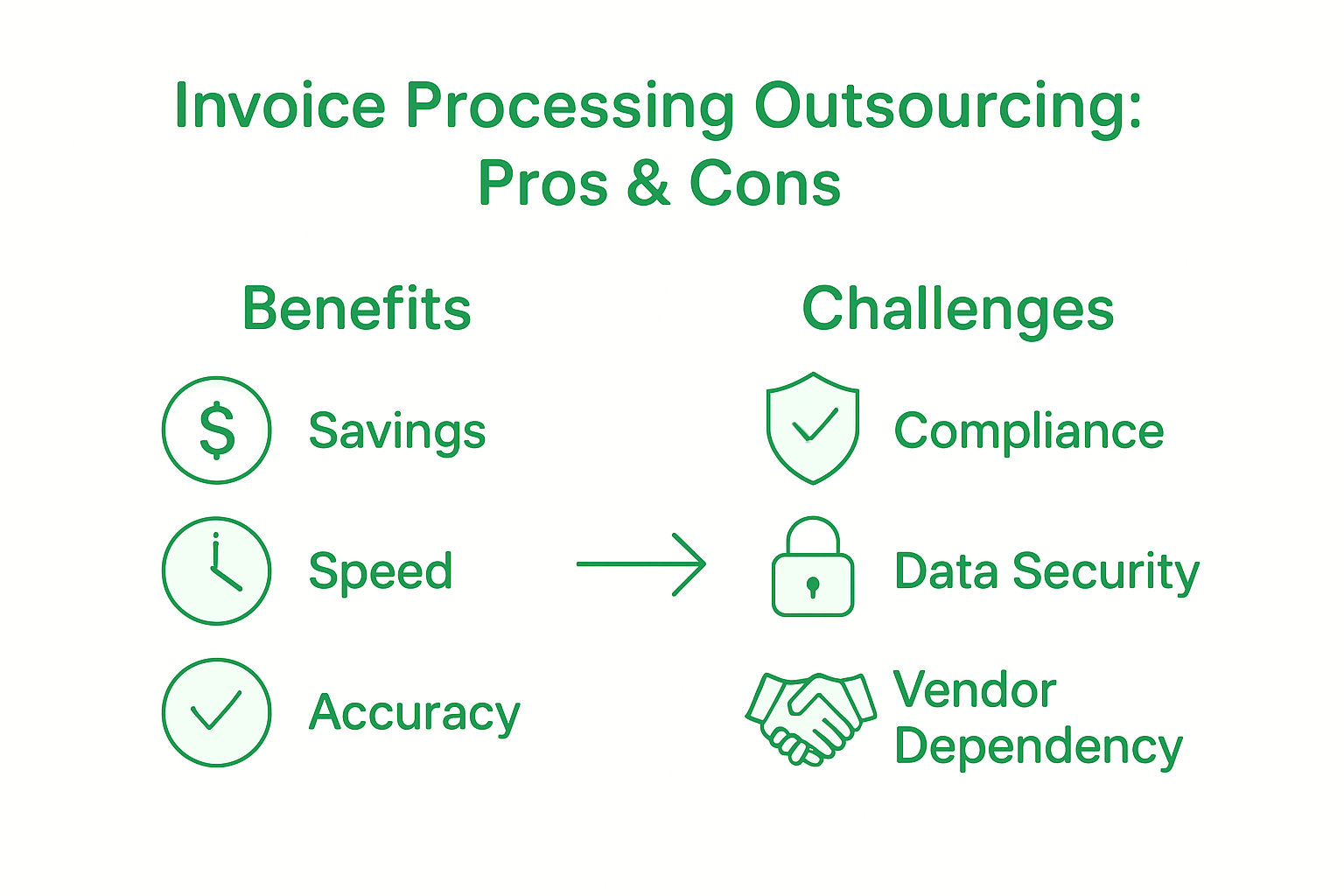
Benefits of invoice processing outsourcing represent a compelling value proposition for businesses across various industries. Primary advantages include significant cost reduction, enhanced operational scalability, access to specialized technological expertise, improved accuracy, and increased organizational flexibility. Professional outsourcing providers leverage advanced automation technologies, machine learning algorithms, and specialized workflows that can dramatically improve processing speed and reduce human error rates compared to traditional in-house methods.
Key benefits and challenges of invoice processing outsourcing include:
Benefits:
- Substantial cost savings through reduced labor expenses
- Enhanced processing speed and accuracy
- Access to advanced technological infrastructure
- Improved compliance and regulatory management
- Scalable solutions adaptable to business growth
- Reduced operational overhead
- Specialized expertise without long-term hiring commitments
Challenges:
- Potential data security and confidentiality risks
- Initial integration complexities
- Communication barriers
- Dependency on external service providers
- Potential hidden implementation costs
- Learning curve for new technological systems
- Reduced direct control over financial processes
Successful implementation of invoice processing outsourcing requires strategic planning, rigorous vendor selection, and continuous performance monitoring. Businesses must conduct comprehensive due diligence, establish clear performance metrics, and maintain robust communication channels with their outsourcing partners. The most effective approach involves creating a flexible, collaborative relationship that balances external expertise with internal oversight, ultimately transforming invoice management from a transactional function into a strategic organizational asset.
Risk Management, Compliance, and Data Security
Risk management in invoice processing outsourcing requires a comprehensive approach that addresses technological, operational, and regulatory challenges. Organizations must develop robust strategies to protect sensitive financial information while maintaining the efficiency and flexibility of external service providers. Businesses often explore outsourcing challenges to develop more sophisticated risk mitigation frameworks.
Artificial intelligence and advanced analytics have transformed risk management approaches in invoice processing workflows. These technologies enable real-time anomaly detection, predictive fraud prevention, and continuous compliance monitoring. Professional outsourcing providers implement multi-layered security protocols that combine technological safeguards, rigorous verification processes, and comprehensive regulatory compliance strategies.
Key risk management and data security considerations include:
Technological Security Measures:
- End-to-end encryption protocols
- Multi-factor authentication systems
- Advanced intrusion detection mechanisms
- Regular security vulnerability assessments
- Secure cloud infrastructure
- Blockchain-based transaction verification
- Real-time threat monitoring systems
Compliance and Regulatory Requirements:
- Adherence to industry-specific financial regulations
- Comprehensive data protection standards
- Regular third-party security audits
- Transparent reporting mechanisms
- Documented risk management protocols
- Employee background verification processes
- Strict confidentiality agreements
Successful risk management in invoice processing outsourcing demands a proactive, holistic approach that balances technological innovation with rigorous security practices. Organizations must view data protection not as a static requirement but as a dynamic, evolving process that requires continuous adaptation, investment in cutting-edge technologies, and a culture of vigilance and transparency. The most effective strategies integrate advanced technological solutions with human expertise, creating a comprehensive defense against potential financial and operational risks.
Transform Your Invoice Processing with Expert Outsourcing Solutions
Managing invoice workflows can feel overwhelming due to repetitive tasks, data validation challenges, and growing demands for compliance and data security. As highlighted in “Invoice Processing Outsourcing: Boosting Efficiency and Savings,” businesses face critical pain points such as reducing operational costs, minimizing manual errors, and accelerating transaction cycles through technology-driven workflows like electronic invoice capture and AI-powered validation. These goals require a reliable partner who understands these complexities and offers scalable, secure solutions.
At NineArchs LLC, we specialize in comprehensive business process outsourcing that transforms your invoice processing into a streamlined, cost-effective operation. Our expertise in virtual assistance, finance outsourcing, and data management aligns perfectly with your need for accelerated invoice approval, enhanced compliance, and risk mitigation. We combine advanced automation with human expertise to deliver accuracy, flexibility, and security for your accounts payable.
Ready to modernize your financial workflows and save valuable time and money?
Discover how partnering with NineArchs can empower your business to focus on strategic growth while we handle the complex intricacies of invoice processing. Contact us today to learn more about our tailored outsourcing services and take the first step toward operational excellence. Visit our contact page now to get started.
Frequently Asked Questions
What is invoice processing outsourcing?
Invoice processing outsourcing involves delegating the tasks of handling, verifying, and paying invoices to specialized external service providers. This approach leverages advanced technology to automate and streamline traditional accounting processes.
What are the main benefits of outsourcing invoice processing?
Key benefits of invoice processing outsourcing include significant cost savings, enhanced speed and accuracy in processing, access to specialized technology, improved compliance management, and greater organizational flexibility, allowing businesses to focus on core strategic activities.
How does the invoicing workflow typically operate in an outsourced model?
The typical outsourced invoice workflow includes several steps: initial assessment of current processes, document capture and digitization, data extraction and validation, workflow routing for approvals, and payment processing and reconciliation.
What are the potential challenges of invoice processing outsourcing?
Potential challenges include data security risks, initial integration complexities, communication barriers, dependency on external providers, and the learning curve associated with new technologies. It’s crucial for businesses to conduct thorough due diligence and establish robust performance metrics.
Recommended
- Complete Guide to Outsourcing Business Operations | NineArchs
- 7 Top Support Tasks to Outsource for Greater Efficiency | NineArchs
- Key Benefits of Business Process Outsourcing Explained | NineArchs
- How to Outsource Back Office for Business Efficiency | NineArchs
- Finance Outsourcing Guide: Effizient Auslagern für Unternehmen – StorsenDigital
- Complete Guide to Process Optimization for AI-Ready Firms – BizDev Strategy