



Over 60 percent of American companies now rely on outsourced teams to streamline operations and drive growth. As outsourcing becomes integral to modern business strategy, effective onboarding plays a crucial role in transforming new partnerships into lasting, productive collaborations. Understanding the unique dynamics of onboarding external professionals helps leaders bridge cultural gaps, improve communication, and unlock the full potential of their global workforce.
Defining Onboarding in Outsourcing Partnerships
Onboarding in outsourcing partnerships represents a strategic process of integrating external talent seamlessly into an organization’s operational ecosystem. Unlike traditional employee onboarding, this specialized approach focuses on aligning external professionals with the company’s core objectives, cultural nuances, and performance expectations. By establishing clear communication channels and comprehensive integration frameworks, businesses can transform outsourcing partnerships from transactional relationships into collaborative, high-performance partnerships.
At its core, outsourcing onboarding transcends mere technical skill transfer. Organizational socialization becomes critical, involving systematic knowledge sharing that enables external team members to understand not just their specific roles, but the broader organizational context. This holistic approach ensures that outsourced professionals comprehend the company’s mission, strategic goals, workflow dynamics, and expected performance standards. By investing time in comprehensive orientation processes, organizations mitigate potential communication gaps, reduce operational friction, and accelerate the productivity of external teams.
Effective onboarding in outsourcing partnerships typically encompasses several key dimensions:
- Knowledge Transfer: Detailed briefings about organizational processes, tools, and methodologies
- Cultural Integration: Understanding company values, communication norms, and collaborative expectations
- Performance Expectations: Clear articulation of quality standards, deliverable requirements, and success metrics
- Technology and Systems Access: Structured approach to providing necessary digital infrastructure and access protocols
- Continuous Learning: Establishing ongoing training and feedback mechanisms to support professional development
Successful outsourcing partnerships recognize that onboarding is not a one-time event but a continuous, dynamic process. By creating structured yet flexible integration strategies, organizations can build resilient, adaptable external teams that function as natural extensions of their internal workforce.
Types of Onboarding Processes for Outsourced Teams
Onboarding processes for outsourced teams represent a strategic spectrum of integration approaches, each designed to address unique organizational requirements and project complexities. Fundamentally, these processes range from structured, comprehensive frameworks to more adaptive, context-specific methodologies that recognize the nuanced challenges of integrating external talent. Business process outsourcing strategies demand flexible yet systematic approaches to ensure seamless team integration and performance alignment.

Structured Onboarding Processes emerge as the most traditional approach, characterized by predefined protocols, comprehensive documentation, and standardized training modules. These processes typically involve systematic knowledge transfer, detailed role orientation, and explicit performance expectations. Research indicates that structured approaches are particularly effective for large-scale outsourcing initiatives where consistency and reproducibility are paramount. By establishing clear guidelines and systematic training pathways, organizations can mitigate potential communication gaps and accelerate external team productivity.
Alternatively, Agile Onboarding Methodologies have gained significant traction, especially in software development and technology-driven outsourcing contexts. These dynamic processes prioritize:
- Iterative learning cycles
- Continuous feedback mechanisms
- Rapid skill adaptation
- Collaborative problem-solving
- Real-time performance assessment
Unlike rigid traditional models, Agile onboarding emphasizes flexibility, allowing outsourced teams to rapidly integrate, understand project nuances, and contribute meaningfully from early engagement stages. This approach recognizes that modern outsourcing relationships require adaptive, responsive integration strategies that can quickly adjust to evolving project requirements and organizational dynamics.
Ultimately, successful onboarding processes transcend standardized templates. They represent a strategic blend of structured protocols and adaptive methodologies, tailored to specific organizational contexts, technological ecosystems, and project complexities. By carefully selecting and implementing the most appropriate onboarding approach, businesses can transform outsourced teams from external resources into fully integrated, high-performing collaborative partners.
Key Steps for Seamless Remote Team Integration
Integrating remote outsourced teams requires a strategic, multifaceted approach that goes beyond traditional hiring practices. The complexity of remote workforce management demands comprehensive integration strategies that address technological, cultural, and operational challenges simultaneously. Successful remote team integration hinges on creating a holistic framework that transforms external professionals into cohesive, high-performing team members.
Communication Infrastructure emerges as the foundational pillar of effective remote team integration. This involves establishing robust digital communication channels, selecting appropriate collaboration tools, and creating clear communication protocols. Research indicates that organizations must invest in platforms that facilitate real-time interactions, document sharing, and transparent workflow tracking. By implementing comprehensive communication systems, businesses can bridge geographical distances and create a unified virtual workspace that promotes seamless collaboration and information exchange.
The integration process typically encompasses several critical steps:
- Comprehensive Onboarding Program
- Detailed role expectations
- Company culture orientation
- Technical system access
- Performance metric clarification
- Technology Enablement
- Secure remote access protocols
- Standardized collaboration tools
- Cybersecurity training
- Performance tracking systems
- Cultural Alignment
- Virtual team-building activities
- Cross-cultural communication workshops
- Regular check-in meetings
- Inclusive decision-making processes
Ultimately, successful remote team integration transcends technical configurations. It represents a nuanced approach of creating psychological safety, establishing clear expectations, and fostering a sense of belonging among distributed team members. Organizations must view remote integration as an ongoing, dynamic process that requires continuous adaptation, empathy, and strategic investment in human connections across digital platforms.
Common Onboarding Challenges and How to Avoid Them
Outsourcing partnerships frequently encounter complex onboarding challenges that can significantly impede team performance and organizational effectiveness. Understanding and proactively addressing these challenges becomes crucial for businesses seeking to optimize outsourcing strategies. The digital transformation landscape has exponentially increased the complexity of integrating external teams, demanding sophisticated approaches to overcome potential barriers.
Communication Disconnects represent the most prevalent challenge in remote outsourcing environments. These disconnects emerge from multiple dimensions, including language barriers, cultural differences, technological limitations, and misaligned expectations. Research indicates that organizations must develop comprehensive communication frameworks that transcend traditional linear information exchange. This involves creating multilayered communication protocols that account for nuanced interpersonal dynamics, technological infrastructure, and contextual understanding beyond mere transactional interactions.
The most common onboarding challenges can be systematically categorized and addressed:
- Technological Integration Challenges
- Incompatible software platforms
- Security protocol misalignments
- Limited remote access capabilities
- Inconsistent digital infrastructure
- Cultural and Psychological Barriers
- Implicit communication differences
- Varying work ethic expectations
- Limited psychological safety
- Potential trust deficits
- Operational Performance Gaps
- Unclear performance metrics
- Inconsistent training protocols
- Misaligned workflow expectations
- Reduced accountability mechanisms
Successful onboarding ultimately requires a holistic approach that recognizes external teams as integral organizational components. By developing adaptive, empathetic integration strategies that prioritize clear communication, technological compatibility, and cultural understanding, businesses can transform potential challenges into opportunities for collaborative excellence. The most effective organizations view onboarding not as a one-time event, but as a continuous, dynamic process of mutual learning and professional development.
Impact of Onboarding on Productivity and Retention
Onboarding processes directly influence organizational performance through intricate mechanisms that connect talent integration, employee engagement, and long-term productivity. Companies that strategically approach outsourcing talent management can transform initial integration phases into sustainable performance frameworks that significantly reduce talent turnover and accelerate operational efficiency.
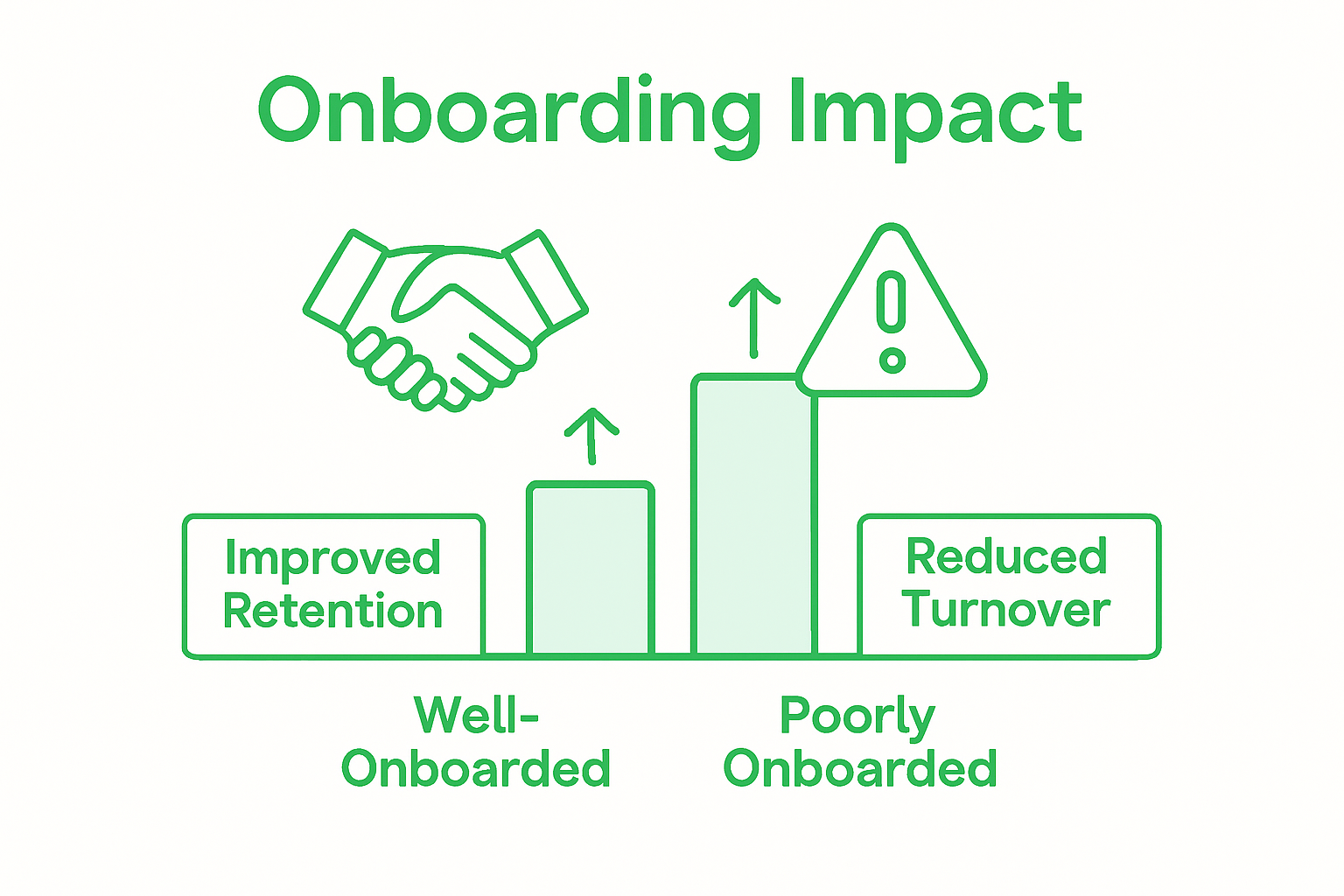
Productivity Acceleration emerges as the primary measurable outcome of comprehensive onboarding strategies. Research demonstrates that well-structured onboarding programs can reduce time-to-productivity by up to 50%, enabling external team members to contribute meaningful value exponentially faster than traditional integration approaches. This acceleration occurs through systematic knowledge transfer, clear performance expectations, and creating psychological safety that empowers new team members to engage proactively and confidently in their roles.
The multidimensional impact of effective onboarding can be categorized across several critical dimensions:
- Performance Metrics
- Reduced ramp-up time
- Higher initial task completion rates
- Increased skill adaptation speed
- Improved quality of initial deliverables
- Retention Indicators
- Enhanced psychological commitment
- Lower early-stage turnover rates
- Increased sense of organizational belonging
- Improved long-term engagement levels
- Organizational Benefits
- Reduced recruitment costs
- Consistent knowledge preservation
- Streamlined team integration
- Enhanced collaborative capabilities
Ultimately, onboarding transcends traditional administrative processes. It represents a strategic investment in human capital that directly correlates with organizational resilience, adaptability, and competitive advantage. By viewing onboarding as a continuous, dynamic relationship-building process, businesses can create sustainable talent ecosystems that transform external professionals into high-performing, deeply integrated team members.
Unlock Outsourcing Success with Expert Onboarding Support
The article highlights critical challenges like communication disconnects, cultural alignment, and operational performance gaps that often stand between a business and effective outsourcing partnerships. If you are striving to transform onboarding from a one-time task into a continuous, dynamic process that accelerates productivity and retention, NineArchs LLC can provide the tailored remote workforce solutions you need. With our expertise in business process outsourcing, custom software development, and comprehensive knowledge outsourcing services, we help you align external teams seamlessly with your organizational goals and culture.
Ready to eliminate onboarding friction and empower your outsourced teams to perform as natural extensions of your in-house staff All it takes is strategic partnership with NineArchs We invite you to discover how our scalable, reliable solutions can streamline your operations and boost team engagement now Contact us today at NineArchs Contact and start building outsourcing success that lasts. For more insights on optimizing integration strategies explore our guide to business process outsourcing success. To understand workforce challenges in depth visit our overview on remote workforce management.
Frequently Asked Questions
What is onboarding in outsourcing partnerships?
Onboarding in outsourcing partnerships is the strategic process of integrating external talent into an organization’s operations, focusing on aligning them with the company’s goals, culture, and performance expectations.
Why is effective onboarding important for outsourced teams?
Effective onboarding is crucial as it accelerates productivity, mitigates communication gaps, and fosters a sense of belonging among external team members, leading to higher engagement and better collaboration.
What are the common challenges faced during onboarding of outsourced teams?
Common onboarding challenges include communication disconnects, technological integration issues, cultural and psychological barriers, and operational performance gaps that can affect team effectiveness.
How can organizations improve their onboarding processes for outsourced teams?
Organizations can improve onboarding by creating comprehensive programs that include clear role expectations, cultural orientation, technology enablement, and ongoing feedback mechanisms to support continuous learning and integration.
Recommended
- Step-by-Step Guide to Business Process Outsourcing Success | NineArchs
- 7-Step Checklist for IT Outsourcing Success | NineArchs
- Understanding Outsourcing Benefits for Companies | NineArchs
- 7 Essential Outsourcing Best Practices for Success | NineArchs
- AI Onboarding Support Calls
- Risiken bei Outsourcing – Was Unternehmen wissen müssen