



Bold new trends are changing how American companies grow their teams, with over 60 percent now tapping into virtual staffing options for greater flexibility. As the remote work revolution accelerates, understanding virtual staffing is becoming crucial for businesses eager to stay competitive. This article cuts through the confusion and myths, showing how modern American organizations use remote professionals to reduce costs, access global talent, and build stronger, more agile teams.
Defining Virtual Staffing and Common Myths
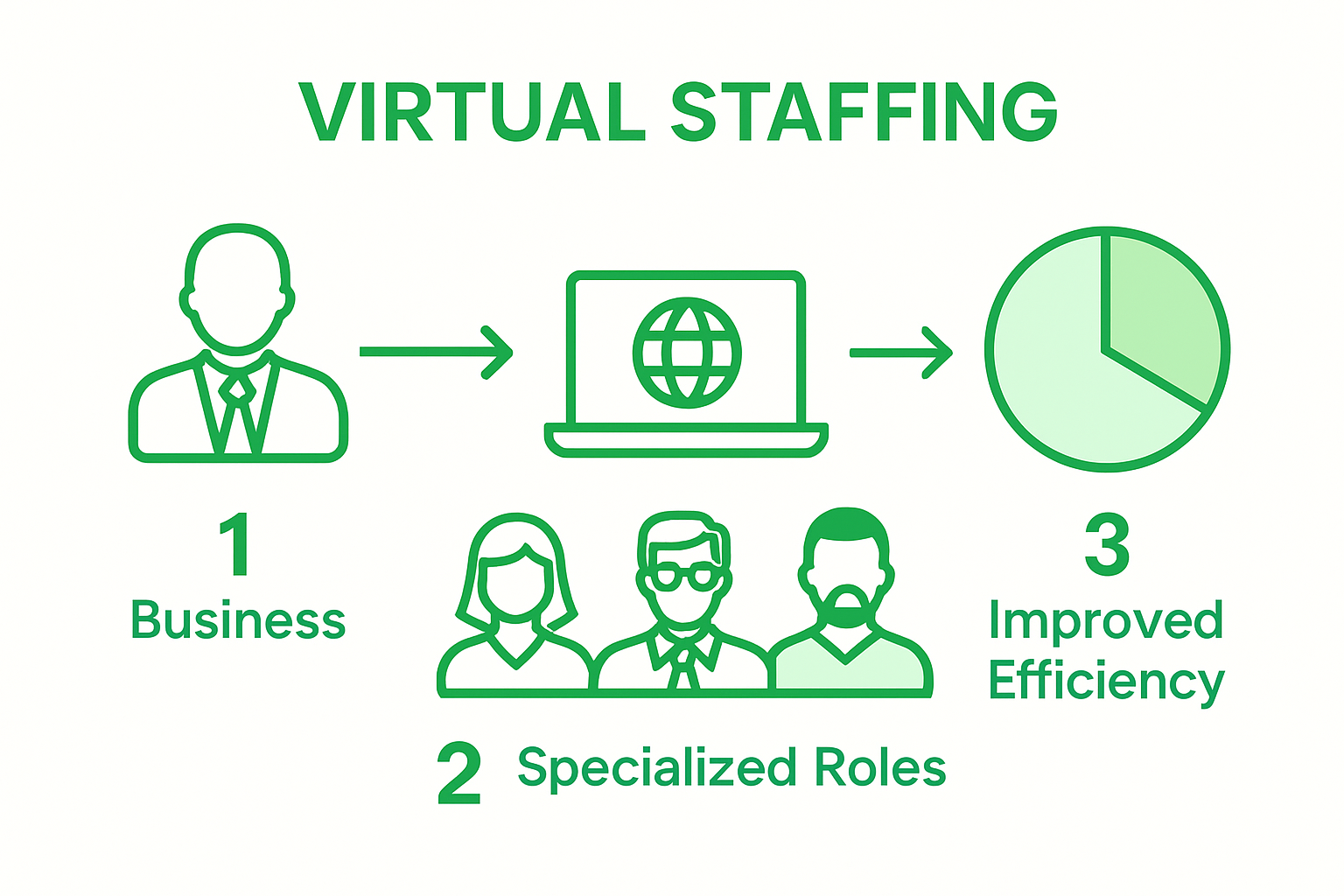
Virtual staffing represents a modern workforce strategy where businesses hire professionals who work remotely through third-party providers. Unlike traditional employment models, these team members operate from different geographic locations while remaining fully integrated into an organization’s operational framework. This approach allows companies to access specialized talent without the overhead of traditional hiring processes.
At its core, remote workforce strategies involve recruiting skilled professionals who collaborate digitally, providing businesses flexible human capital solutions. Companies leveraging virtual staffing gain significant advantages, including reduced operational costs, expanded talent pools, and enhanced workforce scalability. The model enables organizations to tap into global expertise without geographical constraints, transforming how businesses structure their human resources.
Several persistent myths surround virtual staffing that often prevent businesses from exploring this powerful strategy:
- Myth 1: Virtual Staff Are Less Productive
- Reality: Studies show remote workers frequently demonstrate higher productivity
- Digital collaboration tools enable precise performance tracking
- Professionals value flexibility, leading to increased job satisfaction
- Myth 2: Communication Quality Suffers
- Reality: Advanced communication platforms provide seamless interaction
- Video conferencing, project management software, and instant messaging bridge geographic gaps
- Structured communication protocols ensure clarity and accountability
- Myth 3: Only Low-Skilled Work Can Be Outsourced
- Reality: Virtual staffing covers complex professional domains
- High-skill sectors like software development, digital marketing, and strategic consulting frequently utilize virtual talent
- Global talent networks offer sophisticated, specialized expertise
By understanding these nuances, businesses can unlock the transformative potential of virtual staffing. The key lies in strategic implementation, robust technological infrastructure, and a commitment to building cohesive remote teams that transcend traditional workplace boundaries.
Types of Virtual Staffing Solutions for Businesses
Virtual staffing solutions have evolved dramatically, offering businesses unprecedented flexibility in building dynamic, globally distributed teams. Modern organizations can now select from a diverse range of staffing models tailored to specific operational needs, transforming traditional workforce management approaches. These solutions enable companies to strategically leverage talent across different geographic and functional domains.
Businesses can choose from several comprehensive outsourcing solutions for business growth that accommodate varying complexity and strategic requirements. The primary virtual staffing models include:
- Project-Based Virtual Teams
- Designed for specific, time-limited initiatives
- Professionals assembled with targeted expertise
- Rapid scalability and specialized skill deployment
- Functional Virtual Departments
- Complete remote departments managing specific business functions
- Examples: Customer Support, Human Resources, Accounting
- Comprehensive operational coverage without physical infrastructure
- Dedicated Remote Staff Augmentation
- Individual professionals integrated into existing team structures
- Long-term, ongoing collaboration
- Provides specialized skills without full-time employment overhead
- Global Talent Networks
- Access to international professional talent pools
- Diverse skill sets across multiple disciplines
- Cost-effective alternative to traditional recruitment
These virtual staffing solutions offer strategic advantages beyond traditional employment models. By leveraging digital collaboration technologies, businesses can build agile, responsive teams that transcend geographical limitations. The key is selecting the right model that aligns with specific organizational objectives, technological infrastructure, and performance expectations.

How Virtual Teams Operate and Deliver Value
Virtual team collaboration represents a sophisticated approach to modern workforce management, leveraging advanced digital technologies to create seamless, geographically dispersed work environments. These teams transcend traditional workplace boundaries by utilizing comprehensive communication platforms that enable real-time interaction, project management, and collaborative problem-solving across different time zones and cultural contexts.
Successful virtual teams rely on outsourcing best practices that establish clear operational frameworks and communication protocols. The core operational mechanisms include:
- Communication Infrastructure
- Cloud-based project management tools
- Secure video conferencing platforms
- Instant messaging and collaborative documentation systems
- Performance Management
- Quantifiable key performance indicators (KPIs)
- Regular virtual check-ins and progress tracking
- Transparent goal-setting and accountability metrics
- Technology Integration
- Centralized digital workspaces
- Automated workflow management systems
- Cybersecurity protocols for remote collaboration
- Cultural Synchronization
- Cross-cultural communication training
- Inclusive team-building virtual activities
- Strategies for managing diverse professional backgrounds
The true value of virtual teams emerges from their ability to combine specialized talent, technological efficiency, and flexible work arrangements. By eliminating geographical constraints, organizations can build dynamic teams that adapt quickly, leverage global expertise, and maintain high productivity levels. Strategic implementation of digital collaboration tools and robust management practices transforms virtual teams from a novel concept into a competitive business advantage.
Cost, Efficiency, and Scalability Factors
Virtual staffing models represent a transformative approach to organizational resource management, offering businesses unprecedented flexibility in controlling operational expenses and workforce dynamics. By strategically decoupling talent acquisition from traditional geographical and infrastructural constraints, companies can optimize their human capital investments with remarkable precision and adaptability.
Businesses exploring key reasons to outsource IT discover multiple financial and operational advantages that extend far beyond simple cost reduction. The critical factors driving virtual staffing economics include:
- Cost Optimization
- Reduced overhead expenses
- Elimination of physical workspace infrastructure
- Flexible compensation structures
- Minimized recruitment and training expenditures
- Operational Efficiency
- Streamlined talent acquisition processes
- Enhanced productivity through specialized skill matching
- Reduced administrative management burden
- Accelerated project initiation and execution
- Scalability Mechanisms
- Instant workforce capacity adjustment
- Global talent pool access
- Rapid team composition modifications
- Simplified workforce expansion and contraction
- Risk Mitigation
- Distributed workforce resilience
- Reduced dependency on local talent markets
- Compliance with dynamic regulatory environments
- Enhanced business continuity planning
The strategic implementation of virtual staffing transforms traditional workforce management from a rigid, location-dependent model into a dynamic, responsive ecosystem. By leveraging technological platforms and sophisticated talent networks, organizations can create agile human capital strategies that adapt seamlessly to changing business landscapes, technological disruptions, and market demands.
Avoiding Pitfalls When Implementing Virtual Staffing
Virtual staffing implementation requires strategic planning and nuanced understanding of potential organizational challenges. Businesses must navigate complex technological, cultural, and operational dynamics to successfully integrate remote workforce solutions that deliver consistent performance and maintain team cohesion.
Companies can monitor outsourced staff effectively by developing comprehensive strategies that address the most common virtual staffing pitfalls:
- Communication Breakdown
- Unclear communication protocols
- Limited collaboration platforms
- Insufficient context sharing
- Misaligned time zone expectations
- Technology Infrastructure Gaps
- Inadequate cybersecurity measures
- Unreliable digital collaboration tools
- Inconsistent internet connectivity
- Limited technical support systems
- Cultural and Performance Misalignment
- Weak onboarding processes
- Insufficient performance tracking mechanisms
- Limited cross-cultural communication training
- Misunderstood expectations and work standards
- Legal and Compliance Risks
- Incomplete contractual frameworks
- Ambiguous intellectual property protections
- Inconsistent regulatory compliance
- Unclear data privacy guidelines
Successful virtual staffing implementation demands proactive risk management, robust technological infrastructure, and a comprehensive understanding of global workforce dynamics. Organizations must develop adaptive strategies that balance flexibility with structured performance expectations, creating resilient remote teams capable of delivering exceptional results across diverse operational contexts.
Unlock the Power of Virtual Staffing to Accelerate Your Business Growth
The article highlights the challenges of implementing virtual staffing such as overcoming communication gaps and managing remote teams effectively. If your business struggles with these pain points or wants to tap into global talent while optimizing costs and scalability, our tailored remote workforce solutions at NineArchs LLC are designed specifically to address these needs. By embracing virtual staffing strategies with robust technology and professional management, you can break through traditional workforce limits and drive productivity.
Experience how our expertise in virtual assistance, custom software development, and business process outsourcing can transform your operations. We help you build cohesive, high-performing teams that deliver results and adapt to your evolving business goals.
Ready to transform your workforce and gain a competitive edge? Discover how our outsourcing solutions for business growth align with your virtual staffing goals.

Take control of your business growth today by partnering with NineArchs LLC for reliable and scalable virtual staffing. Contact us now at https://ninearchs.com/contact to explore customized solutions that fit your unique needs and unlock new levels of efficiency and innovation.
Frequently Asked Questions
What is virtual staffing?
Virtual staffing refers to a workforce strategy where businesses hire remote professionals through third-party providers to work from different geographic locations, fully integrated into the organization’s operations.
How do virtual teams operate and deliver value?
Virtual teams leverage advanced digital communication tools for seamless collaboration, enabling real-time interaction and project management across different time zones, thus enhancing productivity and operational efficiency.
What are the common types of virtual staffing solutions available?
Common virtual staffing solutions include project-based virtual teams, functional virtual departments, dedicated remote staff augmentation, and access to global talent networks, each tailored to meet specific operational needs.
What are the advantages of implementing virtual staffing?
Advantages of virtual staffing include cost optimization, enhanced operational efficiency, rapid scalability, and improved risk mitigation, allowing organizations to create agile human capital strategies that adapt to changing business needs.