


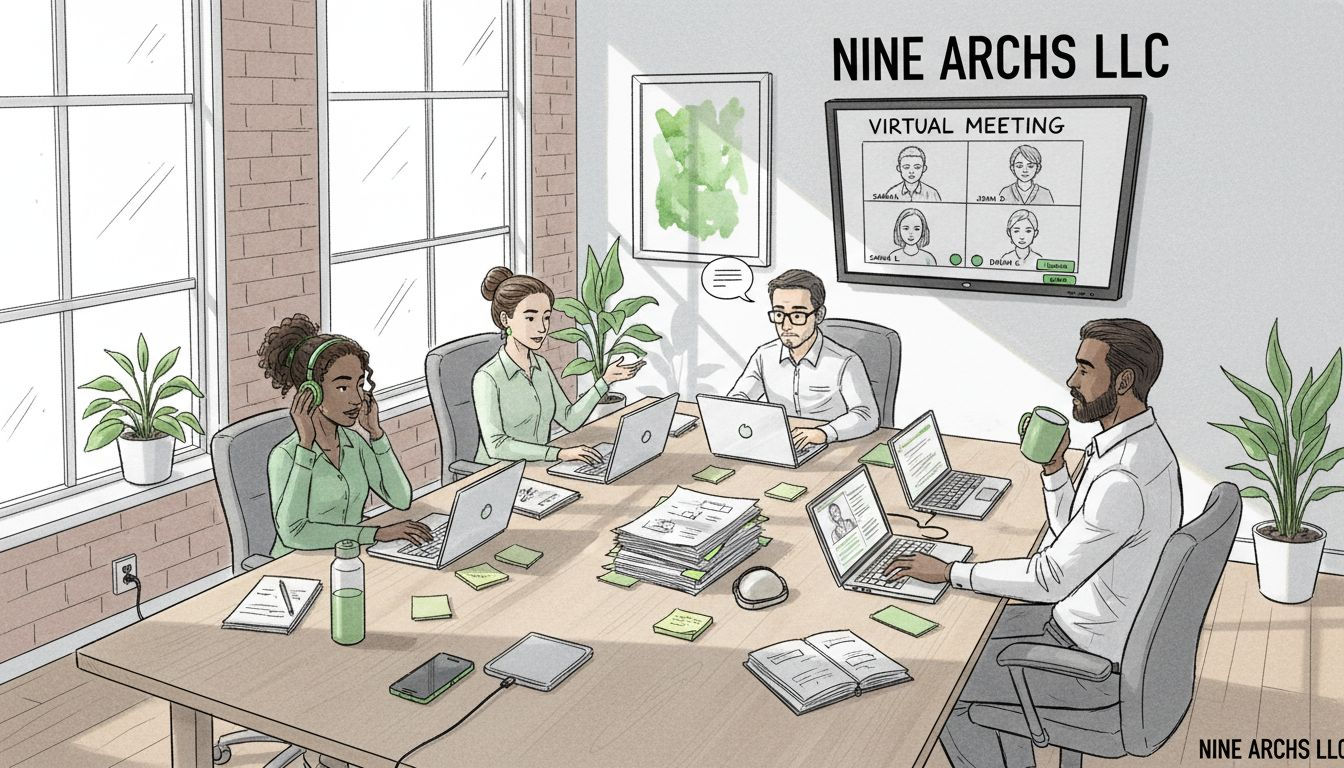
Most American businesses face new challenges as more teams go virtual. Nearly 60 percent of American employers now rely on remote professionals, sparking debates about productivity, team culture, and technology. Understanding what sets a virtual workforce apart from traditional models has become essential for any company hoping to compete globally. This guide clears up common myths, outlines modern team structures, and shows how American organizations can build effective and compliant virtual workforces.
Defining Virtual Workforces and Common Myths
A virtual workforce represents a strategic approach to talent management where professionals work remotely, leveraging digital technologies to collaborate and deliver results across geographic boundaries. Unlike traditional employment models, virtual workforces enable organizations to access global talent pools, reduce operational overhead, and create more flexible work environments. Understanding remote workforce dynamics requires recognizing the profound shift happening in modern business operations.
Despite growing adoption, several persistent myths continue to cloud understanding of virtual workforces. Research from Gartner highlights that many organizations mistakenly equate digital workplace initiatives with simple technological upgrades, overlooking the critical cultural transformation required. Key misconceptions include:
- Assuming technology alone can drive workforce productivity
- Believing remote teams will automatically self-organize
- Thinking virtual collaboration is identical to in-person interactions
- Expecting instant employee technology adoption without training
Successful virtual workforce implementation demands a holistic approach that integrates technological infrastructure, robust communication protocols, and intentional cultural alignment. Organizations must invest in creating clear performance metrics, developing trust-based management strategies, and providing comprehensive digital collaboration tools that bridge physical distance.
Pro Tip: Strategic Onboarding: Design a comprehensive virtual onboarding program that explicitly teaches digital collaboration tools, communication expectations, and team integration strategies to help remote professionals quickly become high-performing team members.
Key Models and Roles in Remote Teams
Remote team models have dramatically evolved, reflecting the complex communication dynamics inherent in distributed workforce strategies. Virtual staffing approaches demonstrate that successful remote teams require carefully structured organizational frameworks that transcend traditional geographic limitations. Research from academic sources reveals nuanced coordination challenges that demand sophisticated team design.
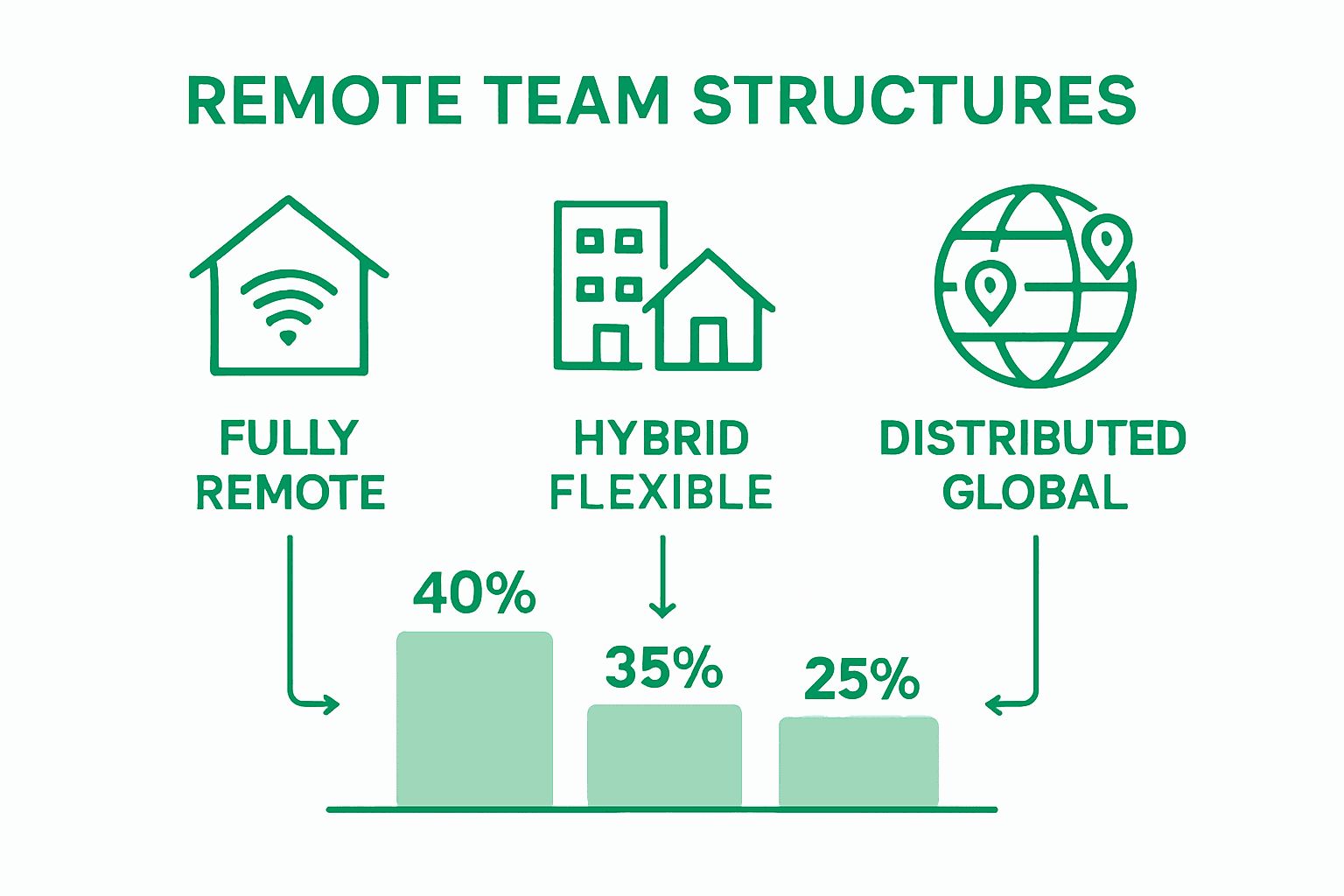
Three primary remote team models have emerged as industry standards:
Here’s a comparison of the primary remote team models to help clarify their structure and unique considerations:
| Remote Team Model | Team Distribution Style | Collaboration Complexity | Notable Challenges |
|---|---|---|---|
| Fully Remote | All members work remotely | High asynchronous needs | Time zones, social isolation |
| Hybrid Flexible | Mix of on-site and remote members | Balancing both modalities | Uneven access, communication gaps |
| Distributed Global | Spans multiple countries/regions | Cross-cultural coordination | Language, legal compliance |
- Fully Remote Model: Complete decentralization where all team members work from different locations
- Hybrid Flexible Model: Combination of in-office and remote work with flexible arrangements
- Distributed Global Model: Teams spread across multiple international locations with diverse cultural backgrounds
Critical roles in remote teams differ significantly from traditional office environments. Key positions include remote team coordinators who manage communication protocols, digital infrastructure managers responsible for technological integration, and asynchronous collaboration specialists who design workflow systems that accommodate different time zones and working styles.

Research from ArXiv highlights a critical paradox in remote team coordination: while intra-team collaboration can be streamlined, inter-team communication often becomes more challenging. Organizations must develop intentional strategies to maintain organizational cohesion and prevent communication silos that can emerge in distributed work environments.
Pro Tip: Communication Architecture: Develop a structured communication matrix that explicitly defines communication channels, response time expectations, and collaboration tools for each team interaction scenario to prevent miscommunication and enhance team performance.
Technology and Tools Powering Virtual Collaboration
Virtual collaboration technologies have transformed how organizations approach remote work, creating sophisticated ecosystems that bridge geographic and technological barriers. Optimizing business communication workflows requires strategic integration of digital tools that facilitate seamless interaction, information sharing, and project management across distributed teams.
The core technological infrastructure for virtual collaboration encompasses several critical components:
The following table summarizes essential virtual collaboration technologies and their business impact:
| Technology Type | Primary Function | Business Impact |
|---|---|---|
| Real-Time Communication | Meetings, instant decisions | Faster alignment, reduced delays |
| Cloud Project Management | Task tracking, resource planning | Enhanced accountability, visibility |
| Document Collaboration Tools | File sharing, version control | Improved teamwork, fewer errors |
| Cybersecurity Solutions | Data protection, compliance support | Risk reduction, regulatory safety |
- Communication Platforms: Real-time messaging, video conferencing, and asynchronous communication tools
- Project Management Software: Cloud-based platforms enabling task tracking, resource allocation, and progress monitoring
- Cloud Storage and Document Sharing: Centralized repositories for collaborative document creation and version control
- Cybersecurity Solutions: Advanced encryption and access management tools protecting distributed work environments
Research from ArXiv highlights how organizations have adapted collaborative technologies, particularly during the COVID-19 pandemic. Scrum practices, traditionally designed for in-person interactions, have been reimagined to support remote team dynamics. This evolution demands not just technological solutions, but intentional redesign of communication protocols and collaborative workflows.
Successful virtual collaboration relies on more than just technological tools. Organizations must develop comprehensive integration strategies that align technological infrastructure with team culture, communication norms, and performance expectations. This holistic approach ensures that digital tools enhance rather than complicate team interactions.
Pro Tip: Tool Convergence: Implement a centralized digital workspace that integrates multiple collaboration tools, reducing context switching and creating a unified communication ecosystem for your remote team.
Integration Strategies for Diverse Global Teams
Building cohesive global teams requires sophisticated approaches that transcend traditional organizational boundaries. Implementing business process outsourcing best practices demands a nuanced understanding of cross-cultural communication, technological integration, and strategic alignment.
Key strategies for effectively integrating diverse global teams include:
- Cultural Intelligence Training: Developing team members’ ability to navigate and respect different cultural communication styles
- Standardized Communication Protocols: Creating uniform communication guidelines that accommodate diverse working approaches
- Flexible Performance Management: Implementing evaluation systems that recognize diverse work rhythms and cultural productivity norms
- Technology-Enabled Collaboration: Utilizing platforms that support seamless interaction across geographic and linguistic boundaries
The concept of boundary spanning emerges as a critical mechanism for team integration. Boundary spanners are individuals who can effectively navigate and connect different organizational networks, bridging cultural and operational divides. These team members play a pivotal role in translating communication styles, aligning team objectives, and creating shared understanding across diverse global contexts.
Systemic Team Coaching provides a holistic framework for managing complex global team dynamics. This approach recognizes teams as interconnected systems influenced by broader organizational contexts, emphasizing collective leadership and stakeholder engagement. Successful integration requires moving beyond surface-level collaboration to develop deep, meaningful connections that transcend geographic and cultural differences.
Pro Tip: Cultural Bridge Building: Establish monthly cross-cultural knowledge-sharing sessions where team members from different regions present insights about their local work culture, communication styles, and professional perspectives.
Managing Risks, Compliance, and Costs in Virtual Workforces
Navigating the complex landscape of virtual workforce management requires a strategic approach to mitigating potential risks and maintaining operational efficiency. Implementing robust security protocols in IT outsourcing has become crucial for organizations seeking to protect their intellectual property and maintain regulatory compliance across distributed work environments.
Key risk management strategies for virtual workforces include:
- Comprehensive Compliance Frameworks: Developing detailed guidelines that address legal and regulatory requirements across different jurisdictions
- Advanced Cybersecurity Measures: Implementing multi-layered security protocols to protect sensitive information and prevent unauthorized access
- Regular Compliance Audits: Conducting systematic reviews to identify and address potential vulnerabilities in remote work infrastructure
- Cost Control Mechanisms: Establishing transparent pricing models and performance tracking systems to optimize virtual workforce investments
Remote staffing introduces unique challenges in managing organizational risks. Third-party vendor relationships require meticulous oversight, particularly when navigating complex international labor laws and regulatory environments. Organizations must develop adaptive control systems that balance technological integration with rigorous compliance standards.
The economic implications of virtual workforces extend beyond simple cost reduction. Successful implementation demands a holistic approach that considers long-term strategic value, including talent acquisition, operational flexibility, and potential productivity gains. This requires sophisticated risk assessment models that go beyond traditional cost-benefit analyses.
Pro Tip: Risk Mitigation Protocol: Create a comprehensive digital risk management dashboard that provides real-time insights into compliance status, security vulnerabilities, and cost efficiency across your virtual workforce ecosystem.
Unlock the Full Potential of Your Virtual Workforce Today
Managing a virtual workforce involves overcoming challenges like technology integration, cultural alignment, and risk management. If you are struggling with coordinating remote teams across time zones or ensuring seamless digital collaboration, NineArchs LLC offers tailored solutions designed to enhance productivity and reduce operational costs. Whether you need skilled virtual assistants, custom software development, or comprehensive business process outsourcing, we provide scalable and reliable support that empowers your distributed teams.
Key advantages include:
- Access to a global talent pool specialized in remote work dynamics
- Expert management of compliance and cybersecurity risks
- Integration of advanced communication and project management tools
Ready to transform your virtual workforce challenges into opportunities for growth and efficiency? Connect with us now to explore how our remote workforce solutions can align with your business goals. Discover more about our strategic consulting and outsourcing services on our contact page. Start streamlining your operations and boosting team performance by reaching out today.
Frequently Asked Questions
What is a virtual workforce?
A virtual workforce refers to a strategic approach where professionals work remotely, using digital technologies to collaborate and deliver results across different locations.
What are the common myths about virtual workforces?
Common myths include the belief that technology alone can drive productivity, that remote teams will automatically self-organize, and that virtual collaboration is the same as in-person interaction.
What are the primary models of remote teams?
The primary remote team models are Fully Remote, Hybrid Flexible, and Distributed Global, each differing in team distribution, collaboration complexity, and notable challenges.
How can organizations manage risks associated with virtual workforces?
Organizations can manage risks by implementing comprehensive compliance frameworks, advanced cybersecurity measures, conducting regular audits, and establishing cost control mechanisms.