



Over half of American technology firms report that inefficient workflows inflate their operational costs each year. Facing tighter margins and increased competition across North America, operations managers feel constant pressure to find smarter solutions that keep their teams both lean and effective. This guide offers practical strategies to help American companies uncover hidden cost drivers, prioritize automation, and make informed outsourcing decisions for sustainable cost reduction and improved efficiency.
Step 1: Assess Current Workflows and Cost Drivers
Understanding your organization’s current workflows represents the critical first stage in reducing operational costs through strategic outsourcing. This systematic analysis allows you to identify inefficiencies, pinpoint unnecessary expenses, and create a strategic roadmap for targeted improvements. By thoroughly examining business processes, you will uncover hidden cost drivers that significantly impact your operational expenses.
To begin your assessment, compile a comprehensive inventory of all existing workflows across different departments. Document each process step meticulously including time spent, resources utilized, personnel involved, and associated direct and indirect costs. Pay special attention to repetitive tasks that consume significant human capital and could potentially be streamlined or outsourced. Research indicates that organizations can achieve substantial efficiency gains by strategically mapping out their operational activities and understanding the intricate relationship between workflow complexity and financial performance.

Your initial assessment should generate quantitative data revealing potential optimization opportunities. Look for processes characterized by high labor intensity, manual data entry, recurring administrative tasks, or workflows that require specialized skills but do not represent core business competencies. These areas often represent prime candidates for outsourcing repetitive tasks that can dramatically reduce operational overhead while maintaining or improving overall productivity.
Pro Tip: Create a visual workflow diagram that color codes tasks based on complexity, time investment, and potential outsourcing feasibility to help stakeholders quickly understand optimization opportunities.
Step 2: Identify Outsourcing Opportunities for Non-Core Tasks
Identifying the right non-core tasks for outsourcing represents a strategic approach to optimizing your organization’s operational efficiency. This crucial step allows you to distinguish between tasks that are essential to your core business competencies and those that can be effectively delegated to external specialists. Understanding why certain functions are ideal for outsourcing will help you make informed decisions that drive cost reduction and performance improvement.
Research consistently demonstrates that non-core activities typically exhibit characteristics that make them prime candidates for outsourcing. Look for tasks that are repetitive, time-consuming, and do not directly contribute to your primary business value proposition. These often include administrative functions, data entry, customer support, accounting processes, and back-office operations. Pay close attention to workflows that require specialized skills but do not represent your organization’s unique competitive advantage. Outsourcing back office functions can dramatically reduce operational expenses while allowing your internal team to focus on strategic initiatives that drive growth and innovation.
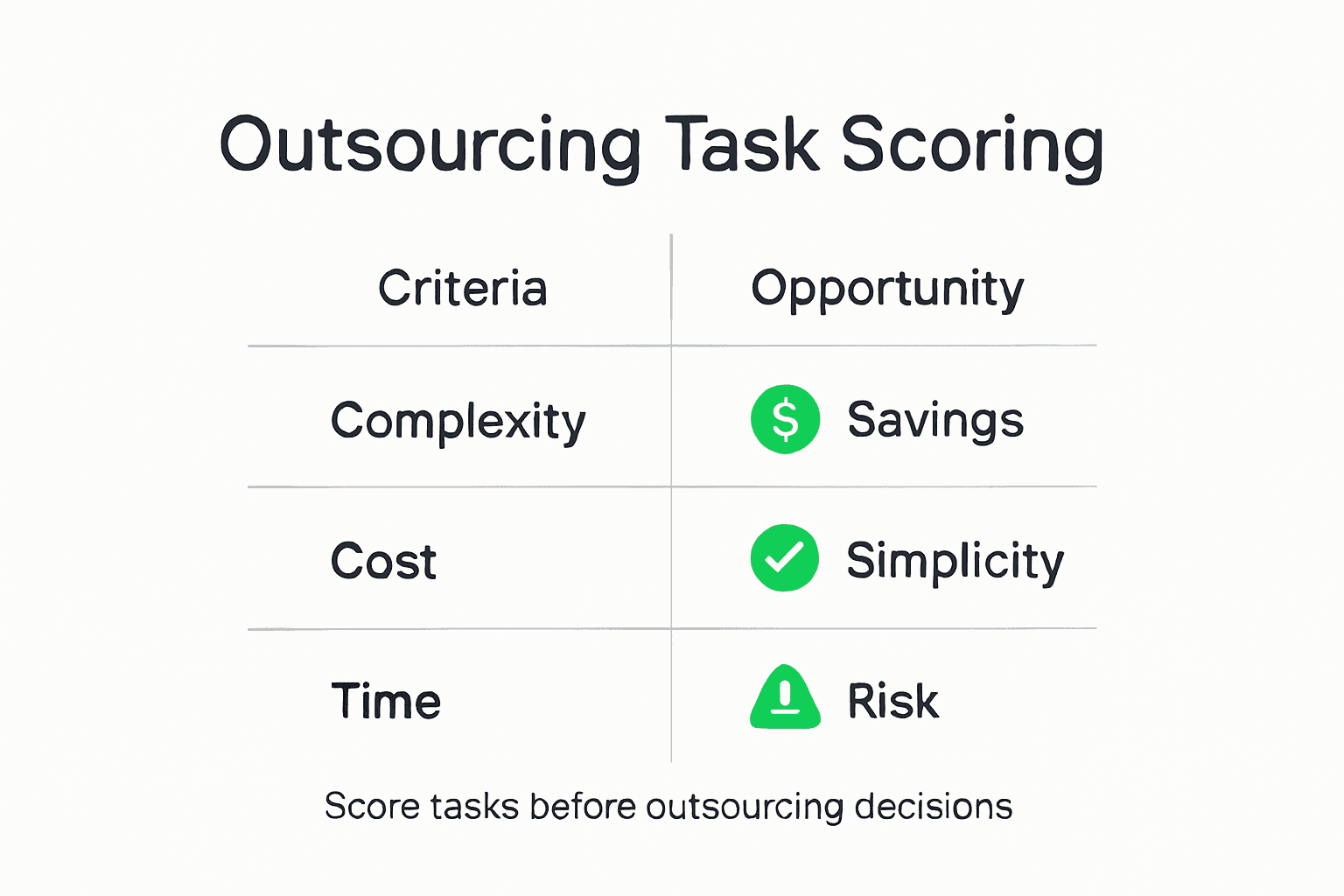
When evaluating potential outsourcing opportunities, conduct a comprehensive assessment that considers multiple factors. Analyze the complexity of each task, the skills required, current resource allocation, and potential cost savings. Create a detailed matrix that ranks non-core tasks based on their strategic importance, complexity, and potential for external optimization. This systematic approach will help you prioritize which functions are most suitable for outsourcing and can generate the most significant operational and financial benefits.
Pro Tip: Develop a scoring system that objectively evaluates each potential outsourcing task across dimensions such as cost, time investment, skill requirements, and strategic value to ensure data-driven decision making.
Step 3: Select and Integrate Suitable Outsourcing Partners
Selecting the right outsourcing partner is a strategic decision that can dramatically impact your organization’s operational efficiency and cost reduction goals. This critical step requires a comprehensive evaluation process that goes beyond simple price comparisons. Leveraging proven IT outsourcing strategies will help you identify partners who can truly transform your operational capabilities and deliver sustainable value.
Begin by developing a rigorous selection framework that assesses potential partners across multiple dimensions. Look beyond technical capabilities to evaluate strategic alignment, cultural compatibility, communication protocols, and proven track records. Key evaluation criteria should include industry expertise, technological infrastructure, scalability, quality certifications, financial stability, and demonstrated success in similar projects. Pay special attention to their ability to understand your specific business needs and adapt their services accordingly. Research indicates that successful outsourcing partnerships are built on more than just transactional relationships they require deep mutual understanding and aligned organizational objectives.
Once you have identified potential partners, initiate a thorough due diligence process that includes comprehensive background checks, reference verifications, and pilot project assessments. Conduct detailed interviews and site visits to gain deeper insights into their operational methodologies and team capabilities. Consider creating a structured onboarding process that ensures smooth integration and knowledge transfer from the very beginning of your collaboration. This approach will help mitigate potential risks and establish a strong foundation for a productive long-term partnership.
This table summarizes essential criteria for selecting an outsourcing partner:
| Evaluation Criterion | Importance to Success | What to Look For |
|---|---|---|
| Industry Expertise | High | Proven experience in your sector |
| Cultural Compatibility | Moderate | Similar values and work style |
| Scalability | High | Capacity to support growth |
| Communication | Critical | Clear and responsive interaction |
Pro Tip: Create a weighted scoring matrix that objectively ranks potential outsourcing partners based on predefined criteria, allowing for a systematic and data-driven selection process.
Step 4: Implement Process Automation and Technology Solutions
Implementing process automation represents a transformative strategy for reducing operational costs and enhancing organizational efficiency. This critical step involves strategically identifying and deploying technology solutions that can streamline repetitive tasks and optimize workflow performance. Understanding the fundamentals of business automation will help you make informed decisions about which technologies can deliver the most significant operational improvements.
Robotic Process Automation (RPA) emerges as a powerful technology for systematically transforming manual workflows into intelligent automated processes. Begin by conducting a comprehensive audit of your current operational tasks to identify repetitive rule-based activities that consume significant human resources. Focus on processes involving data entry, transaction processing, report generation, and administrative functions that follow predictable patterns. Prioritize automation opportunities that offer the highest potential for reducing human error, increasing processing speed, and freeing your team to focus on higher value strategic work. Research confirms that successful RPA implementation requires a strategic approach that carefully maps existing workflows and integrates technological solutions seamlessly into your current operational ecosystem.
To ensure successful implementation, develop a phased approach that allows for gradual technology integration and continuous performance monitoring. Start with pilot projects in low-risk departments to validate the effectiveness of your automation strategy before scaling across the organization. Establish clear performance metrics that track efficiency gains, cost reductions, and quality improvements resulting from automation initiatives. Invest time in training your team to work alongside automated systems, emphasizing the complementary nature of human expertise and technological solutions. Explore comprehensive business task automation strategies that align technological capabilities with your specific organizational objectives.
Pro Tip: Create a detailed automation roadmap that prioritizes processes based on complexity, potential cost savings, and strategic impact to guide your technology implementation efforts.
Here’s a quick reference comparing automation and outsourcing for improving workflow efficiency:
| Approach | Main Benefit | Ideal Use Case | Key Challenge |
|---|---|---|---|
| Outsourcing | Access to expert talent | Non-core, repetitive tasks | Maintaining quality control |
| Automation | Reduced error and cost | Rule-based, high-volume processes | Upfront technology cost |
Step 5: Monitor, Optimize, and Validate Cost Reductions
Monitoring and validating cost reductions represents the critical final phase of your strategic outsourcing initiative. This systematic approach ensures that your technological and operational investments translate into tangible financial benefits. Developing robust strategies for tracking outsourced staff performance will help you maintain accountability and continuously improve operational efficiency.
Establish a comprehensive performance tracking framework that goes beyond traditional cost metrics. Develop a multidimensional dashboard that captures quantitative data such as direct cost savings, productivity improvements, and processing times alongside qualitative metrics like service quality, error rates, and team collaboration effectiveness. Implement regular performance reviews that compare actual outcomes against initial baseline measurements and projected cost reduction targets. Your monitoring process should include periodic detailed assessments that analyze not just financial impacts but also operational improvements resulting from your outsourcing and automation strategies.
Create a dynamic optimization cycle that allows for continuous refinement of your outsourcing approach. Conduct quarterly strategic reviews that evaluate the performance of outsourced teams and automated processes, identifying potential areas for further improvement or cost reduction. Develop a feedback mechanism that captures insights from both internal teams and external partners, ensuring a collaborative approach to ongoing optimization. Be prepared to make data driven adjustments to your outsourcing strategy, whether that means reallocating resources, modifying process workflows, or exploring alternative technological solutions that can further enhance operational efficiency.
Pro Tip: Implement a quarterly performance scorecard that objectively tracks key performance indicators across financial, operational, and strategic dimensions to maintain a holistic view of your outsourcing effectiveness.
Unlock Cost Savings and Efficiency with Expert Outsourcing Solutions
Reducing operational costs by smartly outsourcing non-core tasks requires a partner who understands your unique workflows and delivers scalable, reliable results. If you are struggling with repetitive tasks draining your team’s time or seeking ways to automate and optimize without sacrificing quality, our tailored outsourcing and technology services can transform your operations. From virtual assistance to business process outsourcing and custom software development, NineArchs LLC empowers your business to focus on core growth while slashing overhead expenses.
Why Choose Us:
- Professional expertise aligned with your industry needs
- Scalable and cost-efficient remote workforce solutions
- Seamless onboarding and integration for smooth knowledge transfer
- Innovative automation balancing human talent and technology
Take control of your operational costs today by partnering with a trusted outsourcing provider experienced in driving measurable savings and enhanced productivity. Learn how our strategic consulting and skilled remote teams can help you implement the cost reduction tactics outlined in “How to Reduce Operational Costs with Smart Outsourcing.” Connect with our specialists now to explore tailored solutions designed to streamline your workflows and accelerate growth. Visit NineArchs Contact and start transforming your business efficiency immediately.
Frequently Asked Questions
What are the first steps in reducing operational costs through smart outsourcing?
To begin reducing operational costs with smart outsourcing, assess your current workflows to identify inefficiencies and cost drivers. Compile a detailed inventory of existing processes, focusing on repetitive tasks that could be streamlined or outsourced within 30–60 days.
How can I determine which tasks are suitable for outsourcing?
Identify non-core tasks that are repetitive, time-consuming, and do not contribute directly to your business’s core competencies. Create a matrix that ranks these tasks based on complexity and potential cost savings to prioritize outsourcing opportunities effectively.
What criteria should I consider when selecting an outsourcing partner?
When selecting an outsourcing partner, evaluate them based on industry expertise, cultural compatibility, and scalability. Develop a weighted scoring system to objectively rank potential partners across these criteria, ensuring a better fit for your operational needs.
How can I implement process automation alongside outsourcing?
To implement process automation effectively, conduct an audit of current tasks to identify rule-based activities suitable for automation. Focus on deploying technology solutions that streamline these tasks, aiming for a phased approach to integrate automation gradually into your existing workflows.
How do I monitor cost reductions after outsourcing?
Monitoring cost reductions involves establishing a comprehensive performance tracking framework that captures both quantitative and qualitative metrics. Set up regular performance reviews to assess baseline measurements against actual outcomes and optimize your strategy accordingly.
What should I include in my automated process roadmap?
Your automation roadmap should prioritize processes based on complexity, potential cost savings, and strategic impact. Clearly outline stages for technology implementation and include performance metrics to guide your efforts, aiming to reduce costs by a substantial margin.
Recommended
- Complete Guide to Outsourcing Business Operations | NineArchs
- Why Outsource Non-Core Functions: Complete Guide | NineArchs
- Outsourcing Non-Essential Tasks: Complete Guide | NineArchs
- How to Outsource Back Office for Business Efficiency | NineArchs
- 7 fördelar med blandade utbildningsformer för företag – DISTANSUTBILDNING