



Most American companies are discovering that manual tasks drain more time and resources than expected. With nearly 60 percent of organizations reporting productivity gains after automating key operations, the interest in automation has never been higher. As businesses of every size look to cut costs and stay competitive, understanding modern business task automation opens the door to streamlined workflows, fewer errors, and more strategic use of talent.
Defining Business Task Automation and Scope
Business task automation transforms how organizations manage critical operational workflows by strategically leveraging technology to streamline complex processes. At its core, business task automation represents a systematic approach to reducing manual labor, minimizing human error, and optimizing organizational efficiency through intelligent technological solutions.
The fundamental scope of business task automation extends far beyond simple data processing. Modern automation strategies integrate sophisticated workflows that enable knowledge workers to focus on high-value strategic activities while technology handles repetitive, rule-based tasks. By implementing intelligent systems, companies can dramatically reduce operational bottlenecks and create more responsive, agile business environments.
Key characteristics of effective business task automation include:
- Comprehensive process mapping and analysis
- Identification of repetitive, rules-based tasks
- Selection of appropriate automation technologies
- Continuous performance monitoring and optimization
- Seamless integration with existing technological infrastructure
Businesses implementing task automation strategies typically experience significant performance improvements across multiple dimensions. These benefits range from reduced operational costs and increased productivity to enhanced accuracy and faster response times. By systematically breaking down complex processes into manageable, automatable components, organizations can unlock substantial competitive advantages and create more scalable, resilient operational models.

Popular Types of Task Automation Solutions
Task automation solutions represent a diverse ecosystem of technological tools designed to transform how businesses manage repetitive and complex operational workflows. Workflow automation platforms have emerged as critical technological assets, enabling organizations to streamline processes, reduce manual intervention, and significantly enhance operational efficiency across multiple business domains.
The landscape of task automation solutions encompasses several sophisticated categories. Outsourcing solutions for business growth play a pivotal role in helping companies leverage external technologies and expertise to automate critical business functions. These solutions range from simple task management tools to complex artificial intelligence-driven platforms that can intelligently route, schedule, and execute organizational tasks.
Key categories of task automation solutions include:
- Robotic Process Automation (RPA) platforms
- Workflow management systems
- Artificial Intelligence (AI) powered task schedulers
- Enterprise integration tools
- Cloud-based collaboration and automation suites
Modern task automation solutions go beyond basic process replication. Advanced platforms now incorporate machine learning algorithms that can adapt, optimize, and predict workflow patterns. By analyzing historical performance data, these intelligent systems continuously refine task execution strategies, enabling businesses to achieve unprecedented levels of operational precision and efficiency. The result is a transformative approach to work that empowers teams to focus on strategic, high-value activities while technology handles routine operational requirements.
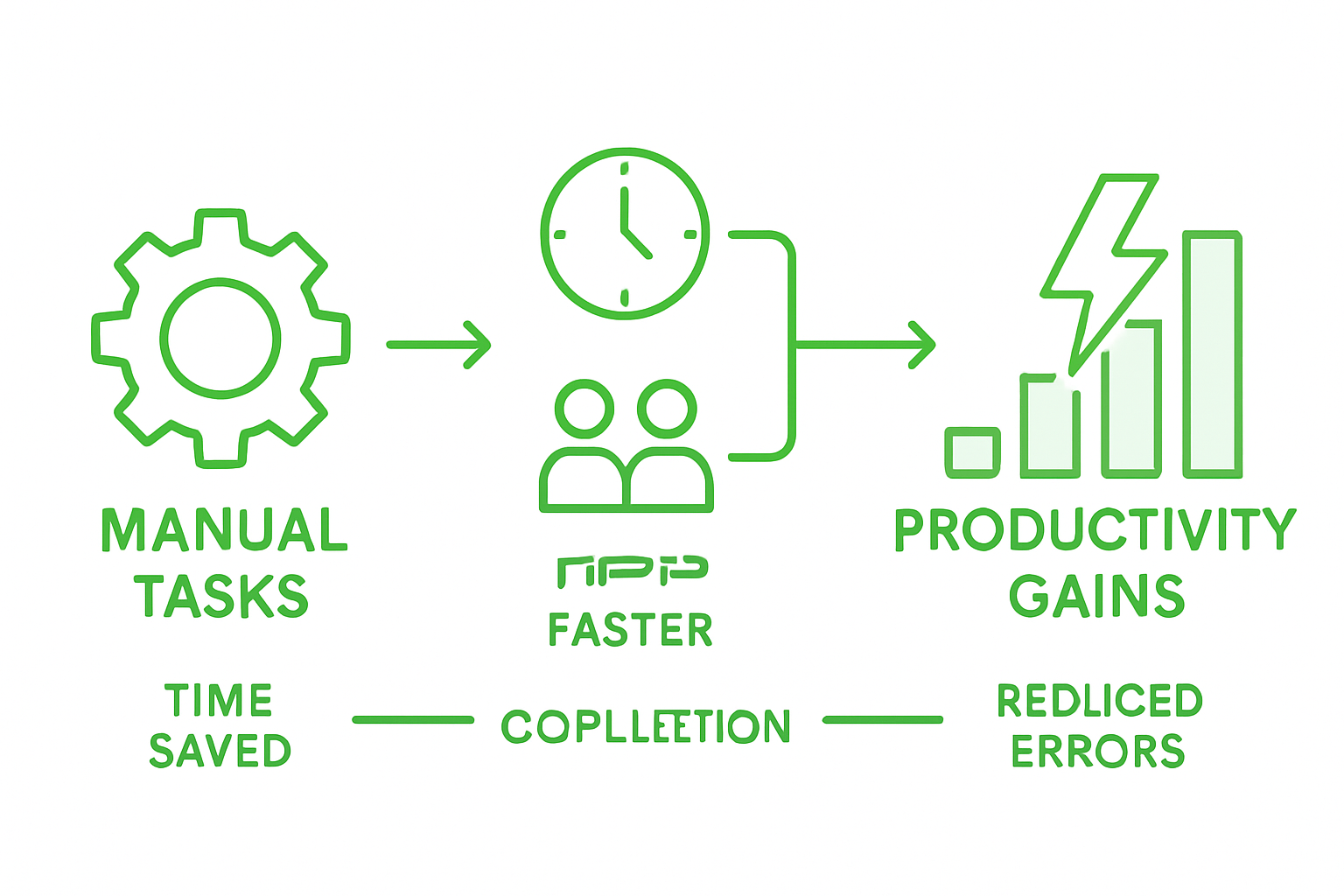
How Business Automation Systems Operate
Business automation systems function through sophisticated technological architectures designed to transform complex operational processes into streamlined, intelligent workflows. Automation technologies leverage advanced algorithms and rule-based frameworks to capture, analyze, and execute business tasks with minimal human intervention, creating a dynamic ecosystem of technological efficiency.
At the core of these systems are intricate mechanisms that enable seamless task execution. Business process documentation strategies play a critical role in mapping out precise operational workflows, allowing automation platforms to understand and replicate complex organizational processes. These systems typically operate through several interconnected stages:
Core Operational Mechanisms:
- Task identification and mapping
- Rule configuration and logic development
- Automatic trigger and execution protocols
- Real-time performance monitoring
- Continuous learning and optimization
Modern business automation systems go beyond simple task replication. They incorporate advanced machine learning and artificial intelligence capabilities that enable dynamic adaptation to changing business environments. By analyzing historical performance data, these intelligent systems can predict potential bottlenecks, optimize workflow sequences, and recommend strategic improvements. The result is a transformative approach to organizational efficiency that empowers businesses to redirect human talent toward more strategic, creative, and value-generating activities while technology handles routine operational requirements.
Key Benefits and Business Use Cases
Business task automation delivers transformative advantages that extend far beyond simple operational efficiency. Organizations implementing strategic automation technologies can unlock substantial performance improvements across multiple business dimensions, fundamentally reshaping how work gets accomplished in modern enterprises.
The spectrum of benefits spans critical organizational capabilities. Key benefits of business process outsourcing illuminate how automation can dramatically enhance operational performance. Businesses typically experience profound improvements through:
Primary Automation Benefits:
- Dramatic reduction in human error rates
- Significant productivity increases
- Enhanced operational scalability
- Faster task completion times
- Improved resource allocation
- Consistent process standardization
- Real-time performance tracking
Unique business use cases demonstrate the versatility of automation technologies across different sectors. Customer service departments leverage intelligent automation to manage ticket routing and initial customer interactions. Finance teams utilize automated systems for invoice processing, reconciliation, and complex reporting tasks. Human resources departments streamline recruitment, onboarding, and employee management processes through intelligent workflow systems. Manufacturing organizations implement automation for inventory tracking, quality control, and supply chain management, creating more responsive and efficient operational environments.
Pitfalls, Costs, and Implementation Challenges
Business automation initiatives require strategic planning and substantial investment, presenting organizations with complex technological and operational challenges that extend far beyond initial implementation. While the potential benefits are significant, businesses must navigate a nuanced landscape of technical complexity, financial considerations, and organizational readiness to successfully adopt automation technologies.
The financial dimensions of automation represent a critical implementation consideration. Support tasks for greater business efficiency highlight the importance of carefully assessing both direct and indirect costs associated with automation deployments. Typical implementation expenses include:
Key Implementation Cost Categories:
- Initial technology infrastructure investments
- Software licensing and integration expenses
- Employee training and change management
- Ongoing maintenance and optimization
- Potential productivity disruption during transition
- Specialized technical talent recruitment
Technological implementation challenges frequently emerge from complex integration requirements and organizational resistance. Many businesses struggle with legacy system compatibility, data migration complexities, and the need for sophisticated workflow redesign. Successful automation strategies demand robust change management protocols, comprehensive employee education, and a phased approach that allows gradual technological adaptation. Advanced organizations recognize that automation is not a one time project, but a continuous process of technological evolution and organizational learning.
Unlock Seamless Business Task Automation with Expert Outsourcing Support
Struggling with the complexity and costs of implementing business task automation solutions While this article highlights the power of reducing human error and optimizing workflows through technology you may face challenges like costly infrastructure investment and operational disruption. At NineArchs LLC we specialize in providing flexible outsourcing services that align perfectly with your automation goals. Our expertise in business process outsourcing and tailored remote workforce solutions ensures you can scale your operations efficiently without overwhelming your internal teams.

Experience improved productivity and streamlined operations by partnering with a team that understands the technical and strategic aspects of automation. Don’t let implementation hurdles slow your growth Take the next step now and connect with us at NineArchs Contact to discover how our reliable and scalable solutions can support your journey toward true operational excellence.
Frequently Asked Questions
What is business task automation?
Business task automation refers to using technology to streamline operational workflows, reduce manual labor, and minimize human error, allowing organizations to optimize efficiency and focus on more strategic activities.
What are the key benefits of implementing business task automation?
Implementing business task automation can lead to reduced human error, increased productivity, faster task completion, improved resource allocation, and enhanced operational scalability.
What types of solutions are available for business task automation?
Various solutions exist, including Robotic Process Automation (RPA) platforms, workflow management systems, AI-powered task schedulers, and cloud-based collaboration tools, all designed to automate repetitive and complex tasks efficiently.
What challenges might companies face when implementing automation?
Companies may encounter challenges such as high initial costs, integration issues with legacy systems, employee resistance to change, and the need for ongoing training and optimization during the automation process.