



Managing complex regulations across borders can feel overwhelming when outsourcing key business functions. For compliance officers at growing technology firms, every partnership with an external provider introduces fresh legal and ethical challenges that demand vigilance. Clear, proactive compliance support is the lever that helps organizations transform daunting requirements into structured, secure processes while protecting both reputation and operational agility. This overview highlights practical strategies and proven support models to help you boost regulatory confidence as your business expands globally.
Defining Compliance Support in Outsourcing
Compliance support in outsourcing represents a strategic framework designed to ensure third-party service providers meet rigorous legal, regulatory, and ethical standards across global business operations. At its core, this approach transforms complex regulatory requirements into actionable guidelines that protect organizational integrity and mitigate potential risks.
Effective compliance support encompasses several critical dimensions that extend far beyond simple rule-following. Organizations must develop comprehensive strategies that address security protocols in IT outsourcing while maintaining transparency and accountability. This involves meticulously mapping regulatory landscapes across different jurisdictions, understanding industry-specific requirements, and establishing robust monitoring mechanisms that proactively identify and address potential compliance gaps.
The fundamental components of compliance support in outsourcing include:
- Comprehensive risk assessment
- Clear contractual definitions of compliance expectations
- Ongoing regulatory monitoring
- Systematic documentation and reporting
- Implementation of standardized compliance verification processes
Companies engaging in global outsourcing must recognize that regulatory compliance is not a static destination but a dynamic journey requiring continuous adaptation. The most successful organizations develop flexible frameworks that can quickly respond to evolving legal standards while maintaining operational efficiency and protecting critical business interests.
Pro tip: Develop a centralized compliance dashboard that tracks regulatory changes across different jurisdictions in real time, enabling proactive risk management and swift strategic adjustments.
Types of Compliance Support Services
Compliance support services represent a sophisticated ecosystem of professional interventions designed to help organizations navigate complex regulatory requirements across multiple operational domains. These services go beyond traditional risk management, offering targeted solutions that transform regulatory challenges into strategic opportunities for businesses seeking global expansion and operational excellence.
The comprehensive landscape of compliance support services typically encompasses several critical categories:
- Policy Development: Crafting robust organizational guidelines that align with current regulatory standards
- Risk Assessment: Conducting detailed evaluations of potential regulatory vulnerabilities
- Regulatory Monitoring: Tracking and interpreting evolving legal requirements across different jurisdictions
- Training and Education: Implementing comprehensive IT outsourcing checklists to ensure organizational readiness
- Audit and Verification: Systematically reviewing compliance mechanisms and identifying improvement areas
Within financial and technology sectors, compliance support services often specialize in specific domains such as data protection, financial reporting, cybersecurity, and ethical standards. Organizations can engage these services through various models including full-scale outsourcing, partial consulting, or hybrid approaches that blend internal expertise with external professional guidance. This flexibility allows businesses to customize compliance strategies that precisely match their unique operational requirements and risk profiles.

The most advanced compliance support services now integrate cutting-edge technologies like artificial intelligence and machine learning to provide real-time regulatory insights. These innovative approaches enable proactive risk management, transforming compliance from a reactive obligation into a strategic competitive advantage that enhances organizational resilience and stakeholder confidence.
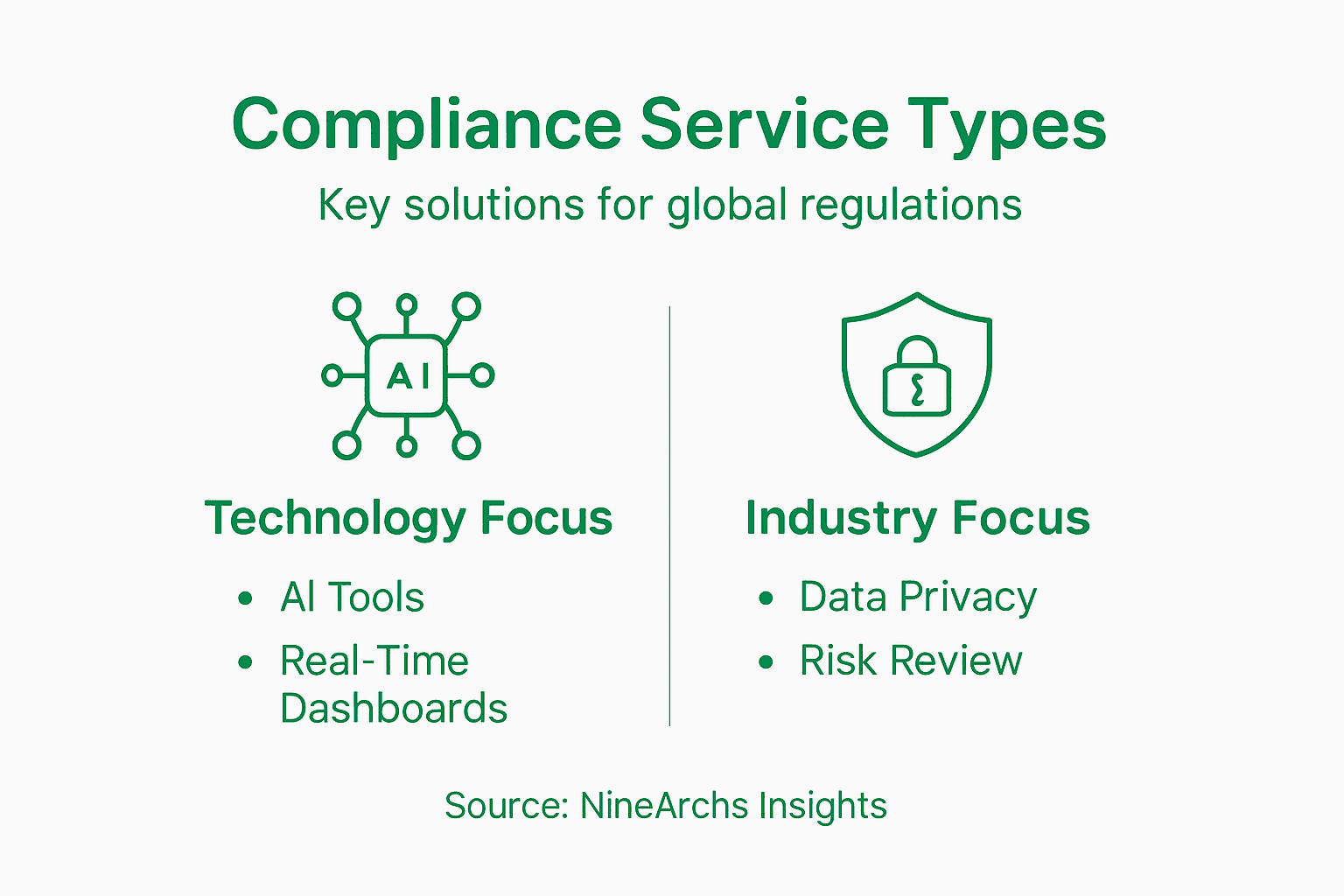
Here is a comparison of compliance support models and their business impact:
| Compliance Model | Description | Typical Benefits |
|---|---|---|
| Full Outsourcing | External provider manages all compliance tasks | Lower internal workload, expert access |
| Hybrid (Internal + External) | Mix of in-house and consultant support | Flexible expertise, tailored solutions |
| Internal Only | All compliance handled by organization | Greater control, direct oversight |
Pro tip: Conduct a quarterly comprehensive review of your compliance support strategy, mapping emerging regulatory trends against your current operational frameworks to maintain continuous adaptability.
How Compliance Support Streamlines Operations
Operational streamlining through compliance support represents a strategic approach that transforms regulatory requirements from potential obstacles into powerful mechanisms for organizational efficiency. By establishing clear, structured frameworks that integrate regulatory adherence into core business processes, companies can dramatically reduce operational friction, minimize risk, and create more agile, responsive organizational structures.
The key mechanisms through which compliance support enhances operational efficiency include:
- Standardizing procedural workflows
- Reducing redundant administrative tasks
- Automating regulatory monitoring and reporting
- Documenting business processes with precision and clarity
- Creating transparent communication channels across organizational units
Modern compliance support goes beyond traditional risk management by leveraging advanced technologies and data analytics. Intelligent compliance frameworks utilize machine learning algorithms to predict potential regulatory challenges, enabling proactive adjustments that prevent disruptions before they occur. This predictive approach allows organizations to maintain continuous operational momentum while simultaneously meeting increasingly complex global regulatory requirements.
By integrating compliance directly into operational DNA, businesses can achieve a remarkable transformation. Compliance shifts from being a costly overhead function to becoming a strategic enabler that drives organizational performance, builds stakeholder confidence, and creates competitive advantages through superior risk management and operational intelligence.
Pro tip: Develop a cross-functional compliance task force that meets quarterly to review and optimize your organization’s regulatory adaptation strategies.
Legal and Regulatory Frameworks Worldwide
Global regulatory frameworks represent a complex and dynamic landscape that requires sophisticated understanding and strategic navigation by organizations operating across international boundaries. These intricate systems of legal requirements create a multifaceted environment where compliance demands continuous adaptation, precision, and proactive management to ensure organizational integrity and operational success.
The primary regulatory frameworks span several critical domains:
- Data Protection: Regulations like European Union’s GDPR
- Financial Compliance: Securities and banking regulations
- Cybersecurity Standards: International information security protocols
- Business Process Operational Guidelines: Standardized compliance requirements
- Cross-Border Transaction Rules: International trade and commerce regulations
Each geographic region presents unique regulatory challenges, with North American, European, Asian, and emerging market jurisdictions developing distinctly nuanced approaches to legal compliance. The European Union, for instance, has established particularly rigorous frameworks like the General Data Protection Regulation (GDPR) that set global benchmarks for data privacy and protection. These regulations not only dictate operational requirements but also impose significant financial penalties for non-compliance, creating substantial incentives for organizations to develop robust, adaptive compliance strategies.
This summary shows how major global regions differ in their regulatory approach:
| Region | Regulatory Focus | Notable Characteristics |
|---|---|---|
| North America | Financial compliance, data privacy | Strong industry self-regulation |
| Europe | Data protection, GDPR, ethics | Strict penalties, unified standards |
| Asia | Cybersecurity, operational risk | Rapid regulation change, localization |
| Emerging Markets | Cross-border trade, business licensing | Diverse requirements, evolving frameworks |
Advanced organizations are increasingly viewing these complex regulatory environments as opportunities for strategic differentiation rather than mere administrative burdens. By developing comprehensive, technology-enabled compliance frameworks that anticipate and rapidly respond to evolving legal requirements, businesses can transform regulatory complexity into a competitive advantage that demonstrates organizational sophistication and builds stakeholder trust.
Pro tip: Create a dedicated cross-functional compliance intelligence team that continuously monitors regulatory changes across multiple jurisdictions and develops agile adaptation strategies.
Roles and Responsibilities in Compliance Support
Compliance support represents a multilayered organizational ecosystem where strategic responsibilities are distributed across different hierarchical levels, creating a comprehensive and dynamic approach to regulatory management. Each role contributes uniquely to establishing, maintaining, and evolving an organization’s compliance infrastructure, transforming regulatory requirements from potential obstacles into strategic opportunities.
The key roles within compliance support typically include:
- Executive Leadership: Setting overall compliance strategy and risk appetite
- Compliance Officers: Designing and implementing specific regulatory frameworks
- Business Process Managers: Integrating compliance requirements into operational workflows
- Legal Department: Interpreting complex regulatory guidelines
- IT Security Teams: Implementing technical safeguards and monitoring systems
- Internal Audit Teams: Conducting independent assessments and validation
Modern compliance support frameworks demand unprecedented collaboration and communication across these roles. Successful organizations create cross-functional teams that break traditional organizational silos, enabling real-time information sharing and rapid adaptive responses to emerging regulatory challenges. This approach transforms compliance from a siloed administrative function into a dynamic, intelligence-driven organizational capability that generates strategic insights and competitive advantages.
Technology now plays a critical role in defining and executing compliance responsibilities. Advanced analytics, artificial intelligence, and machine learning enable more sophisticated risk assessment, predictive monitoring, and automated reporting mechanisms. These technological tools empower compliance professionals to move beyond traditional reactive approaches, allowing them to anticipate potential regulatory risks and develop proactive mitigation strategies that protect organizational interests.
Pro tip: Implement a quarterly cross-functional compliance rotation program that allows team members to gain broader perspectives and develop comprehensive regulatory understanding.
Risks, Costs, and Common Outsourcing Pitfalls
Outsourcing risks represent complex challenges that can significantly impact organizational performance, financial stability, and strategic objectives. These potential pitfalls extend far beyond simple operational disruptions, encompassing multifaceted challenges that require sophisticated risk management approaches and proactive strategic planning.
The most prevalent risks in outsourcing relationships include:
- Governance Failures: Inadequate oversight and control mechanisms
- Communication Breakdowns: Misaligned expectations and unclear communication channels
- Unclear Outsourcing Challenges: Poorly defined contractual terms and performance expectations
- Compliance Vulnerabilities: Regulatory and legal non-adherence risks
- Data Security Threats: Potential breaches and confidentiality compromises
- Hidden Cost Escalations: Unexpected financial burdens beyond initial projections
Financial implications of these risks can be substantial, often extending beyond direct monetary losses to include reputational damage, operational inefficiencies, and potential long-term strategic constraints. Organizations that fail to implement comprehensive risk mitigation strategies may face exponential costs associated with contract renegotiations, legal disputes, and emergency remediation efforts. The most successful outsourcing relationships are built on robust governance frameworks that anticipate and proactively address potential vulnerabilities before they escalate into critical problems.
Technology and advanced analytics now play a crucial role in risk management, enabling organizations to develop more sophisticated monitoring and predictive assessment tools. Machine learning algorithms and real-time compliance tracking systems allow businesses to identify potential risks early, implement adaptive strategies, and maintain greater control over outsourced functions. This technological approach transforms risk management from a reactive discipline to a proactive, intelligence-driven organizational capability.
Pro tip: Develop a comprehensive risk assessment matrix that includes quantitative scoring mechanisms for potential outsourcing vulnerabilities, updating it quarterly to reflect evolving organizational and technological landscapes.
Strengthen Your Compliance Support with NineArchs Outsourcing Solutions
Navigating the complex world of global regulatory frameworks and compliance support calls for expert partners who understand the stakes. This article highlights the critical need for comprehensive risk assessment, ongoing regulatory monitoring, and clear operational integration to avoid compliance pitfalls and costly risks. Organizations aiming to transform compliance into a strategic advantage must address challenges like data security threats, evolving legal standards, and governance failures with scalable, reliable solutions.
NineArchs LLC offers tailored outsourcing services designed to streamline your compliance efforts while boosting operational efficiency. Our expertise in business process outsourcing and custom software development can help you standardize workflows and automate compliance monitoring. With a remote workforce skilled in knowledge outsourcing and business process documentation, you gain the flexibility and innovation needed to meet today’s regulatory demands confidently.
Elevate your compliance support strategy and mitigate hidden outsourcing risks by partnering with professionals focused on your growth and security. Learn how our solutions can give you peace of mind by visiting our contact page.
Looking to align compliance with business agility? See how our seven-step IT outsourcing checklist can guide your outsourcing decisions with precision and confidence.
Ready to lead in global regulatory success? Connect with NineArchs today and secure your business future with expert outsourcing support.
Take action now to transform compliance challenges into growth opportunities. Reach out via NineArchs Contact and discover how our customizable remote workforce solutions empower your organization to stay ahead in a complex regulatory world.
Frequently Asked Questions
What is compliance support in outsourcing?
Compliance support in outsourcing is a strategic framework that ensures third-party service providers adhere to legal, regulatory, and ethical standards, transforming complex regulations into actionable guidelines that protect organizational integrity.
Why is compliance support important for global businesses?
Compliance support is crucial for global businesses as it helps them navigate complex regulatory environments, mitigating risks associated with non-compliance and enhancing operational efficiency while fostering stakeholder trust.
What are the main components of compliance support services?
The main components include comprehensive risk assessment, clear contractual definitions of compliance expectations, ongoing regulatory monitoring, systematic documentation and reporting, and standardized compliance verification processes.
How can compliance support streamline operations?
Compliance support streamlines operations by standardizing workflows, reducing redundant tasks, automating regulatory monitoring, and ensuring clear communication across organizational units, ultimately transforming compliance into a strategic enabler of performance.