

Over 55 percent of American companies have adopted hybrid workforce models, reshaping the global approach to flexible work. For operational managers in mid-sized tech firms, meeting modern expectations while controlling costs presents both opportunity and complexity. This article explores how forward-thinking leaders can design and manage hybrid systems that support efficiency, align with diverse international standards, and help balance the unique demands of on-site and remote talent.
Defining Hybrid Workforce Models Today
A hybrid workforce model represents a sophisticated organizational approach that combines multiple work arrangements to optimize operational flexibility and employee productivity. By integrating remote, in-office, and distributed work strategies, businesses can create adaptive frameworks that respond dynamically to contemporary workplace challenges.
Research indicates hybrid work models are not simply about physical location, but about creating systemic work configurations that balance organizational goals with individual employee preferences. The remote workforce strategies emerging from recent global shifts demonstrate a nuanced understanding of workplace dynamics. These models typically incorporate three primary configurations:
- Flexible scheduling with location autonomy
- Distributed team collaboration protocols
- Technology-enabled communication infrastructure
Cross-cultural studies reveal that employees value time and localization flexibility above traditional workplace structures. Modern hybrid models recognize that productivity is not tied to physical presence but to strategic workflow design, performance tracking, and robust communication technologies. Organizations adopting these approaches can potentially increase operational efficiency while supporting individual work preferences and maintaining high performance standards.
Pro tip: Develop clear hybrid work guidelines that outline expectations, communication protocols, and performance metrics to ensure smooth organizational transitions.
Key Variations and Scheduling Structures
Hybrid workforce models encompass multiple scheduling strategies designed to maximize organizational flexibility and individual employee productivity. These structures range from highly regimented approaches to completely fluid work arrangements, each tailored to specific operational requirements and team dynamics.
Research reveals several primary hybrid scheduling configurations that organizations can implement:
- Fixed Hybrid Model
- Predetermined office and remote days
- Consistent weekly schedule
- Clear expectations for team coordination
- Flexible Hybrid Model
- Employee-driven location choices
- Adaptable work hours
- Performance-based accountability
- Role-Based Hybrid Model
- Schedule determined by job function
- Different requirements for various departments
- Customized workspace allocation
The understanding of IT outsourcing trends demonstrates that successful hybrid models prioritize strategic workflow design over rigid location mandates. Organizations must balance predictability with individual autonomy, recognizing that productivity stems from well-designed communication protocols and clear performance expectations.

Here’s a concise comparison of common hybrid workforce scheduling models and their distinct strengths:
| Scheduling Model | Main Focus | Best For | Typical Drawback |
|---|---|---|---|
| Fixed Hybrid | Predictable workflows | Large teams needing structure | Less individual flexibility |
| Flexible Hybrid | Employee autonomy | Innovation-focused organizations | Coordination challenges |
| Role-Based Hybrid | Job-specific needs | Diverse functions or specialties | Complexity in management |
Cross-functional research indicates that effective hybrid scheduling requires continuous refinement. Companies should regularly assess team performance, employee satisfaction, and operational efficiency to optimize their chosen model. Technology infrastructure, robust communication platforms, and adaptive management practices are critical components in supporting these dynamic workforce configurations.
Pro tip: Implement quarterly review sessions to assess and recalibrate your hybrid work model, ensuring alignment with evolving organizational and employee needs.
Benefits and Challenges in Implementation
Implementing hybrid workforce models requires a strategic approach that carefully balances organizational objectives with individual employee needs. These models present a complex landscape of potential advantages and potential obstacles that demand nuanced management and thoughtful implementation strategies.
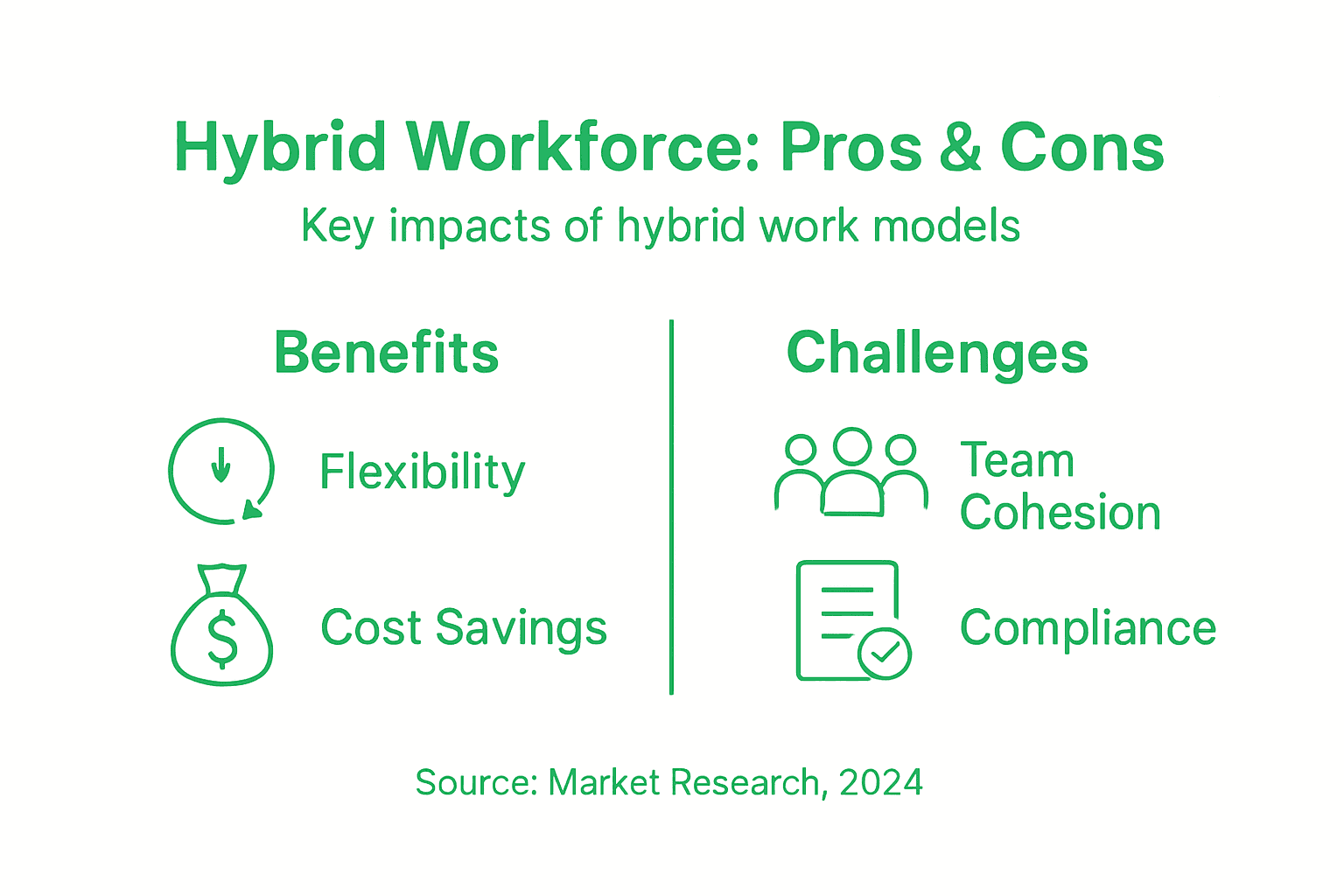
Key benefits of hybrid workforce models include:
- Increased Employee Flexibility
- Reduced commute time
- Enhanced work-life balance
- Personalized productivity environments
- Organizational Advantages
- Lower operational costs
- Expanded talent recruitment pools
- Improved employee retention rates
However, organizations must also navigate significant challenges. Remote workforce strategies reveal potential pitfalls such as communication disruptions, team cohesion difficulties, and potential employee isolation. Successful implementation requires leadership to develop robust communication protocols, technology infrastructure, and outcome-based performance measurement systems.
Research indicates that effective hybrid models prioritize employee engagement and trust-building mechanisms. Leaders must focus on creating inclusive environments that support both remote and in-office team members, emphasizing clear expectations, regular check-ins, and adaptive management approaches. Continuous learning and flexible policy adjustments are critical to maintaining productivity and employee satisfaction across distributed work environments.
Pro tip: Develop comprehensive communication guidelines and invest in collaboration technologies that create seamless interactions between remote and in-office team members.
Integrating Outsourcing and Remote Talent
The integration of outsourcing and remote talent represents a sophisticated strategic approach to workforce management that transcends traditional geographical and organizational boundaries. Modern businesses are reimagining talent acquisition by leveraging global workforce ecosystems that combine local expertise with flexible, technology-enabled collaboration models.
Key strategies for successful integration include:
- Technological Infrastructure
- Cloud-based collaboration platforms
- Secure communication channels
- Real-time project management tools
- Cultural Alignment
- Comprehensive onboarding programs
- Cross-cultural communication training
- Shared organizational values and objectives
The top IT outsourcing strategies demonstrate how organizations can create seamless connections between in-house and external teams. Successful integration requires more than technological solutions – it demands a holistic approach that prioritizes communication, trust, and mutual understanding across distributed work environments.
Empirical research highlights that effective outsourcing and remote talent integration goes beyond simple cost reduction. Organizations must develop sophisticated talent management frameworks that emphasize skill alignment, continuous learning, and adaptive performance measurement. This approach transforms remote talent from external resources to strategic partners who contribute directly to organizational innovation and growth.
Pro tip: Implement robust knowledge transfer protocols and create collaborative digital workspaces that enable seamless communication and project coordination across different geographical and organizational contexts.
Compliance, Risks, and Management Best Practices
Hybrid workforce models introduce complex legal and operational challenges that require sophisticated risk management strategies. Organizations must develop comprehensive frameworks addressing multi-jurisdictional labor regulations, data security protocols, and consistent policy implementation across distributed work environments.
Key compliance considerations include:
- Legal Risk Management
- Multi-jurisdiction labor law alignment
- Employee classification protocols
- Consistent policy enforcement
- Data Security Frameworks
- Secure communication infrastructure
- Device management policies
- Confidentiality agreement standardization
The role of onboarding in outsourcing success demonstrates how strategic employee integration can mitigate potential compliance risks. Successful organizations implement rigorous screening, training, and monitoring processes that create transparent expectations and minimize potential legal vulnerabilities.
Empirical research underscores the importance of continuous risk assessment and adaptive policy development. Organizations must establish dynamic compliance mechanisms that evolve with changing technological landscapes, regulatory environments, and workforce dynamics. This requires investment in ongoing training, regular policy reviews, and proactive risk identification strategies that prioritize both organizational protection and employee empowerment.
To support successful hybrid workforce implementation, consider these critical management levers:
| Management Lever | Strategic Purpose | Measurable Outcome |
|---|---|---|
| Communication Protocols | Unify remote and in-office teams | Improved collaboration rate |
| Performance Measurement | Align with outcome-based goals | Higher productivity scores |
| Compliance Frameworks | Mitigate legal and security risks | Lower incident frequency |
Pro tip: Develop a centralized compliance dashboard that tracks regulatory changes, monitors policy adherence, and provides real-time insights into potential risk areas across your hybrid workforce ecosystem.
Elevate Your Hybrid Workforce Model with Tailored Outsourcing Solutions
Navigating the complexities of hybrid workforce models demands flexible and reliable support that aligns perfectly with your organizational goals. Whether you struggle with seamless communication, role-based scheduling, or integrating remote and outsourced talent, addressing these challenges is critical to unlocking operational efficiency and employee satisfaction. NineArchs LLC specializes in scalable remote workforce solutions designed to empower your business through strategic outsourcing of knowledge work, software development, and essential business processes.
Partner with experts who understand the value of:
- Developing transparent communication protocols
- Leveraging diverse global talent pools
- Enhancing productivity with outcome-focused performance management
Discover how our dependable virtual assistance, custom software development, and business process outsourcing can transform your hybrid work environment today. Take the next step to overcome hybrid workforce challenges with solutions built for growth and innovation. Contact us now to start your journey towards streamlined operations and increased business agility at NineArchs Contact.
Explore our insights on Remote Workforce Strategies and master Top IT Outsourcing Strategies that fuel your hybrid model with expertise and technology.
Frequently Asked Questions
What is a hybrid workforce model?
A hybrid workforce model is an organizational approach that combines various work arrangements, including remote, in-office, and distributed work strategies, to enhance flexibility and productivity.
What are the key benefits of implementing a hybrid workforce model?
The main benefits include increased employee flexibility, better work-life balance, reduced operational costs, and improved talent retention and recruitment.
What are the common scheduling configurations in hybrid workforce models?
Common scheduling configurations include fixed hybrid models with set office days, flexible hybrid models that allow employee-driven location choices, and role-based models where schedules vary by job function.
How can organizations address compliance and risk management in a hybrid workforce?
Organizations should develop comprehensive frameworks that align with labor regulations, implement secure data management practices, and establish clear policies to ensure consistent compliance across distributed work environments.
Recommended
- What Is Remote Workforce? Complete Business Guide | NineArchs
- Business Efficiency via Outsourcing: Complete Guide | NineArchs
- Why Remote Work for IT Teams Drives Growth | NineArchs
- 7 Key Examples of Back Office Tasks for Operations Efficiency | NineArchs
- How to Manage a Production Factory Efficiently and Effectively