



Most American businesses today rely on external experts for specialized tasks that demand more than routine skills. As global markets evolve, the need for deep industry knowledge and sharp analytics is driving a shift toward outsourcing complex projects. In fact, over half of American companies now integrate advanced knowledge process outsourcing into their growth strategies, seeking both cost savings and expert insights. Discover what sets this approach apart and how it transforms business performance.
Defining Knowledge Process Outsourcing and Its Role
Knowledge Process Outsourcing (KPO) represents a sophisticated business strategy where organizations strategically delegate complex, knowledge-intensive tasks to specialized external professionals. Unlike traditional outsourcing models that focus on routine operational work, KPO involves transferring intellectual and analytical activities that require advanced technical skills, domain expertise, and critical thinking capabilities.
At its core, KPO encompasses a range of sophisticated services including research and analysis, business process evaluation, data analytics, financial modeling, and specialized consulting that demand high-level cognitive capabilities. These are not simple transactional tasks but intricate processes requiring deep understanding of specific industries, advanced problem-solving skills, and sophisticated technological competencies.
The primary objective of Knowledge Process Outsourcing is to help businesses access specialized talent, reduce operational costs, and enhance overall organizational efficiency. By partnering with external experts who possess deep domain knowledge, companies can transform complex intellectual work into streamlined, cost-effective processes. Key characteristics of KPO include:
- High-skill knowledge workers with advanced educational backgrounds
- Complex, non-repetitive tasks requiring analytical thinking
- Significant value addition through intellectual contributions
- Technology-enabled knowledge management
- Strategic focus on innovation and competitive advantage
Businesses across multiple sectors leverage KPO to optimize their intellectual workforce, gaining access to global talent pools without substantial internal infrastructure investments. From pharmaceutical research to financial analysis, KPO enables organizations to tap into specialized expertise while maintaining flexibility and managing operational expenses effectively.
Types of Knowledge Processes Outsourced Today
Knowledge Process Outsourcing (KPO) encompasses a wide spectrum of sophisticated intellectual tasks that go far beyond traditional business process outsourcing. Companies today strategically outsource complex knowledge domains that require advanced technical skills, deep industry understanding, and specialized expertise.
In the pharmaceutical and medical research sectors, KPO plays a critical role through outsourcing solutions for business growth that involve intricate processes like clinical trials analysis, regulatory compliance research, drug discovery documentation, and scientific data interpretation. These knowledge processes demand highly specialized professionals with advanced scientific backgrounds and sophisticated analytical capabilities.
The most prevalent types of knowledge processes currently being outsourced across industries include:
- Research and Development (R&D)
- Product design and innovation studies
- Technical feasibility assessments
- Prototype development analysis
- Data Analytics and Intelligence
- Market research and consumer behavior analysis
- Competitive intelligence gathering
- Statistical modeling and predictive analytics
- Financial Services
- Investment research
- Financial modeling
- Risk assessment and management strategies
- Legal and Intellectual Property
- Patent research
- Legal document review
- Intellectual property management
- Healthcare and Biotechnology
- Clinical trial data management
- Medical documentation
- Healthcare policy research
Companies across technology, finance, healthcare, and manufacturing sectors are increasingly recognizing the strategic advantages of Knowledge Process Outsourcing. By accessing global talent pools with specialized expertise, organizations can accelerate innovation, reduce operational costs, and maintain competitive edges in rapidly evolving markets. The ability to tap into high-skilled professionals who bring deep domain knowledge transforms complex intellectual work into streamlined, efficient processes that drive organizational growth and technological advancement.
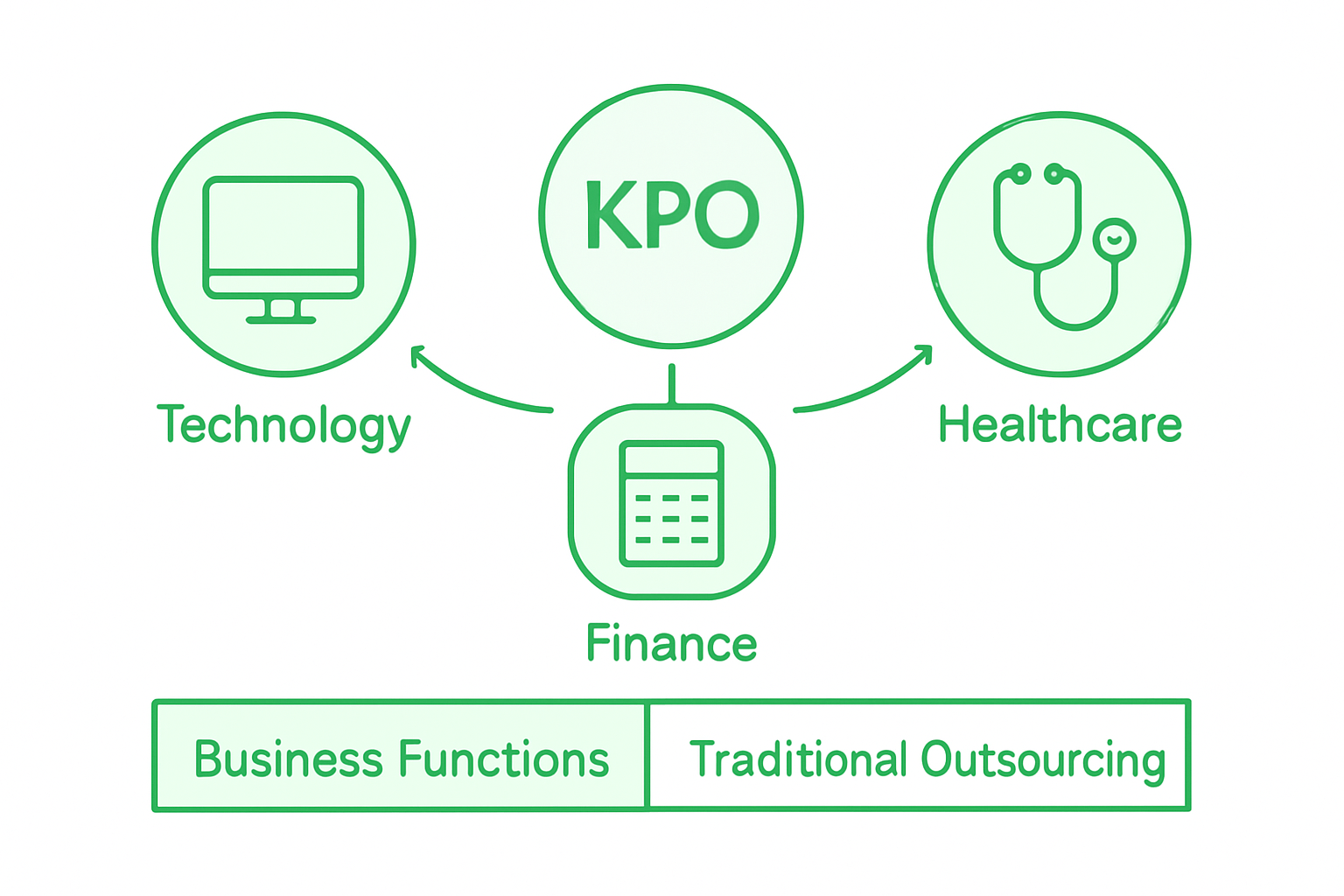
How KPO Differs From Traditional BPO Models
While Business Process Outsourcing (BPO) and Knowledge Process Outsourcing (KPO) might seem similar at first glance, they represent fundamentally different approaches to organizational resource management. Traditional BPO focuses on routine, standardized tasks that follow well-defined processes, typically involving data entry, customer support, and transactional activities that require minimal specialized knowledge.

In contrast, Knowledge Process Outsourcing represents a more sophisticated, intellectually demanding model of external collaboration. Organizations leveraging the differences between BPO and KPO recognize that KPO involves complex, high-value tasks requiring advanced analytical skills, domain expertise, and strategic thinking. Where BPO is about operational efficiency, KPO is about intellectual contribution and innovative problem-solving.
Key distinctions between BPO and KPO can be articulated through several critical dimensions:
Skill Requirements
- BPO: Routine skills, basic training
- KPO: Advanced degrees, specialized expertise
Task Complexity
- BPO: Repetitive, rule-based processes
- KPO: Complex, analytical, context-dependent tasks
Value Proposition
- BPO: Cost reduction and operational streamlining
- KPO: Strategic insights and intellectual capital generation
Knowledge Depth
- BPO: Minimal domain knowledge required
- KPO: Deep understanding of specific industry domains
Worker Profile
- BPO: Process-oriented workers
- KPO: Highly educated professionals with advanced analytical capabilities
Businesses today are increasingly recognizing that Knowledge Process Outsourcing is not merely a cost-cutting strategy but a sophisticated approach to accessing global intellectual talent. By distinguishing between BPO and KPO, organizations can more strategically allocate resources, tap into specialized expertise, and drive innovation through intelligent external collaboration. The evolution from transactional outsourcing to knowledge-based partnerships represents a significant transformation in how companies approach talent acquisition and organizational development.
Key Benefits for Modern Businesses
Knowledge Process Outsourcing (KPO) represents a transformative strategy for modern businesses seeking to gain competitive advantages through strategic external talent acquisition. By tapping into global intellectual resources, companies can dramatically enhance their operational capabilities, drive innovation, and optimize resource allocation in ways traditional business models cannot achieve.
Businesses exploring key reasons to outsource IT for business growth quickly discover that KPO offers multifaceted benefits extending far beyond simple cost reduction. The strategic advantages include accessing specialized expertise, accelerating innovation cycles, and creating flexible organizational structures that can rapidly adapt to complex market challenges.
The primary benefits of Knowledge Process Outsourcing for modern businesses include:
Strategic Benefits
- Access to global talent pools with specialized expertise
- Reduced operational costs
- Accelerated innovation and product development
- Enhanced competitive positioning
- Improved organizational agility
Financial Advantages
- Lower labor and infrastructure expenses
- Reduced recruitment and training costs
- Conversion of fixed costs to variable expenses
- Improved budget predictability
- Capital reallocation to core business functions
Operational Enhancements
- 24/7 productivity cycles
- Scalable workforce solutions
- Advanced technological integration
- Risk mitigation through distributed expertise
- Faster time-to-market for new initiatives
By strategically implementing Knowledge Process Outsourcing, businesses transform external collaboration from a cost-cutting measure into a powerful engine of organizational growth and innovation. The ability to access specialized global talent allows companies to build more dynamic, responsive, and intellectually robust organizational structures that can quickly adapt to emerging market challenges and technological disruptions.
Risks, Challenges, and How to Avoid Them
Knowledge Process Outsourcing (KPO) presents complex challenges that require strategic planning and proactive management. Despite its transformative potential, businesses must navigate potential risks carefully to ensure successful implementation and protect their intellectual assets, organizational knowledge, and operational integrity.
Organizations exploring understanding IT outsourcing challenges quickly recognize that effective risk mitigation demands comprehensive approaches addressing multiple dimensions of external knowledge collaboration. The most critical risks emerge from communication barriers, cultural differences, data security concerns, and potential knowledge leakage.
Key Risks in Knowledge Process Outsourcing:
Intellectual Property Risks
- Potential unauthorized information disclosure
- Inadequate legal protection mechanisms
- Difficulty tracking proprietary knowledge transfer
- Complex international intellectual property regulations
Communication and Cultural Challenges
- Language and communication barriers
- Misaligned professional expectations
- Different workplace communication styles
- Time zone and geographic complexity
Technical and Security Risks
- Cybersecurity vulnerabilities
- Data privacy compliance issues
- Technology infrastructure inconsistencies
- Information management protocol differences
Mitigation Strategies
- Comprehensive legal agreements
- Rigorous vendor screening processes
- Advanced encryption and security protocols
- Regular performance and compliance audits
- Clear communication frameworks
- Structured knowledge transfer processes
Successful Knowledge Process Outsourcing requires businesses to develop robust risk management frameworks that anticipate potential challenges. By implementing strategic safeguards, conducting thorough vendor assessments, and maintaining transparent communication channels, organizations can transform potential risks into opportunities for global collaboration and innovation. The key lies in developing adaptive, proactive approaches that prioritize intellectual asset protection while embracing the transformative potential of external knowledge partnerships.
Unlock the Full Potential of Knowledge Process Outsourcing for Your Business
Navigating the complex world of Knowledge Process Outsourcing requires more than just cost savings. You need trusted partners who understand your industry challenges, protect your intellectual property, and deliver high-value expertise to accelerate growth. At NineArchs LLC, we specialize in providing scalable, reliable, and innovative outsourcing solutions tailored to your strategic needs. Whether you need advanced data analysis, research support, or custom software development, our professional remote workforce helps transform complex knowledge tasks into competitive advantages.
Take the next step to strengthen your business with expert Knowledge Process Outsourcing solutions. Explore how our skills outsourcing and business process outsourcing services can drive innovation and operational efficiency. Connect with us today through NineArchs Contact to begin your journey toward streamlined processes, reduced costs, and access to global talent tailored for your success.
Frequently Asked Questions
What is Knowledge Process Outsourcing (KPO)?
Knowledge Process Outsourcing (KPO) involves delegating complex, knowledge-intensive tasks to specialized external professionals. It focuses on high-value activities that require advanced technical skills and domain expertise, such as data analytics, financial modeling, and research.
How does KPO differ from traditional Business Process Outsourcing (BPO)?
KPO is more sophisticated and involves complex, analytical tasks requiring specialized knowledge, while BPO focuses on routine, standardized processes like data entry and customer support. KPO emphasizes intellectual contributions and strategic insights rather than just operational efficiency.
What are the benefits of implementing KPO for businesses?
The main benefits of KPO include access to specialized expertise, reduced operational costs, accelerated innovation, improved organizational agility, and the ability to tap into global talent pools without significant internal investments.
What are the potential risks associated with Knowledge Process Outsourcing?
Potential risks include intellectual property concerns, communication and cultural challenges, and technical or security vulnerabilities. Businesses can mitigate these risks through comprehensive legal agreements, rigorous vendor screening, and clear communication frameworks.