



Balancing operational demands with tight budgets is a daily challenge for many tech companies. Operations managers need more than standard administrative help they want intelligent support systems that simplify complex tasks and fuel growth. Virtual assistants now deliver advanced technological capabilities, including artificial intelligence and natural language processing, to drive smarter decision-making. Discover how these solutions provide cost savings and strategic efficiency for teams across Europe, Asia, North America, and beyond.
Defining Virtual Assistant Roles in Business
Modern businesses are increasingly recognizing virtual assistants as strategic operational assets that extend far beyond traditional administrative support. These intelligent systems integrate advanced technologies like artificial intelligence, natural language processing, and cloud computing to deliver comprehensive business support across multiple domains. Their roles have dramatically evolved from simple task execution to becoming sophisticated, contextually aware digital agents capable of managing complex workflows and providing strategic insights.
Virtual assistants in tech companies typically perform a wide range of functions, including:
- Administrative task management
- Data processing and analysis
- Customer support coordination
- Scheduling and calendar management
- Research and information gathering
- Communication and correspondence handling
- Digital workflow optimization
The core technological infrastructure enabling virtual assistants involves sophisticated integrations of AI, machine learning, and cloud-based platforms. Unlike traditional outsourcing models, modern virtual assistant services offer scalable, intelligent support that can dynamically adapt to changing business requirements. These systems are not merely replacements for human workers but collaborative tools that enhance overall organizational productivity and efficiency.
Businesses across technology sectors are discovering that virtual assistants represent more than cost-saving mechanisms they are strategic partners in digital transformation. By leveraging contextual understanding and advanced processing capabilities, these intelligent systems can handle nuanced tasks that traditionally required significant human intervention. Their ability to work across time zones, maintain consistent performance, and rapidly scale makes them critical components of agile business strategies.
Pro tip: When integrating virtual assistants, start by mapping out specific, measurable tasks where automation can provide immediate value and gradually expand their responsibilities based on performance metrics.
Types of Virtual Assistants and Their Specializations
Virtual assistants have evolved into sophisticated technological solutions with increasingly specialized roles across different business domains. Outsourced virtual assistants represent a diverse ecosystem of intelligent systems designed to meet specific organizational needs through targeted technological capabilities. These specialized assistants can be broadly categorized based on their functional capabilities and technological sophistication.
The primary types of virtual assistants in tech environments include:
- General Administrative Assistants: Handle routine administrative tasks like scheduling, email management, and basic research
- Technical Support Specialists: Provide specialized technical troubleshooting and IT support across digital platforms
- Customer Interaction Managers: Manage customer communication channels, implement chatbot solutions, and handle multi-channel support
- Data Analysis Assistants: Process complex datasets, generate insights, and support decision-making through advanced analytics
- Research and Intelligence Assistants: Conduct comprehensive research, compile reports, and synthesize information from multiple sources
Technology-driven virtual assistants integrate advanced capabilities such as natural language processing, machine learning, and contextual understanding to deliver intelligent, adaptive support. These systems go beyond simple task automation by offering nuanced, context-aware interactions that can understand complex business requirements and dynamically adjust their performance strategies.

Each virtual assistant type brings unique value propositions to technology-driven organizations. Healthcare virtual assistants might focus on patient data management, legal virtual assistants could specialize in contract review and research, while financial virtual assistants excel in transaction processing and risk analysis. The key differentiator is their ability to provide specialized, intelligent support tailored to specific industry vertical requirements.
Here’s how different types of virtual assistants contribute to business needs:
| Assistant Type | Core Skillset | Common Use Case |
|---|---|---|
| General Administrative | Scheduling and organization | Managing meetings and inboxes |
| Technical Support | IT troubleshooting | Resolving software issues |
| Customer Interaction | Multichannel communication | Chatbots and ticket handling |
| Data Analysis | Advanced analytics | Report generation and insights |
| Research & Intelligence | Information synthesis | Market analysis and summaries |
Pro tip: When selecting a virtual assistant, prioritize solutions that offer flexible integration capabilities and demonstrate proven expertise in your specific industry vertical.
How Virtual Assistants Drive Productivity Gains
Virtual assistants have emerged as powerful productivity multipliers in modern technology-driven organizations, fundamentally transforming how businesses approach work efficiency. Organizational productivity strategies increasingly rely on these intelligent systems to streamline complex workflows, automate repetitive tasks, and enable human workers to focus on high-value strategic activities. Research consistently demonstrates that virtual assistants can boost individual and team performance across multiple dimensions.
The productivity gains from virtual assistants manifest through several key mechanisms:
- Time Optimization: Automating routine administrative tasks
- Error Reduction: Minimizing human error through consistent performance
- Continuous Availability: Operating across multiple time zones without fatigue
- Rapid Information Processing: Analyzing and synthesizing complex data sets quickly
- Scalable Support: Adapting workload capacity instantaneously
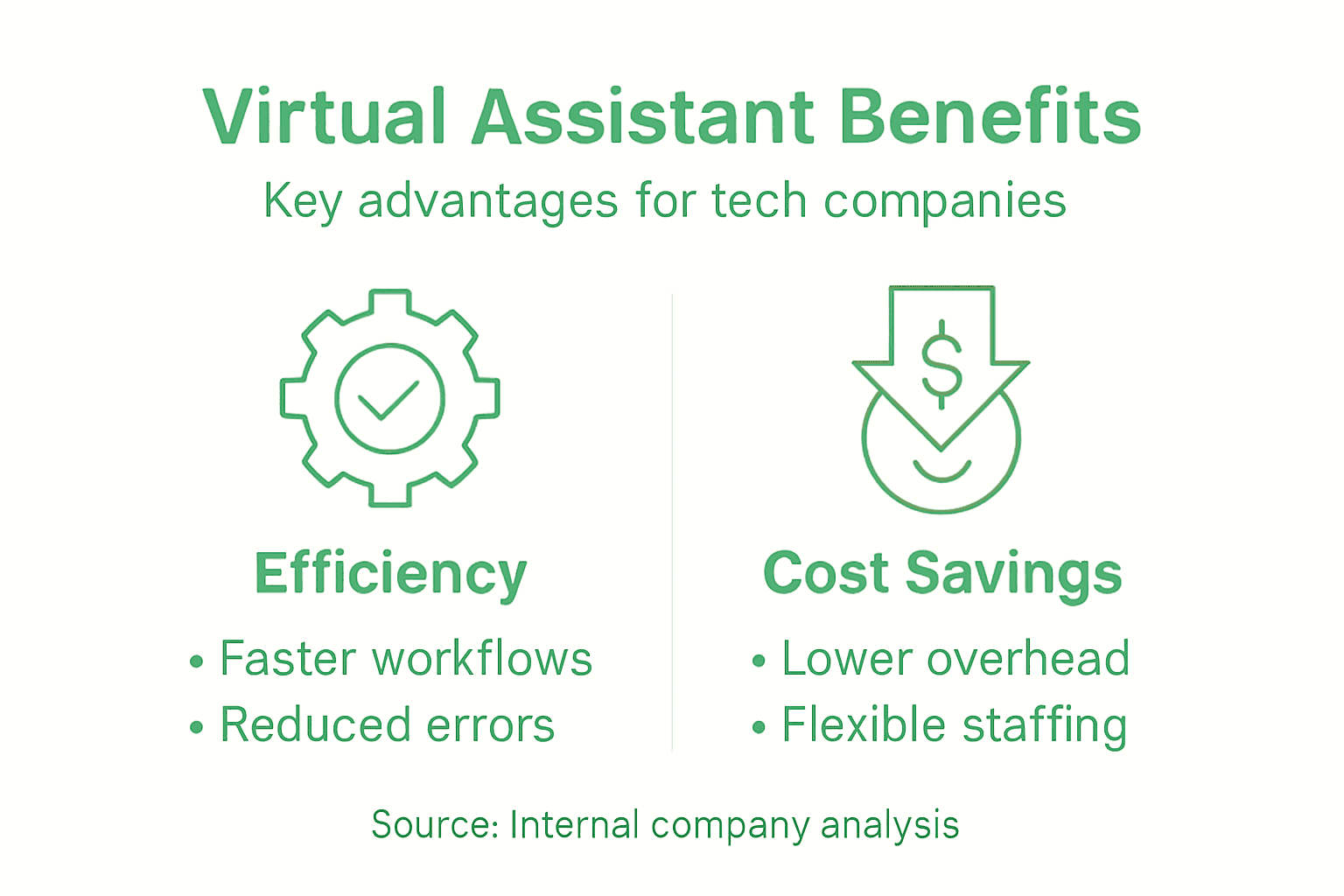
Research from leading academic institutions reveals compelling productivity metrics. Customer support agents using AI-powered virtual assistants resolve approximately 15% more issues per hour, with significant performance improvements particularly noticeable among less experienced team members. These systems do more than simply complete tasks they actively disseminate best practices, standardize workflow procedures, and create knowledge transfer mechanisms that elevate overall team performance.
Beyond immediate task completion, virtual assistants contribute to broader organizational productivity by enabling more strategic resource allocation. They help businesses optimize human capital by handling repetitive, time-consuming activities, thus allowing skilled professionals to concentrate on innovation, problem-solving, and complex decision-making processes. The cumulative effect is a more agile, responsive, and efficient organizational ecosystem that can rapidly adapt to changing business requirements.
Pro tip: Implement virtual assistants incrementally, starting with well-defined, repetitive tasks and gradually expanding their responsibilities based on measured performance improvements.
Financial Impact: Cost Savings and ROI
Virtual assistants represent a strategic financial solution for technology companies seeking to optimize operational expenses while maintaining high-performance capabilities. Virtual staffing strategies demonstrate significant cost advantages compared to traditional full-time employee models, enabling businesses to achieve substantial economic efficiencies through flexible, scalable workforce solutions.
The primary financial benefits of virtual assistants include:
- Reduced Labor Costs: Eliminating expenses related to full-time employee benefits
- Lower Infrastructure Expenses: Minimizing office space and technology equipment investments
- Flexible Billing Models: Paying only for actual work completed
- Reduced Recruitment Overhead: Avoiding complex hiring processes and training expenses
- Global Talent Access: Leveraging cost-effective international workforce options
Technology companies can typically realize cost savings ranging from 40% to 70% by integrating virtual assistants into their operational frameworks. These savings stem from eliminating traditional employment expenses such as healthcare benefits, retirement contributions, workspace allocations, and ongoing training investments. Virtual assistants provide a variable cost structure that allows businesses to dynamically adjust workforce capacity without incurring fixed personnel expenses.
Beyond direct financial savings, virtual assistants generate substantial return on investment through enhanced operational efficiency. By automating routine tasks and enabling core team members to focus on high-value strategic initiatives, these intelligent systems create multiplicative economic value. The ability to scale support instantaneously without long-term commitments represents a significant competitive advantage for organizations seeking agile, cost-effective workforce solutions.
Pro tip: Calculate your potential virtual assistant ROI by comparing current labor costs against projected expenses, including a comprehensive assessment of direct and indirect organizational savings.
Data Security, Risk Management, and Compliance
Data security represents a critical consideration for technology companies implementing virtual assistant solutions. Security protocols in IT outsourcing demand comprehensive strategies that protect sensitive organizational information while maintaining operational flexibility. The evolving technological landscape requires robust risk management frameworks that anticipate potential vulnerabilities and proactively mitigate potential breaches.
Key security considerations for virtual assistants include:
- Encryption Standards: Implementing advanced data protection protocols
- Access Control: Establishing multi-tier authentication mechanisms
- Data Isolation: Maintaining strict boundaries between client information
- Regulatory Compliance: Adhering to industry-specific privacy regulations
- Continuous Monitoring: Regular security audits and vulnerability assessments
Research has revealed critical security vulnerabilities in virtual assistant technologies, including weak encryption mechanisms, improper SSL certificate validation, and potential SQL query execution risks. These technical limitations can expose organizations to unauthorized data access and significant privacy breaches. Technology companies must implement sophisticated cybersecurity techniques such as multifactor authentication, advanced encryption protocols, and continuous anomaly detection systems to protect sensitive information.
Comprehensive compliance strategies require a holistic approach that integrates technological safeguards with rigorous organizational policies. This means developing clear data handling protocols, conducting regular security training, and establishing transparent reporting mechanisms for potential security incidents. Virtual assistants must be configured with granular access controls, ensuring that sensitive information remains protected through intelligent permission management and comprehensive audit trails.
Pro tip: Conduct quarterly comprehensive security assessments of your virtual assistant infrastructure, focusing on identifying and addressing potential vulnerabilities before they can be exploited.
Comparing Virtual Assistants with Other Outsourcing Models
Technology companies are rapidly evolving their outsourcing strategies, with administrative support solutions increasingly shifting toward intelligent virtual assistant models that offer unprecedented flexibility and efficiency. Unlike traditional outsourcing approaches that rely exclusively on human labor, virtual assistants represent a transformative technological solution that combines artificial intelligence, machine learning, and adaptive computational capabilities.
Key differences between virtual assistants and traditional outsourcing models include:
- Scalability: Instant capacity adjustments without human resource constraints
- Consistency: Uniform performance without human variability
- 24/7 Availability: Continuous operation across multiple time zones
- Cost Efficiency: Lower long-term operational expenses
- Technical Integration: Direct compatibility with existing technological ecosystems
Research reveals that virtual assistants excel in routine, repetitive tasks, offering significant advantages over traditional human-based outsourcing models. While human agents remain essential for complex, nuanced interactions requiring emotional intelligence, AI-driven virtual assistants can handle approximately 70-80% of standard customer support and administrative tasks with remarkable accuracy and speed. This hybrid approach allows organizations to optimize their workforce by leveraging both technological efficiency and human expertise.
Below is a summary contrasting virtual assistants and traditional outsourcing:
| Factor | Virtual Assistants | Traditional Outsourcing |
|---|---|---|
| Setup Speed | Immediate deployment | Requires recruitment process |
| Adaptability | Easily customizable | Limited by staff skills |
| Time Zone Coverage | 24/7 potential | Restricted by workforce hours |
| Scalability | Instantly adjustable | Staff expansion required |
The most sophisticated outsourcing strategies now incorporate virtual assistants as complementary tools rather than complete replacements for human workers. These intelligent systems provide real-time contextual support, integrate seamlessly with existing technological infrastructures, and offer unprecedented adaptability across diverse business functions. By combining AI-powered virtual assistants with strategic human oversight, companies can create more responsive, efficient, and cost-effective operational models.
Pro tip: Implement a phased virtual assistant integration strategy, starting with well-defined, repetitive tasks and gradually expanding based on performance metrics and organizational needs.
Unlock the Full Potential of Virtual Assistant Advantages for Your Tech Company
Many technology companies face challenges such as managing repetitive tasks, maintaining data security, and scaling support efficiently. This article highlights key pain points like optimizing workflows, reducing costs, and enhancing productivity through intelligent virtual assistant roles. By leveraging concepts like automated task completion, advanced analytics, and 24/7 availability, businesses can transform operational challenges into growth opportunities.
At NineArchs LLC, we understand these exact challenges and deliver tailored virtual assistance solutions designed to align with your business goals. Our remote workforce services include skilled virtual assistants who specialize in data analysis, customer support, and technical assistance, all while ensuring strict compliance with data security standards. We help you reduce labor costs, improve scalability, and integrate flawlessly with your existing technology.
Discover how you can elevate your operational efficiency with our reliable and innovative outsourcing solutions. Learn more about virtual assistant services and explore how our skills outsourcing can empower your tech team today.
Take action now and experience the difference intelligent support can make for your business.
Ready to accelerate your company’s growth and streamline operations with expert virtual assistance Keep the momentum going by connecting with NineArchs LLC. Reach out to us today through our contact page to discuss a customized strategy designed just for you.
Frequently Asked Questions
What are the main advantages of using virtual assistants for tech companies?
Virtual assistants offer multiple advantages, including cost savings, increased operational efficiency, scalability, and enhanced productivity. They automate routine tasks, allowing human workers to focus on strategic initiatives.
How do virtual assistants differ from traditional outsourcing models?
Virtual assistants provide instant scalability, consistent performance, and 24/7 availability, which traditional outsourcing often lacks. They are also more cost-effective and can be integrated seamlessly into existing technology systems.
What types of tasks can virtual assistants handle in a tech environment?
Virtual assistants can manage a variety of tasks including administrative work, customer support, data analysis, technical troubleshooting, and research. They are designed to optimize workflows and support complex business needs.
How can a tech company ensure data security when using virtual assistants?
To ensure data security, tech companies should implement strong encryption standards, multi-tier access controls, and conduct regular security audits to identify potential vulnerabilities in their virtual assistant systems.