



More than sixty percent of American companies are accelerating investments in automation to optimize critical back office functions across finance, human resources, and procurement. Rising labor costs and increased regulatory demands make automation a top priority for CFOs navigating the pressures of global operations. This article offers practical guidance to help executives clearly define automation in back office settings, identify the processes most primed for transformation, and understand the financial impact of strategic automation adoption.
Defining Automation in Back Office Functions
Back office operations represent the critical internal functions that power organizational performance without direct customer interaction. Automation in these functions transforms labor-intensive administrative tasks by applying digital technologies to streamline processes across finance, human resources, procurement, compliance, and information technology departments.
At its core, back office automation involves strategically deploying software, artificial intelligence, and integrated workflows to replace manual, repetitive tasks with intelligent digital systems. Business task automation solutions enable organizations to reduce operational costs, minimize human error, accelerate process completion times, and redirect human talent toward more strategic, value-creating activities.
The primary objectives of back office automation include:
- Reducing manual data entry and administrative overhead
- Standardizing complex operational workflows
- Ensuring consistent regulatory compliance
- Enhancing data accuracy and processing speed
- Creating scalable operational infrastructure
Modern back office automation goes beyond simple task replacement. Advanced systems utilize machine learning and artificial intelligence to continuously optimize processes, predict potential bottlenecks, and provide real-time insights that support strategic decision-making. These intelligent systems can analyze historical performance data, identify inefficiencies, and recommend process improvements with minimal human intervention.
Pro tip: Start your automation journey by mapping current back office workflows and identifying repetitive tasks that consume significant employee time but require minimal complex decision-making.
Core Types of Automated Back Office Processes
Back office automation encompasses a strategic approach to transforming internal operational processes through advanced digital technologies. Robotic Process Automation (RPA) stands at the forefront of these technological interventions, enabling organizations to systematically replace manual, repetitive tasks with intelligent digital workflows across multiple functional domains.
Implementing business automation typically targets several core operational areas that are ripe for digital transformation. These critical back office processes include:
- Finance Operations
- Accounts payable and receivable processing
- Payroll management and reconciliation
- Financial reporting and analytics
- Budget tracking and expense management
- Human Resources Functions
- Employee onboarding and offboarding workflows
- Recruitment and candidate screening
- Performance management documentation
- Benefits administration
- Procurement Processes
- Vendor selection and management
- Purchase order generation
- Contract lifecycle tracking
- Supplier performance evaluation
Advanced automation technologies like machine learning, natural language processing, and predictive analytics enable these systems to go beyond simple task replacement. These intelligent platforms can now analyze complex datasets, predict potential operational bottlenecks, and provide strategic insights that support more nuanced decision-making across organizational functions.

Modern back office automation is not about wholesale human replacement but strategic augmentation. By automating routine, data-driven tasks, organizations can redirect human talent toward more creative, strategic initiatives that require emotional intelligence, critical thinking, and complex problem-solving skills.
Pro tip: Prioritize automation initiatives by first mapping current workflows and identifying processes with high transaction volumes, repetitive steps, and clear, rule-based decision-making parameters.
How Automation Improves Productivity and Compliance
Automation fundamentally transforms back office operations by dramatically enhancing both productivity and regulatory compliance through intelligent technological interventions. By systematically replacing manual, error-prone processes with sophisticated digital workflows, organizations can achieve unprecedented levels of operational efficiency and risk management.
Business process documentation strategies reveal that automation delivers substantial productivity gains through several key mechanisms:
- Accelerated Processing Times
- Elimination of manual data entry bottlenecks
- Simultaneous multi-task processing capabilities
- Reduction of human-induced processing delays
- Error Reduction and Quality Control
- Consistent execution of standardized workflows
- Real-time data validation and cross-checking
- Automatic flagging of potential compliance violations
- Compliance and Risk Management
- Continuous monitoring of regulatory requirements
- Automatic documentation and audit trail generation
- Sophisticated anomaly detection algorithms
Intelligent automation technologies leverage machine learning and artificial intelligence to create dynamic, adaptive systems that not only execute tasks but also continuously optimize operational processes. These advanced platforms can analyze historical performance data, identify potential inefficiencies, and proactively recommend process improvements, transforming back office functions from cost centers to strategic value generators.
The compliance benefits of automation extend far beyond traditional rule enforcement. Modern automated systems can integrate complex regulatory requirements directly into workflow design, ensuring that every transaction and process adheres to the most current legal and industry standards. This approach dramatically reduces the risk of human error and provides transparent, verifiable documentation for regulatory audits.
Pro tip: Conduct a comprehensive workflow analysis to identify repetitive, rules-based processes that are prime candidates for initial automation implementation.
Financial Impact and Common Implementation Risks
Back office automation represents a significant financial investment with potentially transformative returns for organizations willing to navigate its complex implementation landscape. Financial optimization through automation is not a simple cost-cutting exercise but a strategic transformation of operational economics that requires careful planning and nuanced execution.
Why automate business processes reveals several critical financial dimensions organizations must consider:
- Direct Cost Savings
- Reduction in manual labor expenses
- Lower operational overhead
- Decreased processing time and associated costs
- Indirect Financial Benefits
- Improved accuracy reducing financial errors
- Enhanced resource allocation
- Faster decision-making capabilities
- Potential Implementation Risks
- Initial high technology investment
- Employee resistance and retraining costs
- Complex system integration challenges
- Potential short-term productivity disruptions
The financial implications of back office automation extend beyond immediate cost reductions. Advanced automation technologies create long-term value by enabling organizations to reallocate human capital toward more strategic, high-value activities that drive innovation and competitive advantage. This strategic workforce transformation represents a profound shift from transactional to intellectual productivity.
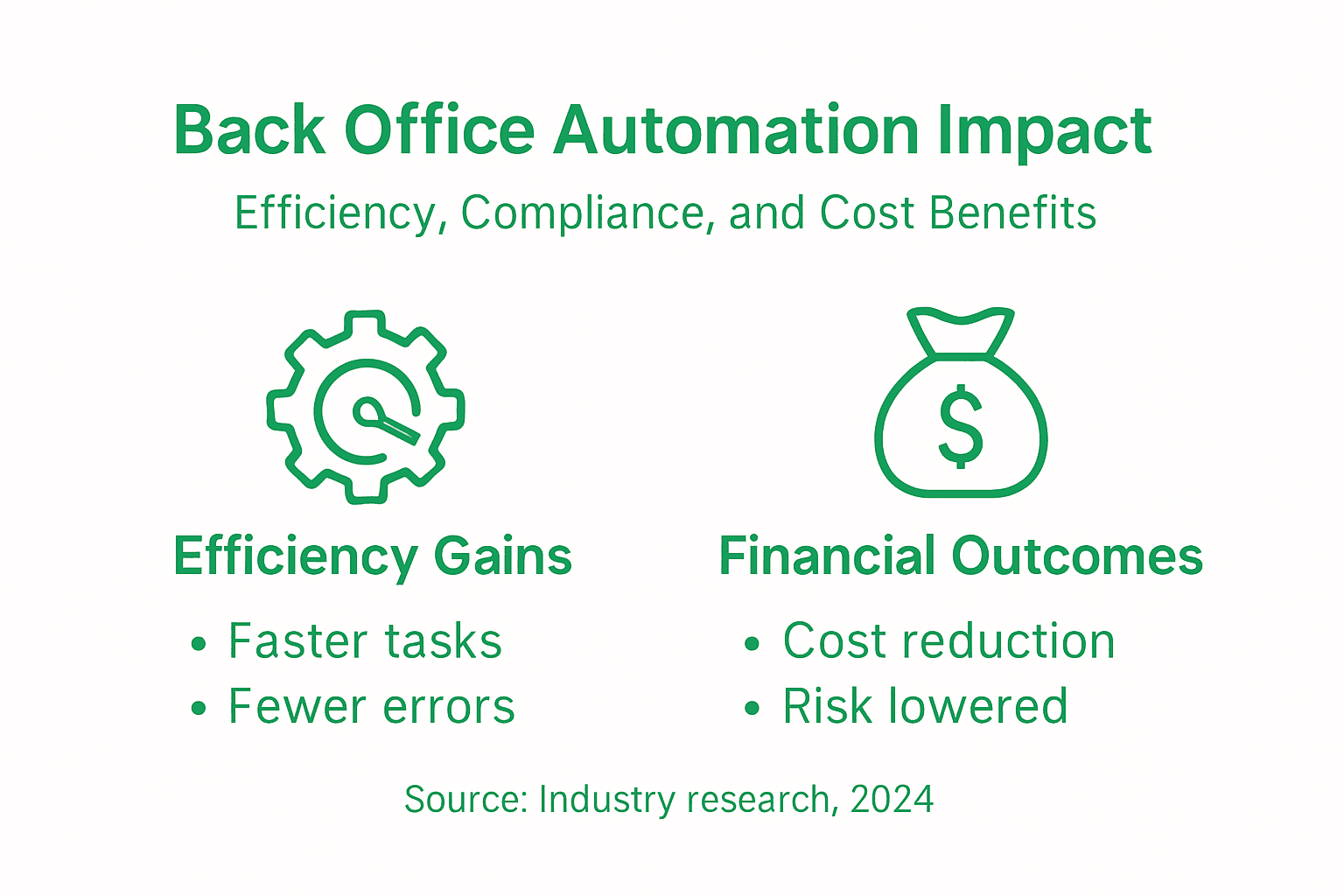
The table below summarizes typical financial, operational, and risk outcomes from back office automation:
| Outcome Category | Positive Results | Potential Drawbacks |
|---|---|---|
| Financial | Reduced labor cost, long-term ROI | Initial investment, short-term costs |
| Operational | Faster workflows, fewer errors | Integration complexity, disruptions |
| Compliance & Risk | Stronger audit trails, fewer fines | Overreliance on technology |
Risk mitigation remains crucial during automation implementation. Successful organizations approach technological transformation through incremental adoption, comprehensive staff training, and robust change management strategies. By creating a culture of continuous learning and technological adaptation, companies can minimize disruption and maximize the return on their automation investments.
Pro tip: Develop a phased automation implementation strategy that starts with low-complexity, high-impact processes to build organizational confidence and demonstrate tangible financial benefits.
Choosing Between Automation, Outsourcing, or Hybrid
Navigating the complex landscape of back office operations requires strategic decision-making about technological and human resource deployment. Strategic optimization demands a nuanced approach that carefully evaluates the unique strengths and limitations of automation, outsourcing, and hybrid models to align with organizational goals and operational requirements.
Outsourcing repetitive tasks reveals critical considerations for selecting the most appropriate operational strategy:
Here’s a comparison of the three main back office optimization strategies:
| Approach | Strengths | Weaknesses | Best Use Cases |
|---|---|---|---|
| Automation | High speed and accuracy | Large upfront cost | Rule-based, repetitive workflows |
| Outsourcing | Scalability, less tech required | Less operational transparency | Tasks not requiring core expertise |
| Hybrid | Flexibility, balanced investment | Complex management | Combining tech with human judgment |
- Pure Automation Model
- Highest potential for process standardization
- Minimal human intervention
- Maximum scalability and precision
- Significant upfront technology investment
- Traditional Outsourcing Model
- Rapid workforce scaling
- Lower immediate technology costs
- Reduced internal management complexity
- Potential reduced operational transparency
- Hybrid Approach
- Flexible technological integration
- Balanced cost structure
- Maintained strategic control
- Adaptive operational framework
The hybrid model emerges as a particularly compelling strategy for organizations seeking to balance technological efficiency with human expertise. By selectively applying automation to repetitive, rules-based tasks while maintaining human oversight for complex decision-making processes, companies can create a dynamic operational ecosystem that maximizes productivity and innovation.
Successful implementation requires a deep understanding of organizational workflows, technological capabilities, and strategic objectives. Leaders must conduct comprehensive assessments of current processes, identifying specific tasks best suited for automation, outsourcing, or continued internal management. This granular approach enables a tailored strategy that optimizes resource allocation and drives continuous operational improvement.
Pro tip: Conduct a detailed workflow analysis to map task complexity, identifying precise opportunities for automation, outsourcing, or human-managed processes across your operational landscape.
Transform Your Back Office with Tailored Automation and Outsourcing Solutions
Organizations aiming to boost efficiency and scale growth face challenges like reducing manual workloads, achieving regulatory compliance, and managing complex workflows as highlighted in the article Role of Automation in Back Office Operations – Boosting Efficiency and Scaling Growth. If you are struggling with repetitive, rule-based tasks that drain resources or hunting for ways to combine automation with strategic human insights, addressing these pain points is critical to unlock your operational potential.
NineArchs LLC offers comprehensive remote workforce and IT services designed to solve these exact challenges. With expertise in business process outsourcing, virtual assistance, and custom software development, we help you automate finance operations, human resources workflows, and procurement processes while keeping the human touch where it matters most. Our solutions are crafted to reduce costs, sharpen compliance, and accelerate processing times so your back office becomes a competitive advantage instead of a bottleneck.
Discover how to integrate cutting-edge automation technologies with expert outsourcing by partnering with us. Explore our approach to business automation for scalable growth and learn how to outsource repetitive tasks effectively. Start transforming your back office today for a faster, smarter, and more resilient operation.
Looking to jumpstart your automation and outsourcing journey?
Contact NineArchs now for a personalized consultation that will put you on the path to operational excellence. Don’t let back office inefficiencies hold your business back anymore. Visit our contact page and take the first step toward streamlined productivity and sustained growth.
Frequently Asked Questions
What is back office automation?
Back office automation refers to the use of digital technologies to streamline and optimize internal operational processes, such as finance, human resources, procurement, and compliance, replacing manual, repetitive tasks with intelligent digital systems.
How does automation improve productivity in back office operations?
Automation enhances productivity by accelerating processing times, reducing manual data entry errors, and allowing for simultaneous multi-task processing, which leads to a more efficient workflow and faster decision-making.
What are the main types of tasks suited for automation in back office functions?
Common tasks suitable for automation include accounts payable and receivable processing, payroll management, employee onboarding, vendor selection, and contract lifecycle tracking, which are typically repetitive and rules-based tasks.
What are the potential risks associated with implementing back office automation?
Potential risks include high initial technology investments, employee resistance to change, integration challenges with existing systems, and short-term productivity disruptions during the transition to automated processes.