
Remote work often brings greater flexibility but can quickly reveal gaps in team connection and productivity, especially for Human Resources managers in mid-sized tech companies facing hybrid work challenges. As teams stretch across different countries and time zones, balancing engagement and results demands practical, research-backed approaches. This guide distills strategies proven to enhance communication, build meaningful recognition, and support ongoing team collaboration—giving you actionable tools to strengthen your remote workforce and drive lasting performance.
Step 1: Assess Team Engagement Baseline
Assessing your remote team’s engagement baseline provides critical insights into current performance and connection levels. In this step, you will develop a comprehensive understanding of how your team functions and feels in a virtual environment.
To establish an accurate engagement baseline, start by designing a structured assessment strategy that captures multiple dimensions of team interaction. Research from academic sources like the International Journal of Research in Technology and Innovation highlights the importance of measuring work engagement, communication patterns, and team connectedness. Begin by creating a multifaceted survey that explores key areas such as individual motivation, communication satisfaction, leadership perception, and social connection.

Your assessment should include both quantitative and qualitative elements. Develop a survey with numeric rating scales to measure specific aspects like work satisfaction, perceived leadership support, and team collaboration effectiveness. Complement these numeric ratings with open ended questions that allow team members to share detailed insights about their remote work experiences. Focus on understanding not just performance metrics but also emotional and psychological aspects of remote work engagement.
Pro Tip: Consider implementing anonymous feedback mechanisms to encourage honest and transparent responses about team dynamics and potential improvement areas.
Step 2: Establish Clear Communication Channels
Establishing clear communication channels is fundamental to maintaining a cohesive and productive remote team. Your goal in this step is to create robust information pathways that enable seamless collaboration across virtual environments.
Research from systematic literature reviews emphasizes the critical importance of developing comprehensive communication frameworks for virtual teams. According to studies published in academic journals, effective communication channels must address both technological infrastructure and human interaction dynamics. Select communication platforms that support multiple interaction modes including instant messaging, video conferencing, project management tools, and asynchronous collaboration spaces. Prioritize platforms that offer real time and recorded communication options to accommodate different work styles and time zones.
When implementing communication channels, focus on creating standardized protocols that everyone understands. Define specific expectations for response times, preferred communication methods for different types of interactions, and guidelines for maintaining professional digital communication. Ensure that your chosen platforms integrate well with existing workflow tools and provide clear documentation about how and when to use each communication method. This approach helps minimize miscommunication and creates a transparent communication ecosystem that supports team connectivity and productivity.
Pro Tip: Create a brief communication guide that outlines your team’s digital communication standards and share it during onboarding to establish clear expectations from the start.
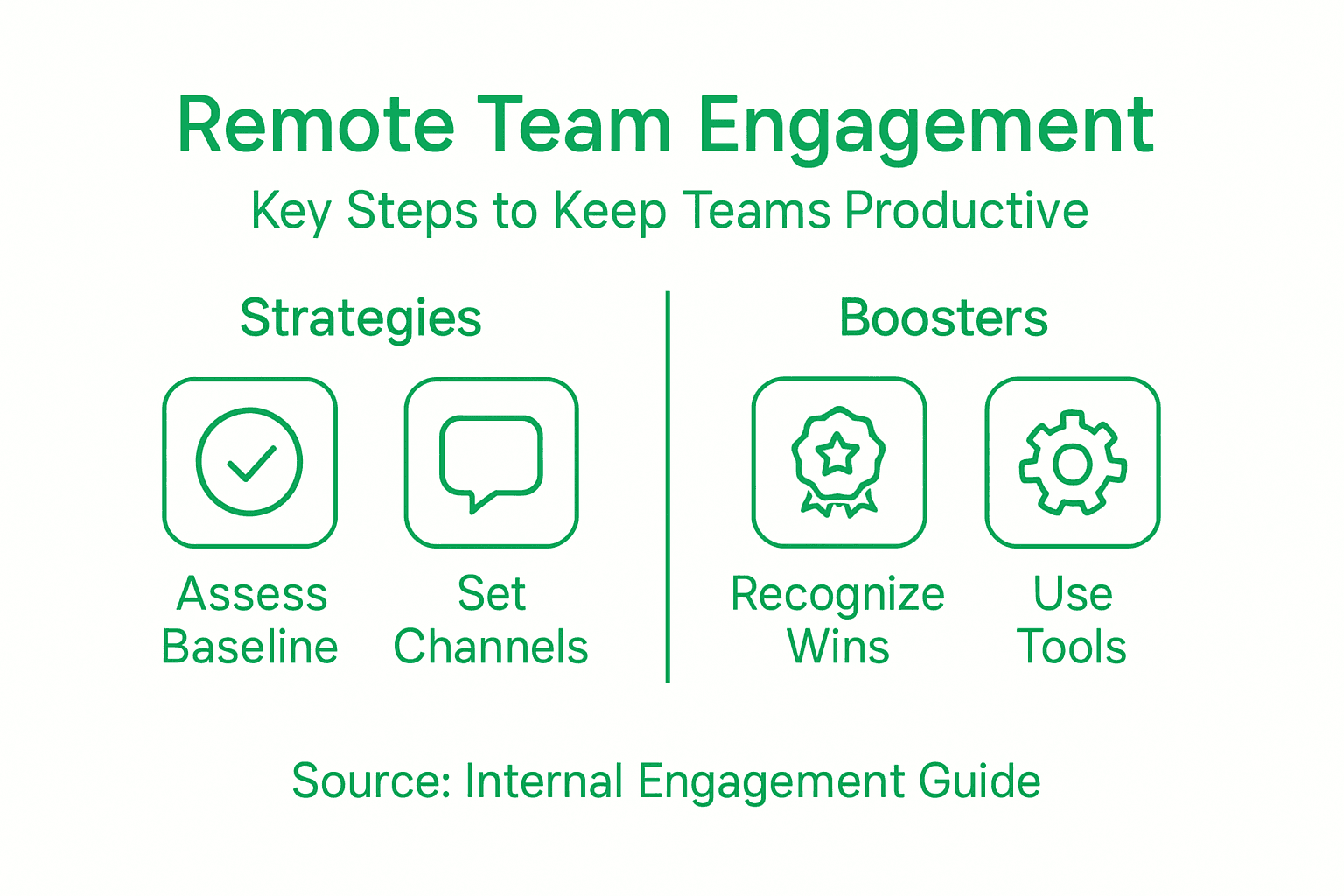
Step 3: Implement Meaningful Recognition Systems
Implementing meaningful recognition systems is crucial for maintaining team motivation and engagement in remote work environments. Your goal is to develop a comprehensive approach that consistently validates and celebrates individual and team achievements across virtual platforms.
Research from organizational studies highlights the significant impact of tailored recognition strategies in mitigating remote work disengagement. According to academic findings, effective recognition systems should incorporate both formal and informal acknowledgment mechanisms. Design a multifaceted recognition framework that includes public praise during team meetings, digital achievement badges, personalized appreciation messages, and performance milestone celebrations. Consider creating a points-based recognition platform where team members can earn rewards for exceptional work, collaborative efforts, and consistent performance that aligns with your organization’s core values.
When developing your recognition system, focus on creating transparent and inclusive processes that feel authentic and meaningful. Develop clear criteria for recognition that go beyond traditional performance metrics. Encourage peer-to-peer recognition, allowing team members to nominate and appreciate each other’s contributions. Integrate these recognition moments into your existing communication channels to ensure visibility and reinforce a culture of appreciation. This approach not only boosts individual motivation but also strengthens overall team connectivity and shared purpose.
Pro Tip: Rotate recognition responsibilities among team members to create a more dynamic and inclusive appreciation ecosystem.
This table highlights how different recognition methods impact team motivation:
| Recognition Type | Visibility Level | Motivational Impact |
|---|---|---|
| Public Praise | Team-wide | Boosts morale, builds trust |
| Digital Badges | Individual/team | Encourages achievement |
| Personalized Messages | One-on-one | Fosters loyalty and retention |
| Milestone Celebrations | Group level | Strengthens team identity |
Step 4: Foster Collaboration Through Virtual Tools
Fostering collaboration through virtual tools is essential for maintaining team connectivity and productivity in remote work environments. Your goal is to strategically implement digital platforms that enable seamless interaction, knowledge sharing, and collective problem solving across geographical boundaries.
Research on remote work collaboration highlights the transformative potential of digital platforms in bridging communication gaps. Select virtual tools that support multiple collaboration dimensions including real time communication, project management, document sharing, and interactive brainstorming. Prioritize platforms that offer integrated features like video conferencing, collaborative document editing, task tracking, and instant messaging. Implement tools that allow for both synchronous interactions during scheduled meetings and asynchronous collaboration through shared workspaces where team members can contribute regardless of their time zone.
When introducing virtual collaboration tools, focus on creating a comprehensive onboarding and training approach. Develop clear guidelines about how and when to use each platform, ensuring that all team members understand the functionality and purpose of different digital spaces. Encourage experimentation and provide ongoing support to help team members become comfortable with new technologies. Create opportunities for informal digital interactions that mimic spontaneous office conversations, such as virtual coffee breaks or random team chat channels. This approach helps build team cohesion and makes digital collaboration feel more natural and engaging.
Pro Tip: Conduct periodic tool effectiveness surveys to continuously refine your virtual collaboration strategy and address emerging team communication needs.
Step 5: Monitor Progress and Adjust Strategies
Monitoring progress and adjusting strategies is critical for maintaining the long-term effectiveness of your remote team engagement initiatives. Your goal is to develop a dynamic and responsive approach that allows you to track performance, identify challenges, and make informed modifications to your team management strategies.
Research on virtual team management emphasizes the importance of implementing comprehensive monitoring systems that combine quantitative performance metrics with qualitative feedback mechanisms. Design a multifaceted assessment framework that includes regular performance reviews, engagement surveys, individual check ins, and data driven analytics. Utilize both objective measurements such as productivity indicators and subjective insights like team member perceptions to create a holistic understanding of your team’s operational dynamics. Implement tracking tools that provide real time insights into work progress, collaboration patterns, and individual and collective performance trends.
When reviewing and adjusting strategies, maintain a flexible and empathetic approach. Create structured yet adaptable feedback loops that allow for continuous improvement and rapid response to emerging challenges. Schedule periodic strategy review sessions where you analyze collected data, discuss team insights, and collaboratively develop targeted interventions. Encourage open communication that allows team members to provide candid input about potential process improvements. By treating strategy adjustment as an ongoing collaborative process, you create an environment of continuous learning and adaptive management that supports sustained remote team engagement and productivity.
Pro Tip: Develop a quarterly review template that standardizes your performance assessment process while remaining flexible enough to capture unique team dynamics.
Here’s a summary of key focus areas and tools for remote team engagement:
| Step | Primary Focus | Example Tool or Method |
|---|---|---|
| Assess Engagement | Detailed surveys | Custom engagement assessments |
| Communication | Clear digital channels | Slack or Microsoft Teams |
| Recognition | Multi-layered praise | Points platform, badges |
| Collaboration | Virtual workspaces | Google Workspace, Trello |
| Monitor Progress | Data-driven reviews | Analytics dashboards |
Elevate Your Remote Team Engagement with Expert Outsourcing Solutions
Keeping remote teams engaged for lasting productivity can feel overwhelming when communication gaps, recognition, and collaboration hurdles arise. This article highlights the key challenges of maintaining motivation, clear communication channels, and meaningful recognition within virtual teams. If you are striving to implement effective engagement strategies like multifaceted recognition systems or seamless collaboration platforms but need expert support to scale these initiatives, NineArchs LLC offers tailored remote workforce solutions designed to address exactly these pain points. Our services specialize in virtual assistance, skills outsourcing, and business process outsourcing that free you to focus on enhancing team connection and performance without the operational burden.
Discover how NineArchs’ professional outsourcing and IT services can help you build a productive and motivated remote workforce today. Benefit from scalable, reliable, and cost-efficient solutions custom-built to support your unique team engagement goals. Start transforming your remote team’s productivity by connecting with us now at NineArchs Contact. Explore more about how our virtual assistance and BPO services can simplify your remote management or reach out for a personalized consultation. Don’t wait to create a thriving remote team culture that drives longstanding success.
Frequently Asked Questions
How can I assess my remote team’s engagement baseline?
Start by designing a structured assessment strategy that includes both quantitative surveys and qualitative feedback. Develop a comprehensive survey that explores areas like motivation, communication satisfaction, and leadership perception to understand how your team feels about their remote work environment.
What communication channels should I establish for my remote team?
Implement clear communication channels that support various interaction modes, such as instant messaging, video conferencing, and project management tools. Choose platforms that facilitate both real-time and asynchronous communication to accommodate different work styles and time zones.
How can I create an effective recognition system for remote workers?
Develop a recognition framework that combines formal and informal acknowledgment methods, such as public praise during meetings and personalized appreciation messages. Ensure the criteria for recognition go beyond performance metrics and encourage peer-to-peer nominations to foster a culture of appreciation.
What virtual tools can enhance collaboration among remote team members?
Select virtual collaboration tools that provide real-time communication, document sharing, and project management features. Tools that offer collaborative document editing and instant messaging can facilitate seamless interaction and knowledge sharing across your remote team.
How do I monitor and adjust engagement strategies for my remote team?
Establish a monitoring system that includes regular performance reviews and engagement surveys to track progress over time. Maintain a flexible approach by scheduling periodic strategy review sessions to discuss insights and develop targeted interventions based on team feedback.
What are the key focus areas to maintain remote team engagement?
Focus on assessing engagement through surveys, establishing clear communication channels, implementing recognition systems, fostering collaboration, and monitoring progress regularly. Create structured plans within each focus area to drive lasting productivity in your remote teams.