
Over half of American businesses now depend on IT helpdesk services to maintain smooth daily operations. As digital systems become more complex, reliable technical support has moved from a “nice to have” to a fundamental part of any organization’s strategy. Understanding the core functions and models of modern IT helpdesk services empowers leaders to choose efficient solutions, improve continuity, and unlock real value from their technology investments.
Defining IT Helpdesk Services and Core Concepts
An IT helpdesk serves as the central nerve center for technical support within an organization, functioning as the primary point of contact for resolving computer, software, and network related challenges. Comprehensive support services encompass a wide range of critical technological assistance designed to maintain operational continuity and employee productivity.
At its core, an IT helpdesk provides structured technical support through multiple communication channels, including phone, email, chat, and web-based ticketing systems. These services systematically track, prioritize, and resolve technical issues using standardized processes that ensure consistent and efficient problem resolution. Key responsibilities include incident management, service request fulfillment, hardware and software troubleshooting, and maintaining a comprehensive knowledge base for recurring technical problems.
The strategic value of IT helpdesk services extends far beyond basic technical support. Modern helpdesks act as proactive technological partners that not only resolve immediate technical challenges but also contribute to broader organizational efficiency. By analyzing recurring issues, identifying systemic technological gaps, and providing continuous user training, these services help businesses optimize their technological infrastructure and reduce long-term operational disruptions.
Pro Tip – Strategic Support Framework: Develop a clear escalation matrix and service level agreement (SLA) that defines response times, issue categorization, and resolution protocols to ensure your IT helpdesk delivers predictable, high-quality technical support.
Key Service Models: Remote, Onsite, and Hybrid
IT helpdesk service models have evolved dramatically, offering businesses unprecedented flexibility in managing technological support. The three primary approaches – remote, onsite, and hybrid – each provide unique advantages tailored to different organizational needs and operational complexities. Remote workforce strategies have become increasingly sophisticated, enabling companies to access global talent and maintain robust technological infrastructure without geographic limitations.
Remote IT helpdesk services operate entirely through digital communication channels, utilizing cloud-based systems, ticketing platforms, and advanced monitoring tools. These services excel at handling software troubleshooting, network management, and routine maintenance tasks. Onsite support, conversely, involves physical presence at a company’s location, addressing hardware issues, infrastructure challenges, and complex technical problems requiring direct interaction. The onsite model remains critical for organizations with significant physical technology infrastructure or those operating in sensitive industries requiring immediate hands-on technical intervention.
The hybrid service model represents the most adaptable approach, strategically combining remote and onsite support capabilities. This model allows businesses to optimize cost-efficiency while maintaining comprehensive technical coverage. By leveraging remote technicians for standard support functions and keeping specialized onsite professionals for critical infrastructure needs, organizations can create a flexible, responsive support ecosystem that scales with their technological requirements.
Pro Tip – Strategic Model Selection: Conduct a comprehensive technology infrastructure audit to determine the most appropriate IT helpdesk service model, considering factors like geographic distribution, technological complexity, budget constraints, and specific industry requirements.
Here’s a comparison of IT helpdesk service models to help select the best fit for your organization:
| Service Model | Communication Channels | Best Suited For | Main Advantages |
|---|---|---|---|
| Remote | Phone, email, chat, web apps | Distributed teams, global operations | Cost-effective, 24/7 access |
| Onsite | In-person, phone | Tech-heavy offices, sensitive industries | Immediate hands-on support |
| Hybrid | Mix of in-person & digital | Organizations needing flexibility | Scalable, optimized coverage |
Core Functions: Ticketing, Troubleshooting, Support
IT helpdesk services operate through three interconnected core functions that form the backbone of technological support: ticketing systems, troubleshooting processes, and comprehensive support strategies. IT support workflow optimization enables organizations to streamline these critical technological management processes, ensuring rapid response and efficient problem resolution.
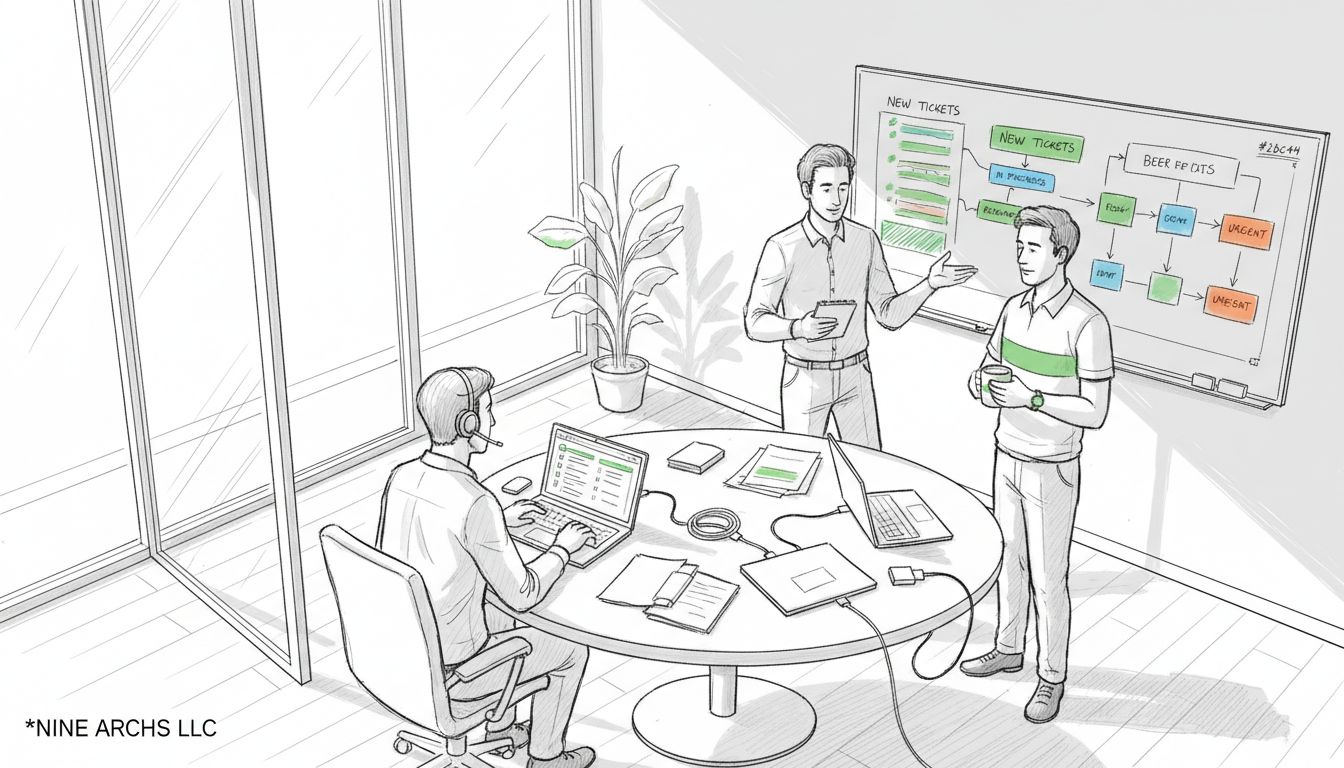
The ticketing system serves as the central nervous system of IT support, creating a structured mechanism for tracking, prioritizing, and managing technical issues. When a user submits a support request, the system automatically logs the incident, assigns a unique identifier, and routes the problem to the appropriate technician based on complexity, expertise required, and current workload. This systematic approach ensures that no technical issue falls through the cracks, providing transparency and accountability throughout the resolution process.
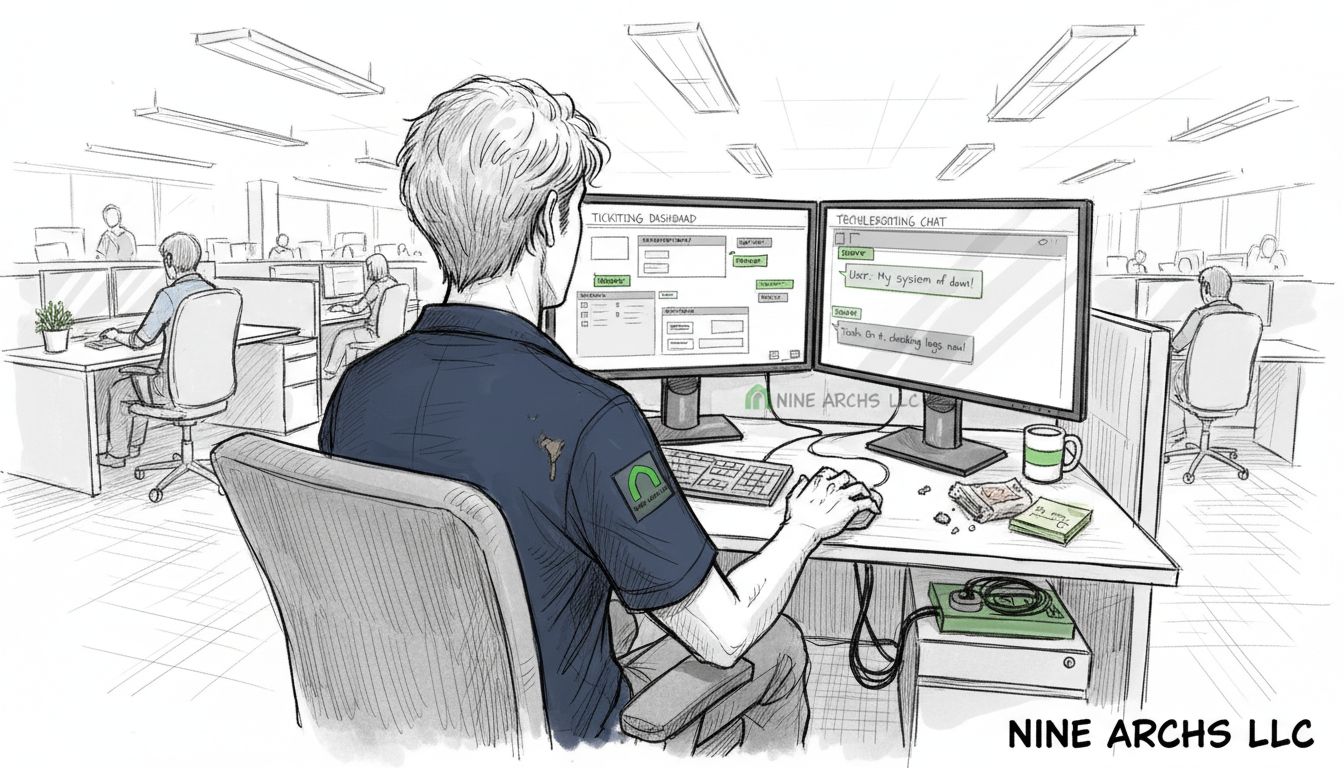
Troubleshooting represents the most complex and nuanced function within IT helpdesk services. Technicians must systematically diagnose technological problems by employing a methodical approach that involves gathering detailed information, reproducing the issue, identifying potential root causes, and implementing targeted solutions. This process requires not just technical expertise, but also strong analytical skills, patience, and the ability to communicate complex technical concepts in language that non-technical users can understand. Advanced troubleshooting often involves multiple layers of investigation, from initial diagnostics to deep system analysis and potential hardware or software interventions.
Pro Tip – Efficient Troubleshooting Framework: Develop a standardized troubleshooting methodology that includes clear documentation, step-by-step diagnostic procedures, and a comprehensive knowledge base to accelerate problem resolution and reduce repeat incidents.
This table summarizes the core IT helpdesk functions and their business value:
| Function | Description | Business Value |
|---|---|---|
| Ticketing | Logs and manages user support requests | Ensures accountability and tracking |
| Troubleshooting | Diagnoses and resolves tech issues | Reduces downtime, boosts efficiency |
| Support | Provides technical help and guidance | Empowers users, increases productivity |
Role in Business Operations and Digital Transformation
IT helpdesk services have transformed from simple technical support functions into critical strategic enablers of business growth and digital transformation. Key reasons to outsource IT support reveal how these services fundamentally reshape organizational technological capabilities, driving efficiency and innovation across multiple business domains.
In the digital transformation landscape, IT helpdesks serve as pivotal change management platforms that bridge technological infrastructure with strategic business objectives. They do more than resolve technical issues – they act as intelligence centers that collect critical data about technological performance, user experience, and systemic inefficiencies. By analyzing support tickets, tracking recurring problems, and identifying potential technological bottlenecks, these services provide actionable insights that help organizations continuously optimize their technological ecosystems and align IT investments with broader business strategies.
The strategic impact of IT helpdesk services extends beyond immediate technical support, functioning as key drivers of operational resilience and technological adaptability. Modern helpdesks integrate advanced analytics, machine learning, and predictive diagnostic tools that enable proactive problem resolution. This approach transforms IT support from a reactive cost center into a strategic partner that helps businesses anticipate technological challenges, streamline workflows, and maintain competitive technological infrastructure. By providing rapid, intelligent support, these services minimize downtime, enhance employee productivity, and create a more agile technological environment that can quickly respond to emerging business needs.
Pro Tip – Strategic Technology Alignment: Develop a comprehensive IT support strategy that integrates continuous learning, performance metrics, and proactive technological assessment to transform your helpdesk from a reactive service into a strategic business enablement platform.
Cost, Scalability, and Outsourcing Considerations
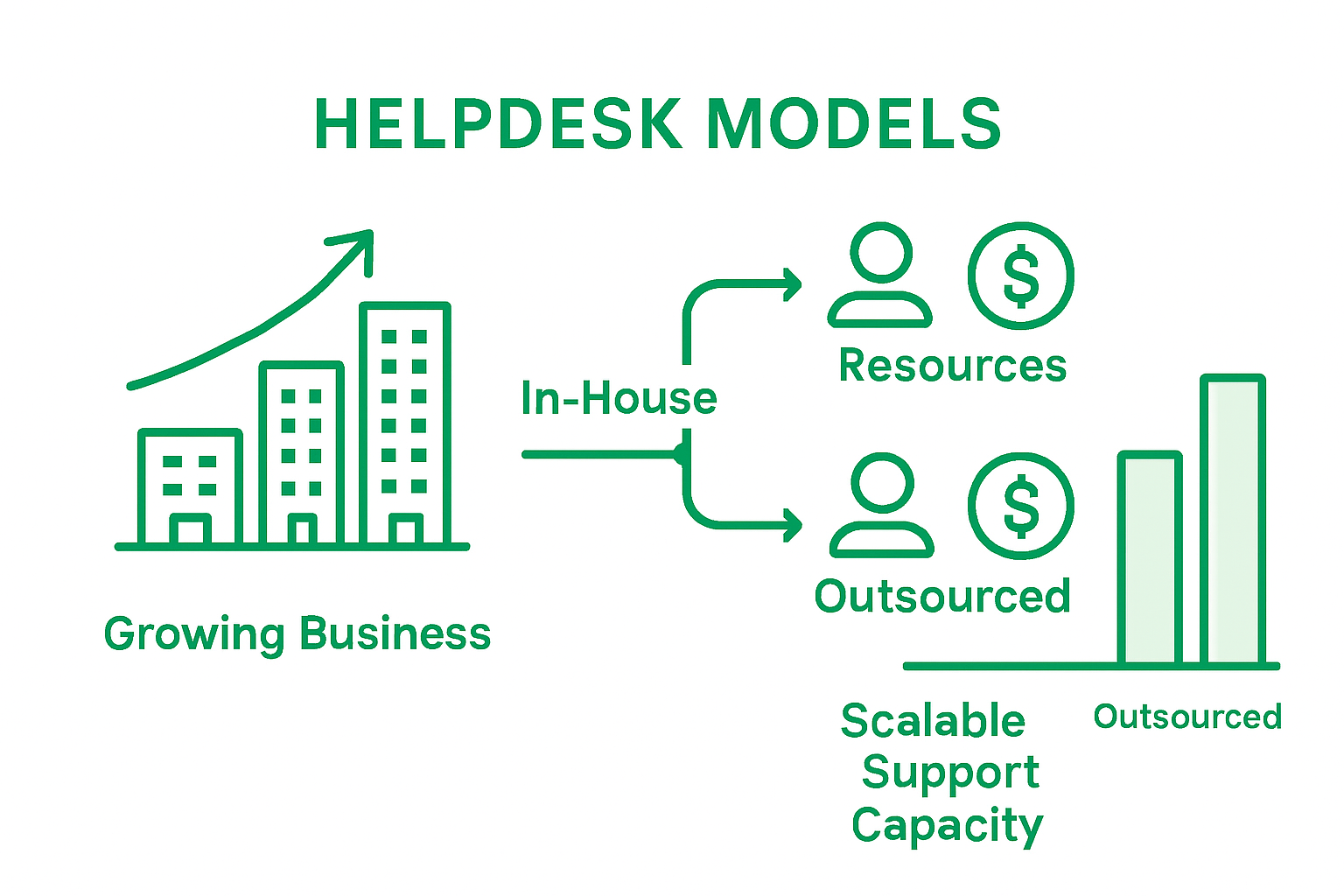
Outsourcing IT helpdesk services represents a strategic financial approach that enables businesses to optimize technological support while maintaining significant cost advantages. Understanding outsourcing benefits reveals how companies can transform fixed technological infrastructure expenses into flexible, scalable operational investments that align directly with business growth requirements.
The financial dynamics of IT helpdesk outsourcing are particularly compelling for mid-sized and growing organizations. Traditional in-house IT support models require substantial upfront investments in staffing, training, infrastructure, and ongoing professional development. By contrast, outsourced helpdesk services provide access to specialized technological expertise without the associated overhead costs of maintaining a full-time internal team. Companies can effectively reduce operational expenses by 30-50%, redirecting those resources toward core business development strategies and technological innovation.
Scalability emerges as another critical advantage of outsourced IT helpdesk services. Businesses can rapidly adjust their support capacity in response to changing technological demands, seasonal fluctuations, or unexpected growth scenarios. This flexibility allows organizations to scale support resources up or down without the complex hiring and termination processes associated with traditional employment models. Advanced outsourcing providers offer tiered support structures, enabling businesses to access specialized technological expertise precisely when needed, without maintaining a permanently large support infrastructure.
Pro Tip – Strategic Cost Management: Conduct a comprehensive total cost of ownership analysis comparing in-house versus outsourced IT support, factoring in not just direct salary expenses but also training, infrastructure, software licensing, and potential productivity losses from inefficient support models.
Empower Your Business Growth with Scalable IT Helpdesk Solutions
Navigating the complexities of IT helpdesk services can feel overwhelming, especially when balancing cost, scalability, and technological adaptability. If your organization struggles with managing ticketing systems, troubleshooting technical issues, or selecting between remote, onsite, and hybrid support models, NineArchs LLC offers tailored outsourcing solutions designed to relieve these burdens. By leveraging our expertise in remote workforce and business process outsourcing, you can transform your IT helpdesk from a reactive cost center into a strategic driver of operational efficiency and growth.
Our services focus on delivering reliable, cost-efficient, and scalable support that aligns perfectly with the critical functions detailed in your IT helpdesk strategy. Whether your goal is to reduce downtime, improve user productivity, or seamlessly scale your technical support capabilities, partnering with NineArchs LLC can accelerate your digital transformation journey while minimizing overhead.
Explore how our comprehensive business process outsourcing and virtual assistance services can complement your IT helpdesk needs.
Take the first step toward a more agile and intelligent IT support system.
Looking for a trusted partner to scale your technology support with precision and efficiency
Contact us today at NineArchs LLC and unlock the full potential of your IT helpdesk to enable sustainable business growth.
Frequently Asked Questions
What are IT helpdesk services?
IT helpdesk services are centralized technical support systems within organizations that assist with computer, software, and network-related issues. They provide structured assistance through multiple communication channels and aim to maintain employee productivity and operational continuity.
How do remote, onsite, and hybrid IT helpdesk models differ?
Remote IT helpdesk services operate completely through digital channels, while onsite support involves physical presence to address hardware and complex issues. The hybrid model combines both, allowing flexibility and scalability in support, optimizing costs while ensuring comprehensive coverage.
What are the core functions of IT helpdesk services?
The core functions of IT helpdesk services include ticketing systems for logging and managing support requests, troubleshooting processes for diagnosing and resolving technical problems, and comprehensive support strategies that empower users and enhance productivity.
Why should businesses consider outsourcing IT helpdesk services?
Outsourcing IT helpdesk services can significantly reduce operational costs by eliminating the need for in-house staffing and infrastructure. It also offers scalability, allowing businesses to adjust support capacity in response to fluctuating technological demands without the complexities of hiring and onboarding.