


Over 60 percent of american IT managers say manual processes still slow down productivity in their organizations. With rising global competition and tight budgets, streamlining operations is no longer a luxury for tech companies, it is essential. This article cuts through common myths about IT workflow automation, helping managers understand proven digital methods to reduce errors, minimize wasted effort, and drive measurable cost savings.
Defining IT Workflow Automation and Myths
IT workflow automation represents a strategic technological approach that transforms complex manual processes into streamlined digital operations. By leveraging advanced software tools and intelligent algorithms, organizations can eliminate repetitive tasks, reduce human error, and accelerate operational efficiency across multiple departments.
At its core, workflow automation involves mapping out existing business processes and creating digital pathways that automatically route tasks, documents, and information between systems and team members. Unlike traditional manual workflows, these automated systems can implement business automation strategies that dramatically reduce processing time and minimize potential mistakes.

Several persistent myths surround IT workflow automation that prevent organizations from fully embracing its potential. Contrary to popular belief, automation does not aim to replace human workers but rather to augment their capabilities. These digital systems are designed to handle repetitive, rule-based tasks, allowing professionals to focus on higher-value strategic activities that require creativity, critical thinking, and complex problem-solving.
Common misconceptions about workflow automation include:
- Automation will eliminate all jobs
- Only large enterprises can benefit from automation
- Implementation is too complex and expensive
- Automation works perfectly without human oversight
Pro tip: Start small by identifying one repetitive process in your organization and create a pilot automation project to demonstrate tangible benefits and build organizational confidence.
Types of IT Workflow Automation Solutions
IT workflow automation solutions have evolved into sophisticated technological frameworks designed to transform organizational processes across multiple domains. These solutions range from simple rule-based systems to advanced artificial intelligence platforms, each offering unique capabilities for streamlining operational tasks and enhancing productivity.
The primary categories of workflow automation solutions include rule-based automation, low-code platforms, and AI-powered systems. Business task automation strategies typically incorporate these frameworks to create comprehensive digital transformation approaches. Rule-based automation focuses on predefined logic and structured workflows, allowing organizations to establish consistent processes with minimal human intervention. Low-code platforms enable technical and non-technical professionals to design custom workflows using visual interfaces and minimal programming knowledge.
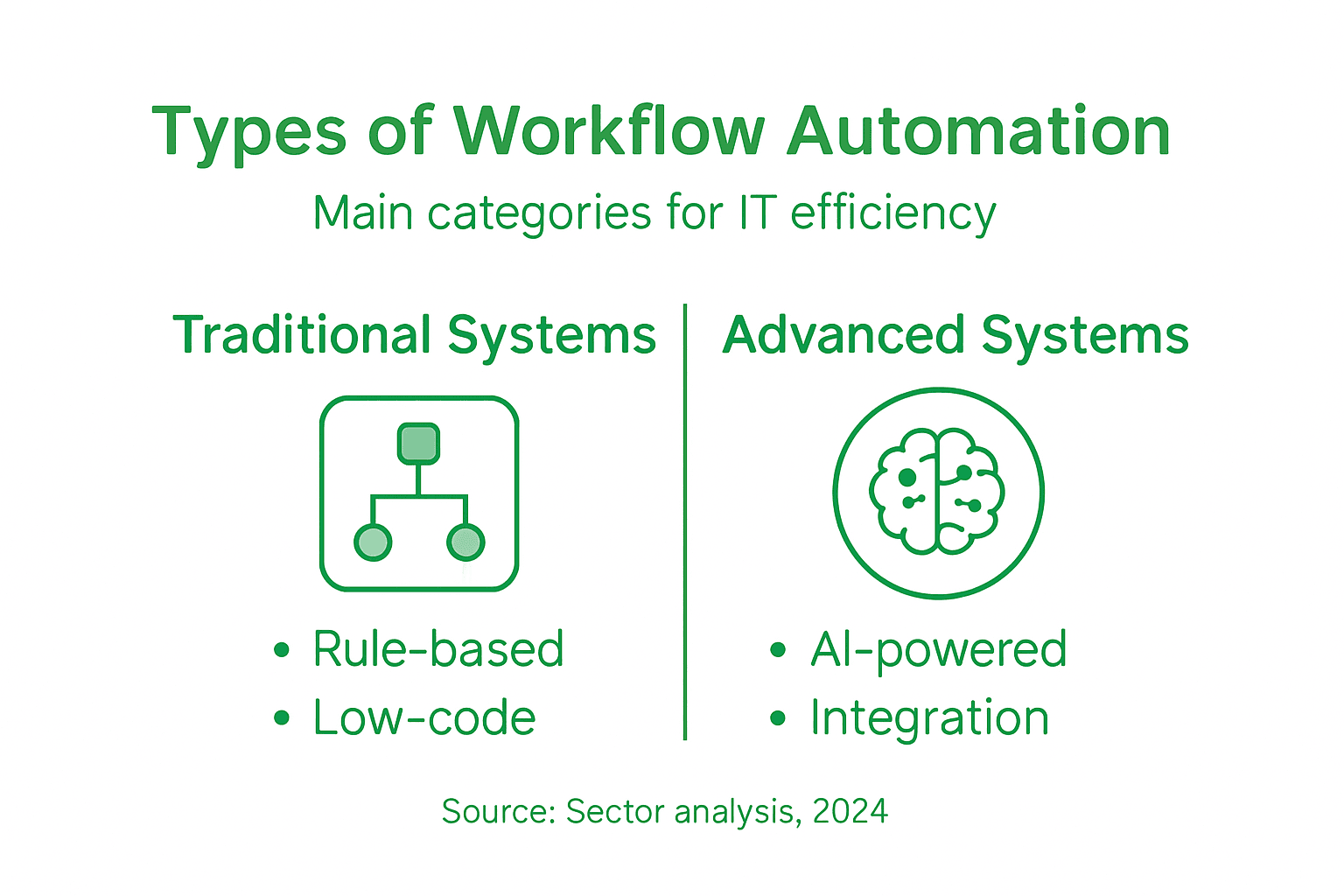
AI-powered workflow automation represents the most advanced category, leveraging machine learning algorithms to create dynamic, adaptive systems that can learn from historical data and make intelligent routing decisions. These sophisticated solutions go beyond traditional automation by introducing predictive capabilities, natural language processing, and advanced decision-making mechanisms that can handle complex, unstructured tasks across different organizational departments.
Key types of workflow automation solutions include:
To clarify how different workflow automation solutions compare in terms of complexity and benefits, see the table below:
| Solution Type | Required Expertise | Typical Use Cases | Key Business Benefit |
|---|---|---|---|
| Rule-Based Automation | Basic technical skill | Routine data entry, notifications | Reduces manual errors |
| Low-Code Platforms | Moderate skill needed | Custom approval workflows | Empowers non-developers |
| AI-Powered Systems | Advanced expertise | Predictive routing, NLP tasks | Enables intelligent processes |
- Robotic Process Automation (RPA)
- Business Process Management (BPM) platforms
- Enterprise Content Management (ECM) systems
- Integration Platform as a Service (iPaaS)
- Artificial Intelligence workflow engines
Pro tip: Conduct a thorough audit of your existing processes and select an automation solution that matches your organization’s specific complexity and technological maturity level.
How Automated IT Workflows Function
Automated IT workflows function as intelligent digital systems that transform complex organizational processes into seamless, programmatic sequences of interconnected tasks. These sophisticated mechanisms leverage advanced algorithms to systematically route information, trigger actions, and manage procedural requirements with minimal human intervention.
The core operational mechanism of automated workflows involves several critical stages: task initiation, rule validation, and execution tracking. Mastering IT support processes requires understanding how these systems dynamically analyze predefined business rules and execute actions based on specific conditions. When a workflow is triggered, the system immediately evaluates incoming data against established criteria, determining the appropriate path for processing, routing documents, or initiating subsequent actions without manual interference.
Modern automated workflow systems incorporate intelligent decision-making capabilities that extend beyond simple rule application. These advanced platforms utilize machine learning algorithms to continuously analyze process performance, identify bottlenecks, and autonomously suggest optimization strategies. By integrating real-time monitoring and adaptive routing mechanisms, organizations can create flexible workflows that respond dynamically to changing operational requirements and complex interdepartmental interactions.
Key functional components of automated IT workflows include:
- Trigger mechanisms that initiate workflow sequences
- Business rule engines for conditional processing
- Integrated notification and escalation systems
- Comprehensive audit and tracking capabilities
- Automated data synchronization across multiple platforms
Pro tip: Map your existing manual processes meticulously before implementing workflow automation to ensure precise digital replication of organizational procedures.
Real-World Applications Across Sectors
Workflow automation has emerged as a transformative technology spanning multiple industries, demonstrating remarkable versatility in solving complex operational challenges across public and private sector environments. Organizations worldwide are leveraging these intelligent systems to streamline processes, reduce operational costs, and dramatically improve service delivery efficiency.
In government sectors, workflow automation has proven particularly impactful, with agencies like the Food and Drug Administration (FDA) and Internal Revenue Service (IRS) implementing sophisticated digital processes to enhance citizen services. Why automate business processes becomes evident when examining how these systems enable faster document processing, reduce administrative overhead, and ensure consistent compliance with regulatory requirements. Public institutions have successfully deployed automated workflows to manage immigration applications, tax filing procedures, and complex administrative approvals with unprecedented speed and accuracy.
Beyond government, workflow automation is revolutionizing sectors like healthcare, education, finance, and manufacturing. Academic institutions are using automated systems to manage student admissions, research grant applications, and complex administrative tasks. Manufacturing companies leverage these technologies to track production workflows, manage supply chain logistics, and maintain real-time quality control processes. Financial services organizations utilize automation for risk assessment, fraud detection, and regulatory compliance reporting, transforming traditionally manual and time-consuming operations.
Key sectors benefiting from workflow automation include:
Below is a summary of cross-industry automation benefits for quick reference:
| Sector | Key Use of Automation | Main Improvement |
|---|---|---|
| Healthcare | Patient record management, billing | Faster processing, fewer errors |
| Education | Admission and research applications | Streamlined operations |
| Finance | Risk assessment, compliance reporting | Greater accuracy, compliance |
| Manufacturing | Production tracking, logistics | Reduced downtime, better quality |
| Public Sector | Licensing, filings, case management | Improved service delivery |
- Healthcare and medical record management
- Government and public administration
- Higher education and research institutions
- Financial services and banking
- Manufacturing and supply chain management
- Technology and software development
- Customer support and service industries
Pro tip: Conduct a comprehensive process audit to identify repetitive tasks with high potential for automation, prioritizing workflows that directly impact operational efficiency and cost reduction.
Risks, Challenges, and Compliance Factors
Workflow automation presents a complex landscape of technological opportunities and potential organizational risks that demand strategic planning and comprehensive risk management approaches. Organizations must navigate multiple layers of technical, regulatory, and operational challenges to successfully implement and maintain automated workflow systems.
The primary challenges in workflow automation include legacy system integration, data security, and organizational resistance. Implementing business automation strategies requires addressing critical vulnerabilities such as cybersecurity risks, potential system failures, and compliance requirements across different regulatory environments. Technical complexities emerge when attempting to integrate new automated systems with existing infrastructure, particularly in organizations with deeply entrenched manual processes and outdated technological ecosystems.
Compliance represents a critical consideration in workflow automation, with organizations needing to establish robust audit trails, maintain data privacy standards, and ensure transparent decision-making processes. Advanced automation platforms must incorporate built-in compliance mechanisms that can adapt to changing regulatory landscapes, validate data integrity, and provide comprehensive documentation of each process step. This requires developing sophisticated rule engines that can programmatically enforce legal and organizational standards while maintaining flexibility for evolving business requirements.
Key risk and compliance factors include:
- Cybersecurity vulnerabilities
- Data privacy and protection standards
- Regulatory compliance across different jurisdictions
- System reliability and redundancy
- Audit trail and documentation requirements
- Human oversight and intervention protocols
- Technology integration challenges
Pro tip: Develop a comprehensive risk assessment framework that includes regular security audits, compliance reviews, and continuous monitoring of automated workflow performance to proactively identify and mitigate potential vulnerabilities.
Best Practices for Successful Implementation
Successful workflow automation requires a strategic, methodical approach that balances technological capabilities with organizational readiness and change management. Organizations must develop comprehensive implementation strategies that address technical, cultural, and operational dimensions to ensure sustainable digital transformation.
The foundational elements of effective workflow automation implementation involve comprehensive planning and incremental deployment. Step-by-Step Guide to Business Process Outsourcing Success emphasizes the critical importance of initial pilot projects that demonstrate tangible value while minimizing organizational disruption. This approach allows teams to validate automation strategies, identify potential challenges, and build organizational confidence through controlled, measurable implementations.
Leadership engagement and stakeholder alignment represent crucial factors in successful workflow automation initiatives. Organizations must invest in extensive staff training, establish clear communication channels, and create performance metrics that demonstrate the direct value of automation. Advanced implementations require developing governance protocols that ensure continuous monitoring, performance tracking, and iterative improvements based on real-world usage data. This approach transforms workflow automation from a technological solution into a strategic organizational capability.
Key best practices for successful implementation include:
- Conduct comprehensive process mapping before automation
- Start with low-complexity, high-impact workflows
- Engage stakeholders from multiple organizational levels
- Develop robust training and change management programs
- Establish clear performance measurement frameworks
- Maintain flexibility for continuous process refinement
- Prioritize user experience and system intuitiveness
Pro tip: Create a cross-functional automation team that includes technical experts, process owners, and end-users to ensure holistic design and widespread organizational buy-in.
Unlock Greater Efficiency with Tailored IT Workflow Automation Solutions
The challenges highlighted around IT workflow automation such as overcoming legacy system integration, ensuring compliance, and optimizing complex processes demand a partner who understands these pain points intimately. At NineArchs LLC, we specialize in delivering customized remote workforce solutions and business automation strategies that empower your team to focus on what matters most while automating repetitive, rule-based tasks seamlessly. With a strong focus on scalability and reliability, our services are designed to integrate smoothly with your existing infrastructure helping you reduce costs and accelerate growth.
Ready to transform your operational workflows into intelligent, automated systems that improve productivity and accuracy now? Contact NineArchs today. Explore how our expertise in virtual assistance, custom software development, and business process outsourcing can help you overcome IT workflow challenges and unlock new levels of efficiency and innovation. Don’t wait to start your journey towards smarter automation — reach out at https://ninearchs.com/contact to discuss your unique needs and begin a tailored solution that scales with your business.
Frequently Asked Questions
What is IT workflow automation?
IT workflow automation is a technology that transforms complex manual processes into streamlined digital operations by using software tools to eliminate repetitive tasks and improve operational efficiency.
How can organizations benefit from implementing workflow automation?
Organizations can benefit from workflow automation by reducing processing times, minimizing human errors, and allowing employees to focus on higher-value tasks that require creativity and critical thinking.
What are the different types of IT workflow automation solutions?
The main types of IT workflow automation solutions include rule-based automation, low-code platforms, and AI-powered systems, each offering unique capabilities for simplifying various business processes.
What are some common challenges associated with workflow automation?
Common challenges include legacy system integration, data security, organizational resistance, and ensuring compliance with regulatory standards, all of which require strategic planning and risk management.
Recommended
- Implementing Business Automation in 2025 for Scalable Growth | NineArchs
- Business Task Automation: Boosting Productivity and Growth | NineArchs
- Why Automate Business Processes: Unlocking Scalable Growth | NineArchs
- Role of Automation in Back Office Operations – Boosting Efficiency and Scaling Growth | NineArchs
- Intranet content ideas