



Many American companies are turning to offshore support as a strategic advantage in today’s fast-changing business world. With over 60 percent of major organizations utilizing global talent, the shift goes far beyond routine cost savings. Offshore support enables access to specialized expertise, expands operational capacity, and helps businesses stay agile in an increasingly competitive market. Understanding how this international approach works can reveal why so many American leaders now see it as essential for growth and innovation.
Defining Offshore Support in Business Operations
Offshore support represents a strategic business approach where companies relocate specific operational functions to international teams, leveraging global talent pools to enhance organizational capabilities. By expanding operational strategies beyond traditional geographical boundaries, businesses can access specialized skills, reduce operational costs, and maintain competitive flexibility.
Offshore Support fundamentally involves transferring business processes, tasks, or entire departments to teams located in different countries. This approach goes far beyond simple cost reduction, encompassing complex strategic objectives like accessing specialized talent, extending operational hours, and building robust global capabilities. Multinational corporations increasingly view offshore support not just as an economic strategy, but as a sophisticated method of building dynamic, globally distributed workforce ecosystems.
The core characteristics of offshore support typically include:
- Geographical separation between primary business headquarters and support teams
- Specialized skill acquisition from international talent markets
- Significant potential for cost optimization
- Enhanced operational flexibility and scalability
- Ability to operate across multiple time zones
Global Capability Centers (GCCs) have emerged as sophisticated manifestations of offshore support, representing dedicated offshore entities established by multinational corporations. These centers are not mere outsourcing arrangements but strategic extensions of parent organizations, designed to deliver critical services with deep organizational alignment and specialized expertise.
Types of Offshore Support Services Available
Businesses today leverage a diverse range of offshore support services strategically designed to optimize operational efficiency and access global talent. Examples of support desk services reveal the intricate landscape of offshore capabilities that modern organizations can tap into, spanning multiple functional domains and technological platforms.
Offshore Support Services typically encompass several critical business functions, each offering unique advantages and strategic opportunities. These services are not monolithic but represent a sophisticated ecosystem of specialized operational capabilities:
- Information Technology (IT) Services
- Software development
- Technical support
- Cybersecurity management
- Cloud infrastructure maintenance
- Customer Support Services
- Multilingual customer assistance
- Technical troubleshooting
- Help desk operations
- Customer relationship management
- Finance and Accounting Services
- Bookkeeping
- Financial analysis
- Payroll processing
- Tax preparation and compliance
- Human Resources Services
- Recruitment processing
- Employee onboarding
- Performance management
- Training and development administration
Offshoring as a Service (OaaS) has evolved beyond traditional outsourcing models, transforming into a strategic approach where specialized vendors provide comprehensive operational support. These vendors don’t just offer isolated services but create integrated solutions that align closely with client organizational objectives, enabling businesses to build flexible, scalable global workforce ecosystems that transcend traditional geographical and operational constraints.

How Offshore Support Models Operate
Offshore support models represent sophisticated strategies for businesses to extend operational capabilities beyond traditional geographical boundaries. Understanding remote workforce dynamics reveals the intricate mechanisms through which organizations strategically distribute their workforce and operational functions across international territories.
Offshore Support Models fundamentally operate through two primary approaches: captive centers and third-party vendor partnerships. Each model offers distinct advantages and requires unique implementation strategies:
- Captive Offshore Centers
- Fully owned subsidiaries established in foreign locations
- Complete operational control retained by parent company
- Direct management of offshore teams and infrastructure
- Higher initial investment but greater long-term strategic control
- Third-Party Vendor Partnerships
- Contracted external service providers manage offshore operations
- Reduced capital investment and operational complexity
- Faster market entry and scalability
- Access to specialized talent pools without direct infrastructure management
The Offshoring as a Service (OaaS) model has emerged as a sophisticated evolution of traditional offshore strategies. This approach allows businesses to leverage specialized vendors who provide comprehensive operational support, creating integrated solutions that align closely with organizational objectives. By outsourcing offshore operations to expert providers, companies can focus on core business functions while accessing global talent and advanced technological capabilities with minimal administrative overhead.
Successful offshore support models prioritize clear communication protocols, robust technological infrastructure, and rigorous performance management systems. These elements ensure seamless integration between onshore headquarters and offshore teams, enabling businesses to create truly global, flexible, and efficient operational ecosystems that transcend traditional workplace limitations.
Key Benefits and Challenges to Consider
Navigating offshore support requires a nuanced understanding of both strategic advantages and potential obstacles. Business process outsourcing benefits reveal a complex landscape of opportunities and risks that demand careful strategic planning and execution.
The Key Benefits of offshore support are compelling and multifaceted:
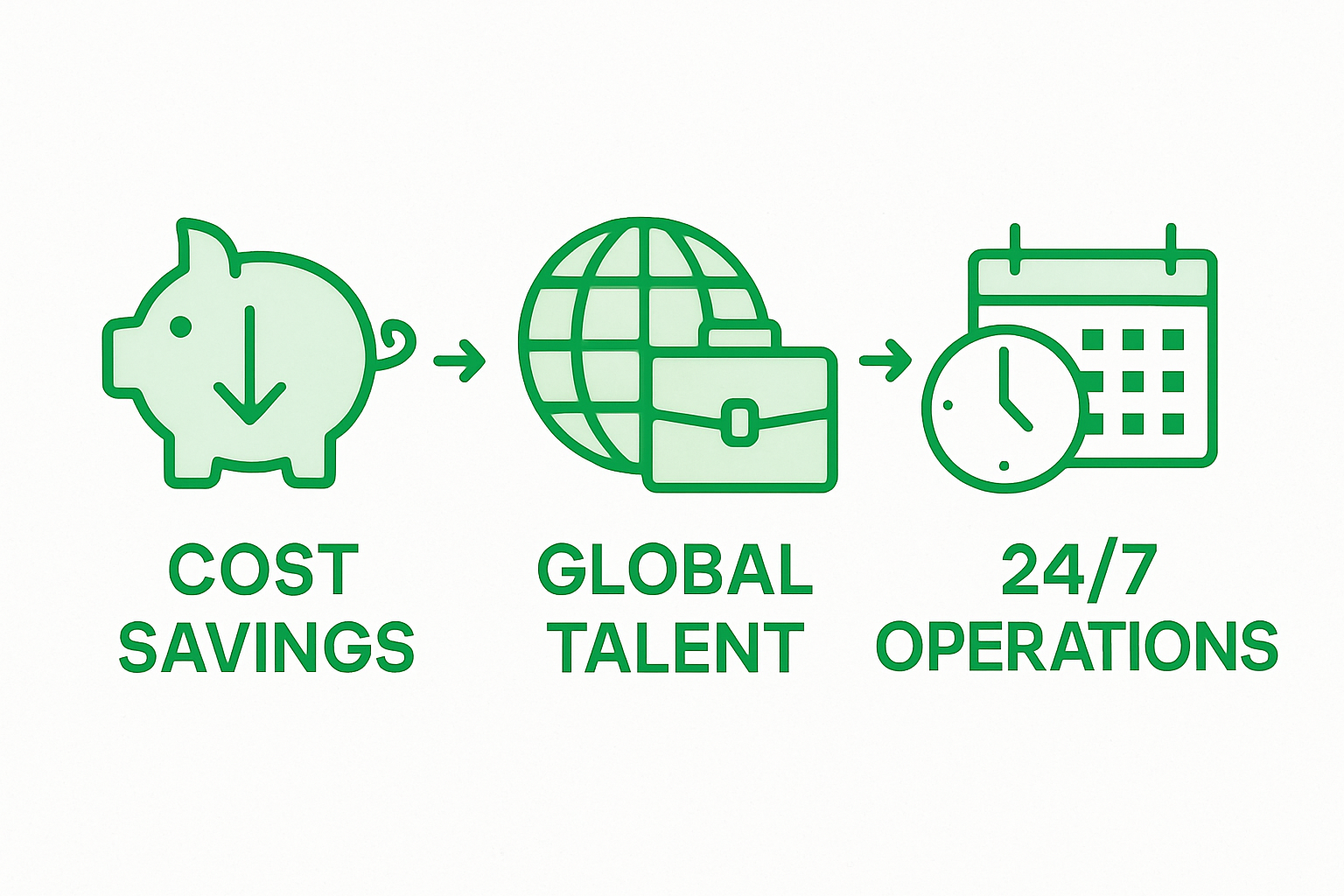
- Cost Optimization
- Significant reduction in operational expenses
- Lower labor costs in international markets
- Minimized infrastructure investment
- Flexible scaling of workforce
- Talent Access
- Global talent pool recruitment
- Specialized skill acquisition
- Diverse professional perspectives
- 24/7 operational capabilities
- Operational Flexibility
- Rapid market expansion
- Enhanced technological capabilities
- Accelerated product development cycles
- Increased organizational adaptability
Corresponding Challenges require strategic mitigation approaches:
- Communication Barriers
- Language differences
- Cultural misalignments
- Time zone complexities
- Potential misunderstandings
- Quality Control
- Maintaining consistent performance standards
- Monitoring remote team productivity
- Ensuring data security
- Managing compliance requirements
Successful offshore support strategies demand proactive management, robust technological infrastructure, and a comprehensive understanding of both organizational objectives and potential limitations. Companies must develop sophisticated communication protocols, invest in cultural training, and implement rigorous performance management systems to transform potential challenges into competitive advantages.
Legal, Security, and Compliance Factors
Offshore support arrangements demand meticulous attention to legal, security, and compliance frameworks that protect organizational interests across international boundaries. Understanding IT outsourcing challenges reveals the complex regulatory landscape businesses must navigate when establishing global operational strategies.
Legal Considerations in offshore support encompass multiple critical dimensions:
- Jurisdictional Compliance
- International contract law alignment
- Cross-border legal agreements
- Intellectual property protection
- Dispute resolution mechanisms
- Regulatory Frameworks
- Data privacy regulations
- Industry-specific compliance requirements
- International labor standards
- Tax and financial reporting obligations
Security Protocols represent another crucial dimension of offshore operations:
- Data Protection Strategies
- Encryption technologies
- Secure communication channels
- Access control management
- Regular security audits
- Risk Mitigation Approaches
- Comprehensive background checks
- Non-disclosure agreements
- Cybersecurity training programs
- Continuous monitoring systems
Successful offshore support models integrate robust compliance mechanisms that transcend traditional operational boundaries. Organizations must develop sophisticated governance frameworks that balance operational efficiency with stringent legal and security requirements, ensuring comprehensive protection of sensitive information while maintaining the flexibility required for global business strategies.
Unlock the Full Potential of Offshore Support with Expert Outsourcing Solutions
Offshore support offers businesses significant advantages like cost optimization, access to global talent, and operational flexibility. However managing communication barriers, quality control, and legal compliance can be challenging without the right partner. If you’re looking to build a scalable, reliable offshore workforce that aligns perfectly with your strategic goals NineArchs LLC specializes in delivering tailored offshore solutions including virtual assistance, custom software development, and business process outsourcing that address these pain points.
By leveraging our expertise you gain professional, cost-efficient support that seamlessly integrates into your operations while overcoming common hurdles outlined in the article. Let us help you transform offshore support from a complex challenge into a powerful growth driver.
Explore how our remote workforce services can accelerate your business growth today.
Ready to scale your offshore support efforts with trusted experts Contact us now at NineArchs LLC for a customized plan. Discover more about our knowledge outsourcing and remote workforce solutions and start benefiting from global talent and operational flexibility immediately.
Frequently Asked Questions
What is offshore support in business operations?
Offshore support refers to relocating specific operational functions to international teams, allowing companies to access a global talent pool, reduce costs, and enhance flexibility in their operations.
What are the key benefits of offshore support services?
The key benefits include cost optimization, access to specialized skills, operational flexibility, and the ability to operate across multiple time zones, which helps businesses scale efficiently.
How do offshore support models operate?
Offshore support models can operate through captive centers, which are fully owned subsidiaries in foreign locations, or third-party vendor partnerships, where external service providers manage operations, allowing for quicker market entry and scalability.
What challenges should businesses consider when implementing offshore support?
Challenges include communication barriers, quality control issues, and compliance with legal and security regulations. Companies must develop effective communication protocols and performance management systems to address these challenges.