
More than 60 percent of American tech firms now consider remote workforce optimization a top strategic priority. For operations managers worldwide, aligning human talent with business goals has grown far more complex as teams spread out across countries and time zones. Understanding the core methods behind effective workforce optimization can help your organization achieve better productivity outcomes while managing costs in an unpredictable global market.
Defining Workforce Optimization Strategies
Workforce optimization represents a strategic approach to systematically managing and enhancing organizational human resources to maximize productivity, efficiency, and overall business performance. At its core, workforce optimization involves aligning an organization’s human capital with its operational goals through data-driven planning, skills development, and performance management techniques.
The fundamental objectives of workforce optimization include creating a comprehensive strategy that addresses several critical dimensions:
- Resource Allocation: Matching employee skills precisely with organizational needs
- Performance Management: Establishing clear performance metrics and development pathways
- Skills Forecasting: Anticipating future talent requirements and potential skill gaps
- Operational Efficiency: Streamlining workflows and reducing operational friction
Companies implementing effective remote workforce strategies recognize that workforce optimization goes beyond traditional human resources management. It requires a holistic approach that integrates technological tools, data analytics, and strategic planning to create adaptive and responsive organizational structures.
Research from the World Economic Forum highlights that successful workforce optimization strategies prioritize continuous learning, on-the-job training, and process automation. These approaches enable businesses to address emerging skills challenges and drive productivity in rapidly changing market environments. By investing in systematic workforce planning, organizations can develop more resilient and flexible human capital capable of navigating complex operational landscapes.
Pro tip: Conduct quarterly skills assessments to proactively identify and address potential talent gaps before they impact organizational performance.
Types of Workforce Optimization Approaches
Workforce optimization encompasses multiple strategic approaches designed to enhance organizational performance and human resource effectiveness. Modern businesses increasingly recognize the need for comprehensive strategies that go beyond traditional management techniques, integrating technological solutions and adaptive workforce planning methodologies.
The primary types of workforce optimization approaches include:
- Technological Optimization: Leveraging AI and data analytics for predictive workforce planning
- Learning and Development: Implementing continuous skill enhancement programs
- Performance Management: Creating data-driven performance tracking and improvement systems
- Strategic Talent Alignment: Matching organizational capabilities with strategic business objectives
Outsourcing repetitive tasks represents a critical component of technological optimization, enabling companies to redirect human capital toward more strategic and high-value activities. Artificial intelligence-driven approaches are particularly transformative, offering unprecedented capabilities in demand forecasting, workforce scheduling, and skills gap analysis.
Research from global organizations highlights that successful workforce optimization strategies integrate multiple complementary approaches. These typically involve continuous learning investments, process automation, and strategic alignment of workforce capabilities. By adopting a multifaceted approach, businesses can address talent attraction challenges, bridge skills gaps, and create more resilient organizational structures capable of adapting to rapid market changes.
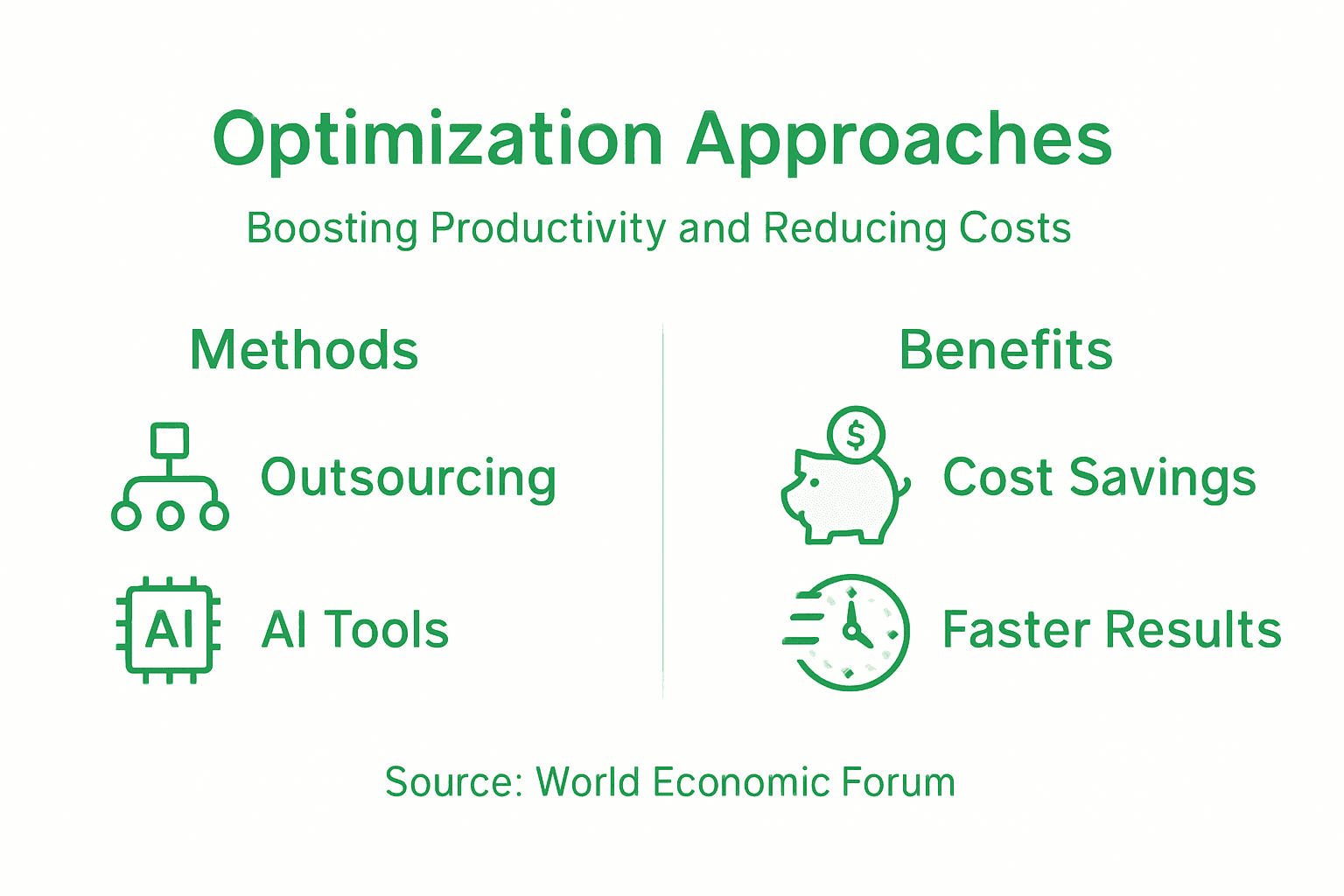
Here’s a comparison of workforce optimization approaches and their core impact on organizations:
| Approach Type | Primary Benefit | Key Tools/Methods | Business Impact |
|---|---|---|---|
| Technological | Enhanced efficiency | AI, analytics platforms | Faster, smarter decision-making |
| Learning & Development | Strengthened skillset | Online courses, workshops | Improved talent adaptability |
| Performance Management | Increased accountability | Data-driven reviews | Higher productivity and morale |
| Strategic Talent Alignment | Goal-oriented workforce | Capability mapping | Competitive business edge |
Pro tip: Develop a cross-functional optimization team that combines HR professionals, data analysts, and technology experts to create more holistic workforce strategies.
Key Components of Successful Optimization
Workforce optimization requires a strategic, multidimensional approach that integrates technological capabilities, human potential, and organizational design. Successful optimization is not a singular intervention but a comprehensive system that aligns talent management, technological infrastructure, and business objectives into a cohesive strategy.
The core components of effective workforce optimization include:
- Data-Driven Planning: Utilizing advanced analytics to forecast workforce needs
- Continuous Learning: Implementing robust upskilling and reskilling programs
- Performance Management: Creating transparent, measurable performance frameworks
- Technological Integration: Leveraging AI and automation to enhance workforce capabilities
Outsourcing best practices play a critical role in workforce optimization by enabling organizations to strategically allocate human resources and focus on core competencies. Advanced predictive analytics and artificial intelligence now allow businesses to anticipate workforce requirements with unprecedented precision, transforming traditional reactive approaches into proactive talent management strategies.
Research indicates that holistic optimization strategies must transcend technical implementations and incorporate crucial human-centric elements. This includes creating inclusive organizational cultures, prioritizing employee well-being, and developing adaptive frameworks that support continuous professional growth. By integrating technological solutions with strategic human resource practices, organizations can build resilient workforce ecosystems capable of navigating complex business landscapes.
Pro tip: Conduct quarterly skills gap assessments and develop personalized learning pathways to ensure continuous workforce evolution and alignment with emerging business needs.
Implementing Remote Workforce Solutions Effectively
Implementing remote workforce solutions requires a comprehensive strategy that goes beyond simply enabling employees to work from different locations. Organizations must develop a holistic approach that addresses technological infrastructure, communication protocols, performance management, and employee engagement to create a cohesive and productive virtual work environment.
Key implementation strategies include:
- Technological Infrastructure: Deploying robust digital collaboration platforms
- Communication Protocols: Establishing clear expectations and communication channels
- Performance Tracking: Creating objective, results-oriented measurement systems
- Cultural Integration: Fostering a unified organizational culture across distributed teams
How to manage virtual teams effectively demands a strategic approach that balances technological solutions with human-centered management practices. Organizations must invest in advanced collaboration tools, secure communication platforms, and comprehensive training programs that enable seamless remote interactions while maintaining high levels of productivity and team cohesion.

Research highlights the critical importance of addressing potential challenges inherent in remote work environments. This includes managing potential isolation, maintaining employee mental health, ensuring equitable access to resources, and developing leadership capabilities that support distributed team dynamics. Successful implementation requires continuous assessment, iterative improvements, and a flexible approach that adapts to evolving workforce needs and technological capabilities.
Pro tip: Implement quarterly virtual team-building activities and regular check-ins to maintain team connectivity and monitor employee engagement levels in remote work settings.
Risks, Costs, and Common Mistakes to Avoid
Workforce optimization strategies can quickly become counterproductive when organizations fail to recognize the nuanced challenges inherent in transforming human capital management. Understanding potential risks and strategic pitfalls is crucial for developing resilient and effective workforce solutions that balance technological innovation with human-centered approaches.
Key risks and potential costly mistakes include:
- Misalignment with Strategic Goals: Implementing optimization without clear organizational objectives
- Short-Term Cost Cutting: Prioritizing immediate savings over long-term talent development
- Technological Over-Reliance: Neglecting human factors in favor of pure technological solutions
- Insufficient Change Management: Failing to prepare workforce for structural transformations
7 essential outsourcing tips demonstrate that successful workforce optimization requires a holistic approach that goes beyond simplistic cost reduction strategies. Organizations must carefully evaluate potential implementation risks, including potential negative impacts on employee morale, data privacy concerns, and unintended consequences of technological interventions.
Research highlights that the most significant costs associated with workforce optimization emerge not from technology investments, but from poor implementation and inadequate change management. Ethical considerations, employee resistance, and potential disruptions to existing workflow patterns can create substantial hidden expenses that far outweigh initial technological investments. Successful strategies require a balanced approach that integrates technological capabilities with comprehensive human capital development and organizational cultural sensitivity.
For quick reference, here are common workforce optimization risks and practical strategies to mitigate them:
| Risk Category | Typical Challenge | Recommended Mitigation |
|---|---|---|
| Strategic Misalignment | Goals not clearly defined | Set measurable objectives |
| Overemphasis on Tech | Ignoring human element | Balance with employee support |
| Change Resistance | Staff pushback | Implement ongoing training |
| Poor Communication | Lack of transparency | Establish feedback channels |
Pro tip: Conduct comprehensive risk assessments and create detailed mitigation strategies before implementing any major workforce optimization initiative.
Elevate Your Workforce Optimization with Tailored Remote Solutions
Maximizing productivity and managing complex workforce demands are challenges every forward-thinking company faces today. This article highlights key concepts like data-driven planning, continuous learning, and strategic talent alignment. If you are looking to overcome risks such as misalignment with business goals or technological over-reliance, implementing a comprehensive remote workforce strategy is essential.
NineArchs LLC specializes in providing scalable, cost-efficient outsourcing services including virtual assistance, skills outsourcing, and business process outsourcing. Our solutions empower you to streamline operations while focusing human capital on high-impact tasks. Combine cutting-edge technology with expert remote teams to boost efficiency and reduce costly mistakes.
Discover how your company can achieve workforce optimization that drives growth instead of just cost-cutting. Explore strategic outsourcing options and expert consulting by contacting NineArchs today. Take the next step toward reliable, flexible, and innovative workforce support by visiting our contact page. Don’t wait to transform your workforce challenges into opportunities for sustained business success.
Frequently Asked Questions
What is workforce optimization?
Workforce optimization is a strategic approach to managing and enhancing an organization’s human resources to maximize productivity, efficiency, and overall business performance. It aligns human capital with operational goals through data-driven planning and performance management techniques.
Why is performance management important in workforce optimization?
Performance management establishes clear performance metrics and development pathways, which help organizations track employee performance, enhance productivity, and promote continuous improvement.
How can organizations predict future talent requirements?
Organizations can anticipate future talent requirements using skills forecasting, which identifies potential skill gaps and helps in developing proactive strategies for recruitment and training.
What role does technology play in workforce optimization?
Technology plays a crucial role by leveraging AI and data analytics for predictive workforce planning, enabling streamlined workflows, and automating processes, ultimately enhancing operational efficiency and decision-making.
Recommended
- What Is Remote Workforce? Complete Business Guide | NineArchs
- Role of Outsourcing in Productivity: Complete Guide | NineArchs
- Implementing Business Automation in 2025 for Scalable Growth | NineArchs
- Outsource Repetitive Tasks Guide for Seamless Efficiency | NineArchs
- Employee Retention Solutions | Reduce Turnover | OpenElevator
- Time management voor ondernemers: structuur en efficiëntie verhogen – Ondernemers Plaza Online