

More than 80 percent of American tech companies now rely on remote HR support to cut costs and manage global teams. Faced with shifting expectations and an increasingly dispersed workforce, HR managers must find solutions that work across time zones without compromising compliance or employee satisfaction. This guide breaks down the latest models, technologies, and best practices in remote HR, helping you choose smart strategies that fit your growing organization.
Defining Remote HR Support Services Today
The landscape of human resources has undergone a profound transformation, driven by technological advancements and global workforce shifts. Remote HR support services now represent a sophisticated approach to managing human capital across geographic boundaries, leveraging digital platforms and strategic frameworks to maintain organizational effectiveness. These services encompass a comprehensive range of functions designed to support, engage, and optimize workforce performance without traditional physical workplace constraints.
Modern remote HR support services integrate multiple strategic components, including digital talent management, virtual employee engagement, performance tracking, and cross-cultural workforce coordination. By utilizing strategic workforce management techniques, organizations can now seamlessly manage recruitment, onboarding, training, and professional development processes through advanced technological platforms. The pandemic accelerated this transition, demonstrating that HR professionals can effectively manage complex human capital needs without traditional in-person interactions.

The core objectives of remote HR support services focus on three primary dimensions: operational efficiency, strategic workforce planning, and employee experience optimization. These services employ sophisticated digital tools to automate administrative tasks, conduct data-driven performance assessments, and create inclusive communication channels that transcend geographical limitations. HR teams now utilize advanced analytics, cloud-based collaboration platforms, and intelligent workflow management systems to deliver comprehensive support in real time.
Pro tip: Implement a robust digital infrastructure with integrated communication and performance tracking tools to ensure seamless remote HR management and maintain high employee engagement levels.
Core Models of Remote HR Support
The contemporary HR landscape has evolved to embrace multiple sophisticated remote work models that cater to diverse organizational needs and workforce dynamics. These models represent strategic frameworks designed to optimize operational efficiency, employee engagement, and organizational adaptability in an increasingly digital global environment. HR support outsourcing has become crucial in implementing these flexible workforce strategies effectively.
Three primary remote HR support models have emerged as dominant approaches in modern business contexts: fully remote, hybrid, and decentralized workforce management. The fully remote model enables complete digital workforce coordination, allowing organizations to recruit talent globally without geographic restrictions. Hybrid models provide flexible arrangements where employees split time between physical office spaces and remote work environments, offering balanced approaches to collaboration and individual productivity. Decentralized workforce management focuses on creating autonomous teams with distributed decision-making capabilities, emphasizing outcomes over traditional hierarchical structures.
Each remote HR support model requires specialized technological infrastructure and strategic frameworks to ensure seamless operations. Advanced digital platforms, cloud-based communication tools, performance tracking systems, and robust cybersecurity protocols are essential for maintaining organizational effectiveness. These models demand sophisticated approaches to talent management, including virtual recruitment processes, digital onboarding strategies, continuous professional development programs, and data-driven performance evaluation techniques that transcend traditional physical workplace limitations.
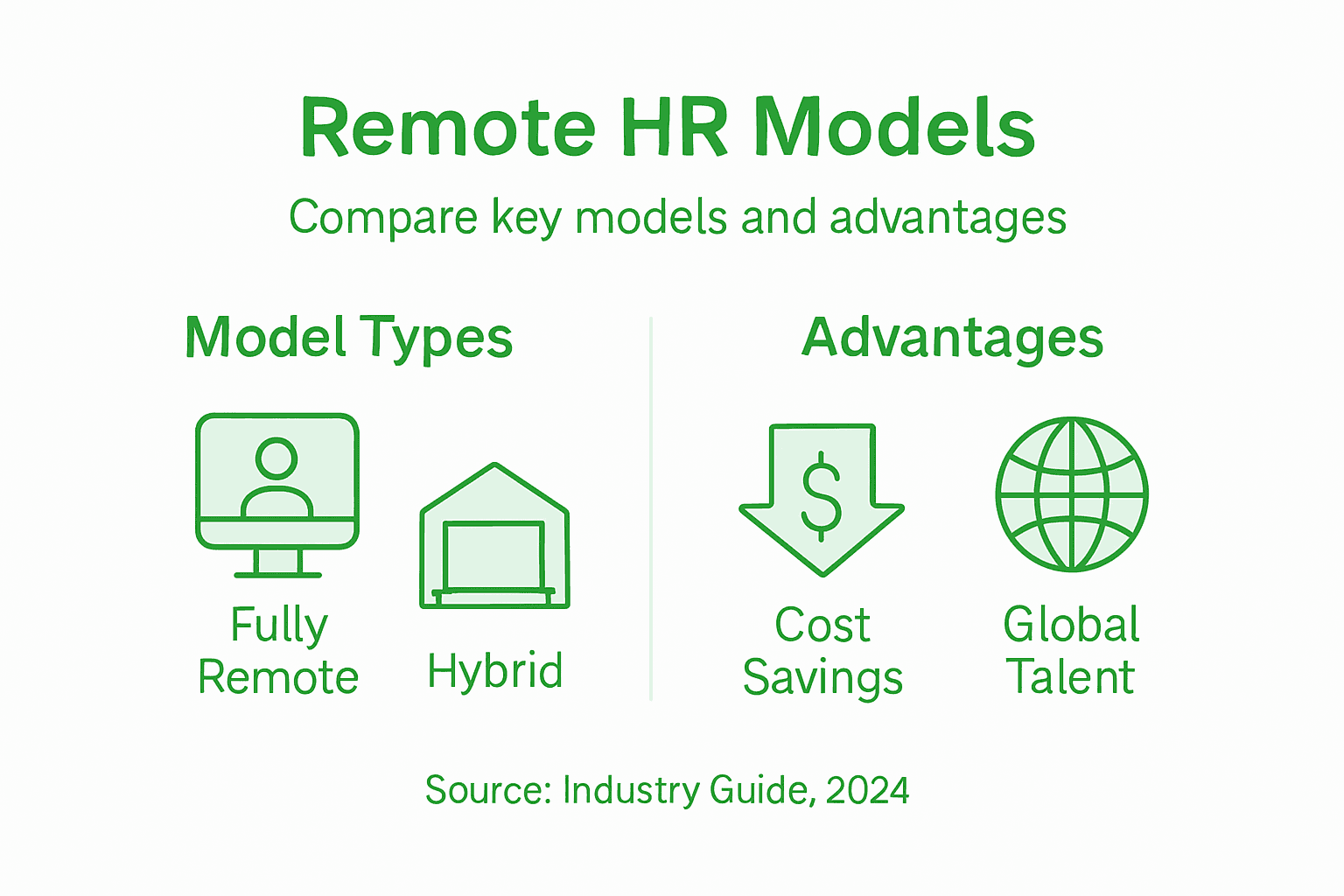
Here’s a comparison of the core remote HR support models for a quick overview:
| Model | Key Advantage | Challenge |
|---|---|---|
| Fully Remote | Access global talent pool | Coordination across time zones |
| Hybrid | Flexible work-life arrangements | Managing in-person/remote parity |
| Decentralized | Autonomous decision making | Consistent communication required |
Pro tip: Develop a comprehensive digital ecosystem with integrated communication and collaboration tools that support multiple remote work models while maintaining consistent organizational culture and employee engagement.
Essential Technologies Powering Remote HR
The digital transformation of human resources has accelerated dramatically, with advanced technological ecosystems becoming the backbone of modern workforce management. Organizations now rely on sophisticated technological infrastructures that enable seamless remote HR operations, transcending traditional workplace boundaries. Remote workforce technologies have revolutionized how companies manage, engage, and support their global talent pools.
Cloud-based Human Resource Information Systems (HRIS) represent the foundational technology driving remote HR capabilities. These comprehensive platforms integrate multiple critical functions, including employee data management, performance tracking, recruitment processes, and strategic workforce analytics. Advanced communication tools like unified messaging platforms, video conferencing systems, and collaborative workspaces enable real-time interaction and team coordination across diverse geographic locations. Artificial intelligence and machine learning algorithms further enhance these systems by providing predictive insights, automating repetitive administrative tasks, and supporting data-driven decision making.
Securing these technological ecosystems requires robust cybersecurity protocols and integrated digital infrastructure. Organizations must implement multi-factor authentication, encrypted communication channels, and comprehensive data protection mechanisms to safeguard sensitive employee information. Emerging technologies such as virtual reality onboarding experiences, AI-powered recruitment screening, and predictive workforce analytics are transforming traditional HR practices, creating more dynamic, responsive, and intelligent human resource management approaches that can adapt to rapidly changing global business environments.
The table below summarizes essential technologies that enable effective remote HR support:
| Technology Pillar | Primary Function | Business Impact |
|---|---|---|
| Cloud-based HRIS | Centralizes HR data and workflows | Enhanced accuracy and accessibility |
| Unified Communication Tools | Facilitate real-time interaction | Boosted employee engagement and speed |
| AI & Machine Learning | Automate HR tasks, predictive insights | Improved efficiency and data-driven decisions |
Pro tip: Invest in comprehensive technology integration training to ensure your HR team can effectively leverage and maximize the potential of advanced remote workforce technologies.
Key Responsibilities and Compliance Factors
Remote HR support demands a comprehensive approach to managing complex legal and operational responsibilities across diverse global environments. Organizations must navigate an intricate landscape of regulatory requirements, employee protections, and ethical workforce management practices. Employee communication best practices become critical in ensuring transparent and compliant remote work arrangements that protect both organizational and employee interests.
The key responsibilities of remote HR support encompass multiple critical domains, including legal compliance, workforce management, and employee well-being. Compliance factors require meticulous attention to international labor laws, data privacy regulations, and equitable employment practices. HR professionals must develop sophisticated strategies that address wage standards, anti-discrimination protocols, benefit administration, and workplace safety guidelines across different jurisdictions. This involves creating flexible yet rigorous policy frameworks that can adapt to varying legal environments while maintaining consistent organizational standards.
Technological infrastructure plays a pivotal role in managing compliance and operational responsibilities in remote HR support. Advanced digital platforms enable real-time tracking of workforce regulations, automated compliance monitoring, and comprehensive documentation of employment practices. HR teams must implement robust cybersecurity measures, develop comprehensive training programs on legal requirements, and create transparent communication channels that facilitate ongoing dialogue about rights, responsibilities, and organizational expectations. Proactive risk management, continuous legal education, and agile policy development are essential components of effective remote HR compliance strategies.
Pro tip: Develop a comprehensive compliance tracking system that integrates legal updates, regulatory changes, and organizational policies to maintain proactive risk management in remote workforce environments.
Risks, Cost Savings, and Choosing Providers
Remote HR support represents a complex strategic decision involving significant financial and operational considerations. Organizational risk management requires a nuanced approach to evaluating potential providers, balancing cost savings with comprehensive service capabilities. Benefits of remote IT support demonstrate how strategic outsourcing can transform operational efficiency while mitigating potential risks.
The financial landscape of remote HR support reveals multiple dimensions of potential cost savings and inherent risks. Organizations can typically reduce overhead expenses by 30-40% through remote workforce strategies, eliminating physical infrastructure costs and accessing global talent pools with lower labor expenses. However, these savings must be carefully weighed against potential risks including data security vulnerabilities, compliance challenges across international jurisdictions, and potential productivity disruptions. Critical evaluation criteria for selecting remote HR providers should encompass technological infrastructure, compliance expertise, data protection protocols, and proven track records of successful global workforce management.
Effective risk mitigation requires a comprehensive assessment framework when selecting remote HR support providers. Organizations must conduct thorough due diligence, examining potential partners across multiple dimensions including technological capabilities, legal compliance expertise, cybersecurity standards, and demonstrated ability to maintain consistent service quality. Advanced screening processes should incorporate AI-driven verification techniques, comprehensive background checks, and rigorous evaluation of the provider’s ability to adapt to complex international regulatory environments. This multifaceted approach ensures that cost savings do not compromise organizational integrity or expose the company to unnecessary legal and operational vulnerabilities.
Pro tip: Develop a comprehensive vendor assessment matrix that quantifies potential risks, cost savings, and service capabilities before committing to any remote HR support provider.
Unlock Global Efficiency with Expert Remote HR Support
Managing a remote HR workforce comes with challenges like maintaining compliance, seamless communication, and leveraging advanced technology to optimize employee experience. If you are seeking strategic solutions to overcome these pain points and drive operational efficiency, NineArchs LLC offers tailored remote workforce services designed for your unique business needs. By integrating scalable outsourcing options and cutting-edge digital tools, we help you reduce costs while enhancing workforce engagement and compliance across time zones.
Key benefits include:
- Access to a global talent pool without geographic restrictions
- Robust technology-driven HR management and performance tracking
- Expert handling of legal compliance and data security
Discover how our professional outsourcing and IT services can transform your remote HR challenges into growth opportunities. Start building a future-ready workforce today.
Streamline your remote HR support with NineArchs Contact and explore how our HR support outsourcing expertise can empower your business. For comprehensive insights on managing your workforce, visit our What is Remote Workforce page.
Take the step now to enhance global efficiency through tailored remote HR solutions. Visit https://ninearchs.com/contact to start your journey toward seamless and cost-effective human resource management.
Frequently Asked Questions
What are remote HR support services?
Remote HR support services are sophisticated human resource management functions that leverage digital platforms to manage human capital across geographic boundaries, focusing on operational efficiency, strategic workforce planning, and enhancing employee experience.
What are the core models of remote HR support?
The core models of remote HR support include fully remote, hybrid, and decentralized workforce management, each offering distinct advantages and challenges in optimizing employee engagement and operational efficiency.
What technologies are essential for remote HR support?
Essential technologies for remote HR support include cloud-based HR information systems (HRIS), unified communication tools, and artificial intelligence (AI) for automating tasks and providing predictive insights.
What are the key responsibilities of remote HR support?
Key responsibilities of remote HR support include ensuring legal compliance across jurisdictions, managing workforce dynamics effectively, and promoting employee well-being through effective communication and support systems.