


Nearly 60 percent of American companies now use a mix of remote and onsite support to tackle technical challenges efficiently. For IT managers seeking smarter ways to control spending and improve service, understanding the core differences between these models is crucial. This article breaks down how remote and onsite support work, equipping decision-makers to weigh their advantages and choose solutions that fit their organization’s needs.
Defining Remote and Onsite Support Models
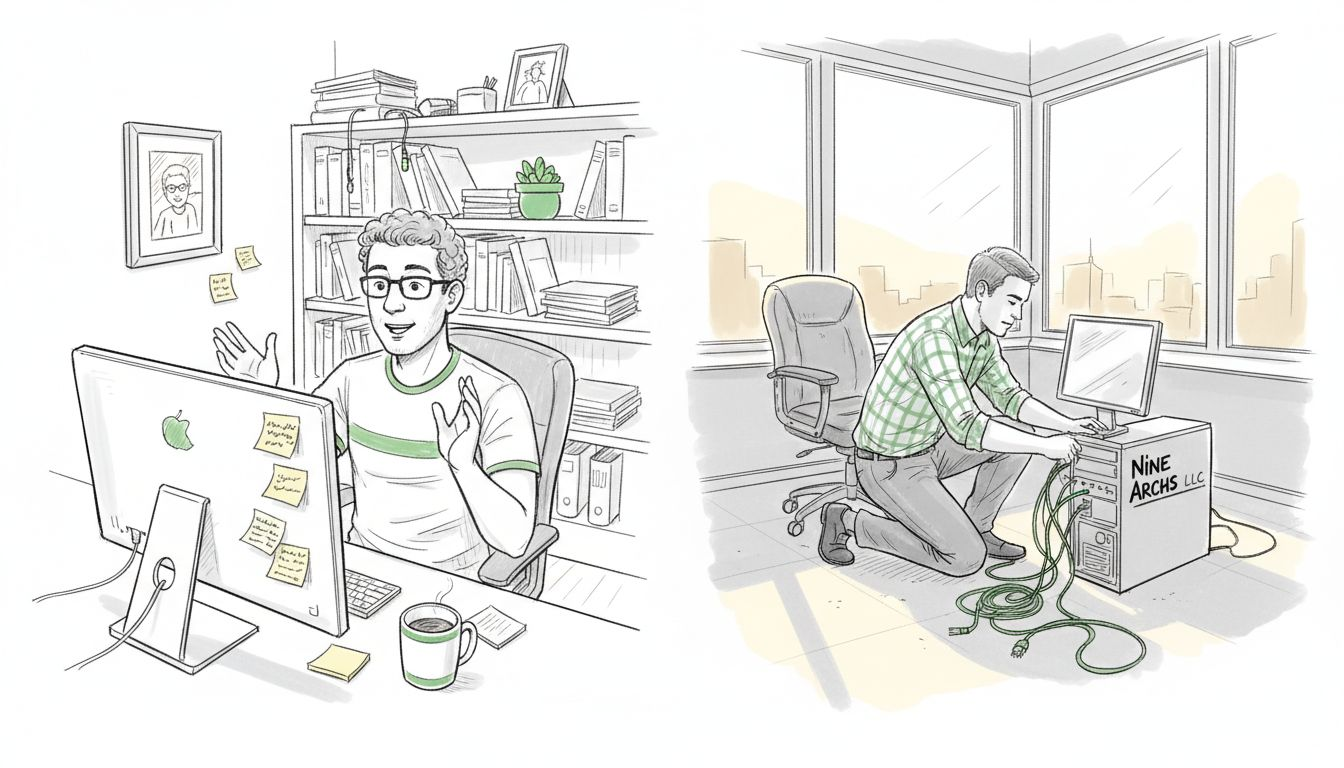
In the evolving landscape of professional services, remote and onsite support models represent two distinct approaches to delivering technical assistance and organizational services. Remote support involves providing professional services through digital platforms and communication technologies, enabling professionals to deliver solutions without physical presence. Onsite support, conversely, requires direct physical interaction and presence at a client’s location or specific workplace environment.
The fundamental difference between these models lies in their operational mechanics and technological infrastructure. Remote support relies heavily on digital connectivity, utilizing tools like video conferencing, cloud-based collaboration platforms, and secure remote access systems. Remote IT support strategies have become increasingly sophisticated, allowing professionals to troubleshoot, manage systems, and provide comprehensive solutions without geographical constraints. In contrast, onsite support demands physical proximity, enabling direct hardware interactions, immediate problem resolution, and face-to-face communication that digital platforms cannot entirely replicate.
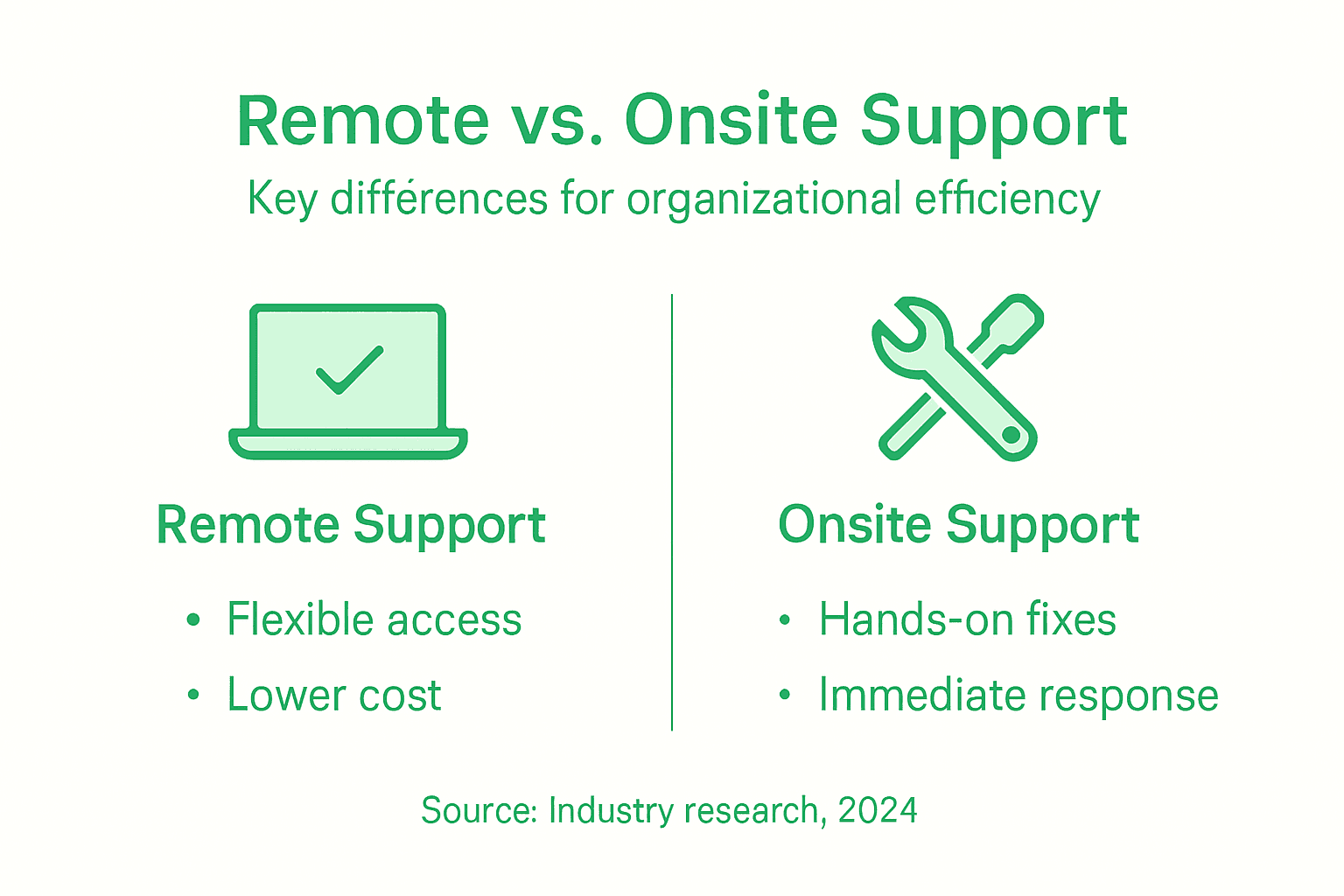
Understanding these models requires examining their unique characteristics. Remote support typically involves:
- Asynchronous communication
- Leveraging digital collaboration tools
- Global talent accessibility
- Reduced overhead costs
Onsite support, meanwhile, features:
- Real-time physical interventions
- Direct equipment maintenance
- Immediate interpersonal problem solving
- Hands-on technical diagnostics
Each model presents distinct advantages depending on organizational needs, technological requirements, and operational complexity. The choice between remote and onsite support is not binary but exists on a spectrum, with many organizations adopting hybrid approaches that blend both methodologies.
Here’s a side-by-side look at factors impacting remote vs. onsite support models:
| Consideration | Remote Support | Onsite Support |
|---|---|---|
| Onboarding Speed | Rapid—can add team members globally | Slower—requires local hiring |
| Service Availability | 24/7 potential—global coverage | Limited by location/time zone |
| Technology Dependence | High—advanced digital tools needed | Moderate—relies on physical access |
| Adaptation to Change | Flexible—easy to scale workforce | Less flexible—logistics intensive |
| Personalization Level | Moderate—virtual interactions | High—face-to-face engagement |
Pro tip: Conduct a comprehensive assessment of your organization’s technological infrastructure and communication needs before selecting a support model to ensure optimal efficiency and performance.
Key Tasks and Issues Handled by Each Model
Remote and onsite support models handle dramatically different types of tasks and operational challenges, reflecting their unique technological and interaction frameworks. Remote support tasks primarily center on digital problem solving, communication management, and knowledge-based interventions that can be executed through technological platforms. Remote work delegation strategies enable professionals to address complex issues without physical proximity, leveraging advanced digital tools and communication technologies.
Onsite support, in contrast, specializes in physical interventions and direct technical troubleshooting. These tasks require immediate, hands-on engagement that cannot be replicated through digital channels. Key areas of onsite support include:
- Hardware repair and maintenance
- Physical network infrastructure diagnostics
- Direct equipment configuration
- Immediate hands-on technical interventions
- Face-to-face client consultations
Remote support tasks encompass a broad range of digital-centric responsibilities:
- System monitoring and management
- Virtual troubleshooting
- Digital security assessments
- Cloud infrastructure maintenance
- Remote software installations
- Technical customer service
- Digital training and knowledge transfer
The complexity of these tasks varies significantly between remote and onsite models. Remote support demands advanced digital literacy, sophisticated communication skills, and proficiency with collaborative technologies. Onsite support requires technical expertise combined with physical dexterity and immediate problem-solving capabilities. Organizations must carefully evaluate their specific technological needs, infrastructure complexity, and operational requirements when selecting an appropriate support model.
Pro tip: Develop comprehensive skill matrices for both remote and onsite support teams to ensure clear task allocation and minimize potential service gaps.
Technology, Access, and Security Considerations
Technology infrastructure represents the critical backbone differentiating remote and onsite support models, with each approach presenting unique technological challenges and security requirements. Why remote work for IT teams demonstrates the complex technological ecosystems necessary for effective digital collaboration, highlighting the intricate relationship between access, security, and technological capabilities.
Remote support models demand robust technological frameworks that ensure secure, reliable digital connectivity. Key technological requirements include:
- High-speed internet connectivity
- Secure virtual private network (VPN) access
- Multi-factor authentication systems
- Encrypted communication platforms
- Cloud-based collaboration tools
- Advanced endpoint security solutions
Onsite support models, conversely, rely on physical technological infrastructure and direct hardware interactions. Their security considerations involve:
- Physical access control systems
- Localized network protection
- Direct hardware monitoring
- Immediate physical intervention capabilities
- Restricted physical workspace security
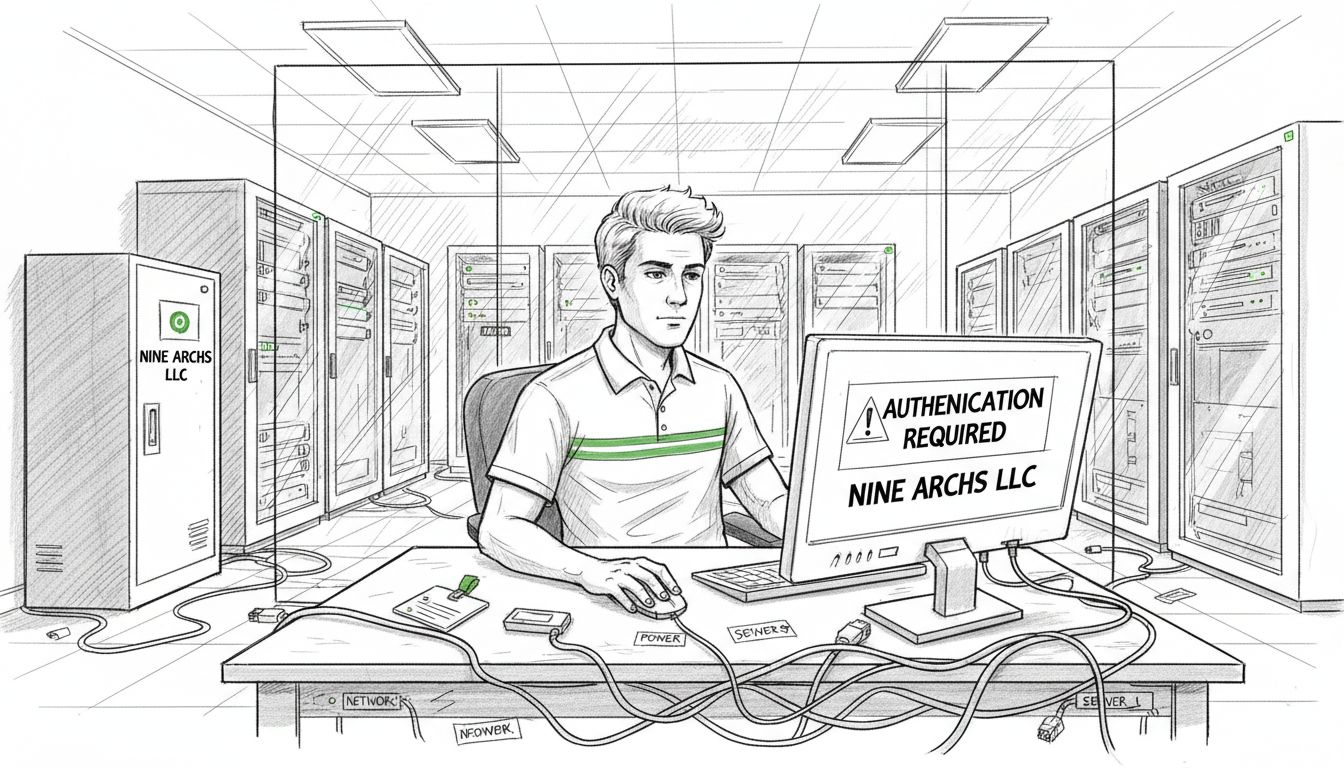
The security landscape for each model differs fundamentally. Remote support requires comprehensive digital security strategies, focusing on preventing unauthorized access, protecting sensitive data transmission, and maintaining secure communication channels. Onsite support can leverage physical security measures like controlled entry points, direct supervision, and immediate threat detection, which are not readily available in remote environments.
Organizations must carefully evaluate their technological capabilities, understanding that hybrid models increasingly blur traditional boundaries between remote and onsite approaches. Successful implementation demands continuous technological adaptation, robust security protocols, and flexible infrastructure design that can accommodate evolving workplace dynamics.
Pro tip: Implement comprehensive cybersecurity training programs that address both remote and onsite technological vulnerabilities to create a holistic security approach.
Cost, Scalability, and Resource Implications
Cost dynamics represent a critical differentiator between remote and onsite support models, with each approach presenting unique financial and operational challenges. Remote work delegation strategies demonstrate how organizations can strategically optimize resource allocation across different support frameworks.
Remote support models offer significant cost advantages through:
- Reduced physical infrastructure expenses
- Minimal office space requirements
- Lower travel and commutation costs
- Flexible global talent acquisition
- Decreased operational overhead
- Scalable workforce expansion
Onsite support models typically involve higher resource investments:
- Substantial physical facility maintenance
- Fixed geographical infrastructure costs
- Direct hardware and equipment expenses
- Higher recruitment and training costs for localized teams
- Significant travel and transportation expenditures
Scalability becomes a paramount consideration in resource planning. Remote support enables organizations to rapidly scale teams across geographic boundaries, allowing unprecedented flexibility in workforce management. Onsite models, by contrast, face more rigid scalability limitations, requiring substantial financial investments for physical infrastructure expansion and localized talent recruitment.
Organizations must conduct comprehensive cost-benefit analyses, recognizing that the most effective approach often involves hybrid models that strategically blend remote and onsite capabilities. This approach maximizes operational efficiency while maintaining flexibility to adapt to changing technological and market requirements.
This summary highlights how cost and scalability differ by support model:
| Aspect | Remote Support Benefits | Onsite Support Challenges |
|---|---|---|
| Facility Costs | Minimized—no office needed | High—requires physical space |
| Talent Pool | Global—more hiring options | Local—limited candidates |
| Expansion Speed | Fast—add resources remotely | Slow—requires more logistics |
| Overhead | Lower—fewer fixed expenses | Higher—maintenance intensive |
Pro tip: Develop detailed financial models comparing total ownership costs for both remote and onsite support frameworks to make data-driven resourcing decisions.
Risks, Limitations, and Compliance Factors
Organizational risk management requires comprehensive understanding of the unique challenges presented by remote and onsite support models. Why remote work for IT teams illuminates the complex landscape of potential vulnerabilities and compliance considerations that organizations must navigate strategically.
Remote support risks encompass several critical areas:
- Enhanced cybersecurity vulnerabilities
- Data privacy and protection challenges
- Communication and collaboration barriers
- Cross-jurisdictional legal compliance issues
- Potential intellectual property protection gaps
- Technology infrastructure reliability concerns
Onsite support limitations present different operational challenges:
- Geographic recruitment constraints
- Physical infrastructure dependencies
- Higher operational health and safety risks
- Limited workforce diversity potential
- Increased fixed operational expenses
- Reduced flexibility in talent management
Compliance factors represent a complex terrain where organizations must carefully balance operational requirements with legal obligations. Remote models demand sophisticated technological safeguards and robust data protection protocols, while onsite models require stringent physical security measures and localized regulatory adherence. The increasing complexity of global work environments necessitates nuanced approaches that can seamlessly integrate legal, technological, and operational considerations.
Successful risk management strategies increasingly involve hybrid models that leverage the strengths of both remote and onsite approaches, creating flexible frameworks that can adapt to evolving regulatory landscapes and technological capabilities.
Pro tip: Conduct periodic comprehensive risk assessments that evaluate both technological and human factors across remote and onsite support infrastructures.
Choosing the Right Model for Your Organization
Strategic model selection demands a comprehensive evaluation of organizational capabilities, technological infrastructure, and operational requirements. Remote work delegation strategies provide critical insights into making informed decisions that align support models with strategic business objectives.
Key decision-making criteria for selecting an appropriate support model include:
- Nature of core business tasks
- Technological infrastructure maturity
- Workforce geographic distribution
- Complexity of technical support requirements
- Budget and resource constraints
- Regulatory and compliance environment
- Organizational culture and communication dynamics
Evaluation framework for model selection involves assessing multiple dimensions:
- Task Complexity Analysis
- Identify tasks requiring physical presence
- Evaluate digital transformation readiness
- Determine technology-enabled work potential
- Workforce Capability Assessment
- Analyze existing team skills
- Evaluate technological proficiency
- Consider communication and collaboration capabilities
- Financial and Operational Considerations
- Compare total cost of ownership
- Analyze scalability potential
- Assess long-term operational flexibility
Hybrid models increasingly represent the most sophisticated approach, allowing organizations to leverage strengths of both remote and onsite support frameworks. This flexible strategy enables businesses to dynamically allocate resources, optimize operational efficiency, and maintain adaptability in rapidly changing technological landscapes.
Pro tip: Conduct a comprehensive organizational capability audit before finalizing your support model, focusing on technological infrastructure, workforce skills, and strategic objectives.
Bridge the Gap Between Remote and Onsite Support with NineArchs Solutions
Navigating the differences between remote and onsite support can be challenging for any organization aiming to boost efficiency and scalability. Whether you face difficulties in managing complex technical tasks remotely or need the flexibility to scale talent globally while maintaining high levels of personalization and security, NineArchs LLC offers tailored outsourcing solutions designed to address these exact issues. We understand the importance of blending advanced digital collaboration with hands-on expertise to create seamless operational workflows that drive growth.
Here is how we help you overcome support model challenges:
- Access a global talent pool to rapidly expand your remote workforce
- Benefit from professional skills outsourcing that aligns with your infrastructure and security needs
- Gain cost-efficient and scalable support that adapts to your business complexity
Discover how our remote workforce solutions can elevate your operational efficiency today.

Are you ready to transform your support strategy and maximize productivity with a hybrid or fully remote team approach? Contact NineArchs LLC now for a comprehensive consultation to tailor a solution that perfectly matches your organization’s unique needs and technological landscape. Explore how combining our expertise in virtual assistance, business process outsourcing, and custom software development can provide you a competitive advantage. Visit our contact page to get started and turn the challenge of choosing between remote and onsite support into your company’s most valuable asset.
Frequently Asked Questions
What is the primary difference between remote and onsite support?
The primary difference lies in their operational mechanics: remote support is delivered through digital platforms, while onsite support requires physical presence at a client’s location.
What are the advantages of remote support over onsite support?
Remote support offers benefits such as global talent accessibility, reduced overhead costs, and 24/7 service availability, allowing for rapid problem resolution without geographical constraints.
What types of tasks are typically handled by onsite support?
Onsite support generally involves hands-on tasks like hardware repair, direct network diagnostics, and face-to-face client consultations, which require immediate physical intervention.
How do cost dynamics differ between remote and onsite support models?
Remote support typically incurs lower costs due to minimized infrastructure and operational expenses, while onsite support involves high costs related to physical facilities and local staffing.